
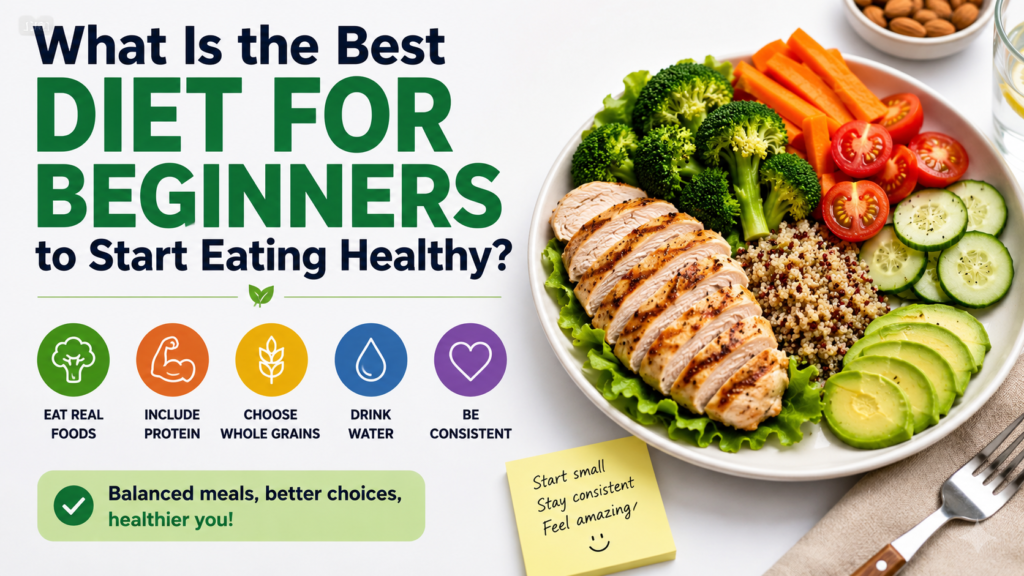
The best diet for beginners is a simple, balanced eating pattern built around whole or minimally processed foods, vegetables, fruits, protein, whole grains, healthy fats, and water. You do not need a perfect meal plan, expensive foods, detoxes, or strict rules to start eating healthy.
A beginner’s diet should make your normal meals better, not make your life harder. The easiest starting point is to build each meal around a protein source, a high-fiber carbohydrate, colorful produce, and a small amount of healthy fat.
Healthy eating matters because diet quality affects energy, digestion, weight management, heart health, blood pressure, blood sugar, and long-term disease risk. WHO states that a healthy diet helps prevent malnutrition and a range of noncommunicable diseases, while current U.S. guidance emphasizes whole, nutrient-dense foods as the foundation of healthy eating.
What Does a Healthy Diet for Beginners Actually Mean?
A healthy diet for beginners means eating enough nutritious foods most of the time while limiting foods that are high in added sugar, excess salt, unhealthy fats, and heavy processing. It is not a short-term punishment plan.
WHO describes healthy diets through four core principles: adequacy, balance, moderation, and diversity. In Easy Words, that means your diet should provide enough nutrients, include a variety of food groups, avoid excess, and contain a wide variety of foods.
For beginners, healthy eating should focus on five simple habits:
- Eat vegetables or fruit every day.
- Include protein at most meals.
- Choose whole grains or high-fiber carbohydrates more often.
- Drink mostly water or unsweetened drinks.
- Reduce highly processed foods, sugary drinks, and frequent fried snacks.
The brutal truth: most beginners fail because they try to redesign their whole life in one week. That is unnecessary. Start with repeatable meals you can actually follow.
What Should Beginners Eat First to Start Eating Healthy?
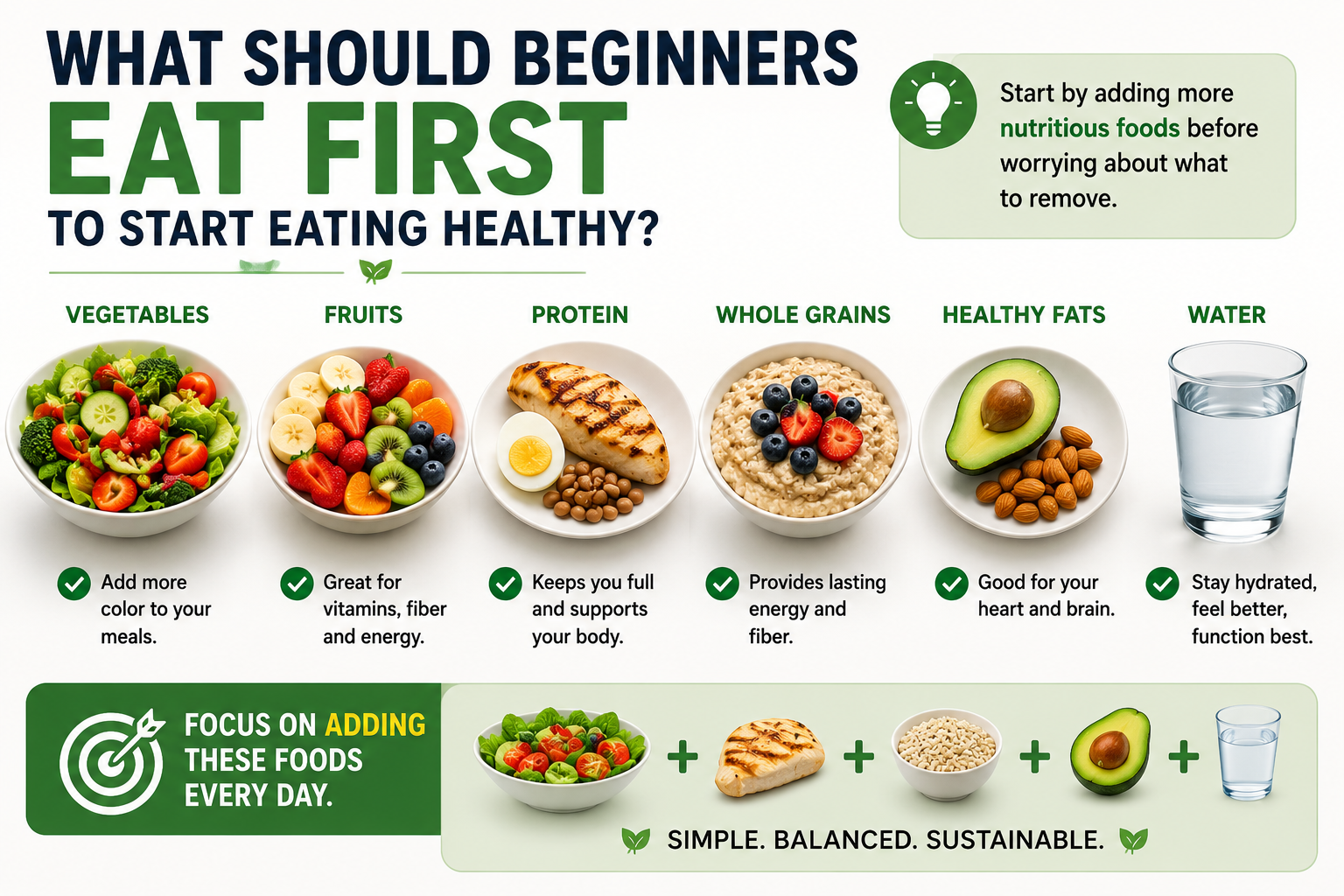
Beginners should first add more nutritious foods before obsessing over what to remove. Start with vegetables, fruits, lean or minimally processed protein, beans, lentils, whole grains, nuts, seeds, dairy or fortified alternatives, and water.
This works because addition is easier than restriction. When meals include more fiber, protein, and volume from whole foods, it becomes easier to feel satisfied and naturally reduce overeating.
What Should a Beginner’s Healthy Plate Include?
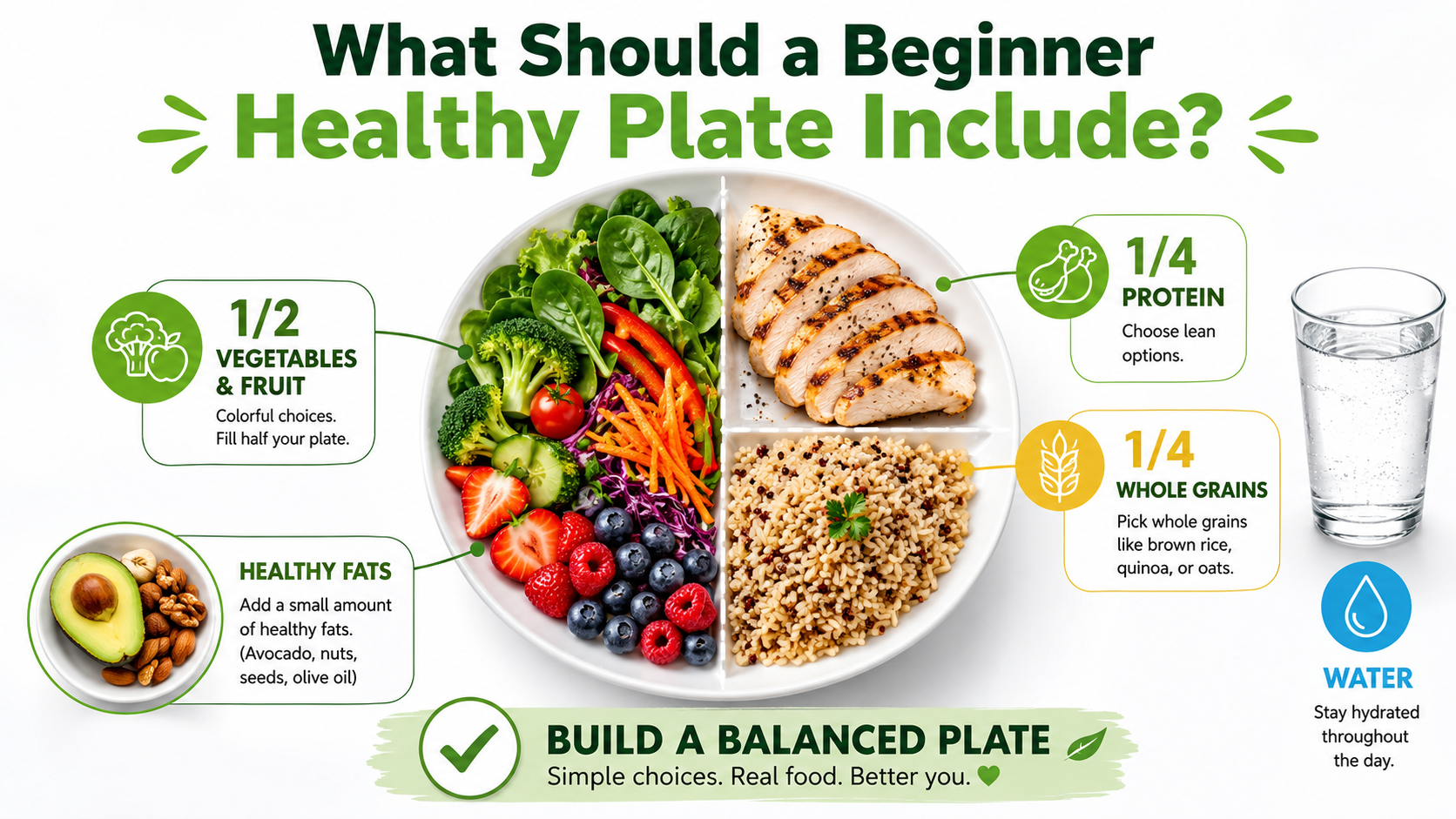
A beginner’s healthy plate should include produce, protein, high-fiber carbohydrates, and healthy fats. This plate method is easier than tracking every calorie or macro.
A simple beginner plate looks like this:
| Plate part | What to choose | Easy examples |
|---|---|---|
| 1/2 plate of vegetables or fruit | Colorful, high-fiber produce | Salad, broccoli, carrots, peppers, berries, apples |
| 1/4 plate protein | Animal or plant protein | Eggs, fish, chicken, Greek yogurt, tofu, beans, lentils |
| 1/4 plate whole grain or starchy food | High-fiber carbohydrates | Oats, brown rice, potatoes, whole-wheat bread, quinoa |
| Small amount of healthy fat | Mostly unsaturated fats | Olive oil, avocado, nuts, seeds |
| Drink | Unsweetened beverage | Water, sparkling water, unsweetened tea |
WHO recommends that carbohydrates come mainly from whole grains, vegetables, fruits, and pulses such as lentils, chickpeas, beans, and dried peas.
Which Foods Should Beginners Eat More Often?
Beginners should eat more whole and minimally processed foods because these foods usually provide more fiber, vitamins, minerals, and satiety per bite. Current U.S. dietary guidance emphasizes whole, nutrient-dense foods, and WHO says minimally processed and unprocessed foods low in unhealthy fats, free sugars, and sodium are the foundation of a healthy diet.
Good beginner foods include:
- Vegetables: spinach, lettuce, broccoli, carrots, peppers, tomatoes, peas, green beans.
- Fruits: apples, berries, bananas, oranges, grapes, pears.
- Proteins: eggs, fish, poultry, beans, lentils, tofu, yogurt, cottage cheese.
- Whole grains and starches: oats, brown rice, potatoes, whole-grain bread, quinoa.
- Healthy fats: nuts, seeds, avocado, olives, olive oil.
- Drinks: water, unsweetened tea, unsweetened coffee, sparkling water.
Frozen and canned produce can still be healthy choices. WHO notes that fresh, frozen, and canned fruit and vegetables can all be good options when they do not contain added sugars or excess sodium.
How Much Fruit, Vegetables, Fiber, Sugar, Fat, and Salt Should Beginners Aim For?
Beginners should use simple targets rather than chasing perfection. For most people over age 10, the WHO recommends at least 400 grams of fruits and vegetables per day and at least 25 grams of naturally occurring dietary fiber per day.
Here are practical beginner targets:
| Nutrition area | Beginner target | What it means in real life |
|---|---|---|
| Fruits and vegetables | At least 400 g daily | Roughly 5 portions per day |
| Fiber | At least 25 g daily | More beans, lentils, oats, whole grains, fruit, and vegetables |
| Free sugars | Less than 10% of daily energy | Limit sugary drinks, sweets, desserts, juice, and syrups |
| Salt | Less than 5 g salt daily for adults | Reduce salty snacks, processed meats, fast food, and heavy sauces |
| Saturated fat | No more than 10% of the total energy | Limit butter, fatty meats, and high-fat processed foods |
| Trans fat | No more than 1% of total energy | Avoid industrial trans fats where possible |
WHO says limiting free sugars to less than 10% of total daily energy equals about 50 grams, or 12 level teaspoons, for a person eating around 2,000 calories per day. WHO also states that reducing free sugars further to 5% or less may provide additional health benefits.
For salt, the WHO recommends adults limit intake to less than 5 grams of salt per day, equal to about 2 grams of sodium. This matters because high sodium intake is associated with increased blood pressure, which can increase cardiovascular disease risk.
The CDC found that in 2019, only 12.3% of U.S. adults met fruit intake recommendations and 10.0% met vegetable intake recommendations. The point is not shame; the point is that improving fruit and vegetable intake is one of the highest-leverage beginner changes.
How Can Beginners Build Simple, Healthy Meals Without Counting Calories?
Beginners can build healthy meals without counting calories by using a repeatable formula: protein + produce + high-fiber carbohydrate + healthy fat. This gives structure without turning eating into math.
Use this formula:
- Pick a protein: eggs, chicken, fish, beans, lentils, tofu, or Greek yogurt.
- Add produce: salad, cooked vegetables, fruit, frozen vegetables.
- Add a high-fiber carbohydrate: oats, brown rice, potatoes, whole-grain bread, beans.
- Add healthy fat: olive oil, nuts, seeds, avocado.
- Choose a low-sugar drink: water, unsweetened tea, or unsweetened coffee.
This approach aligns with the DASH eating plan, which NHLBI describes as a flexible, balanced eating plan that does not require special foods and emphasizes vegetables, fruits, whole grains, low-fat or fat-free dairy, fish, poultry, beans, nuts, and vegetable oils.
What are easy, healthy breakfast ideas for Beginners?
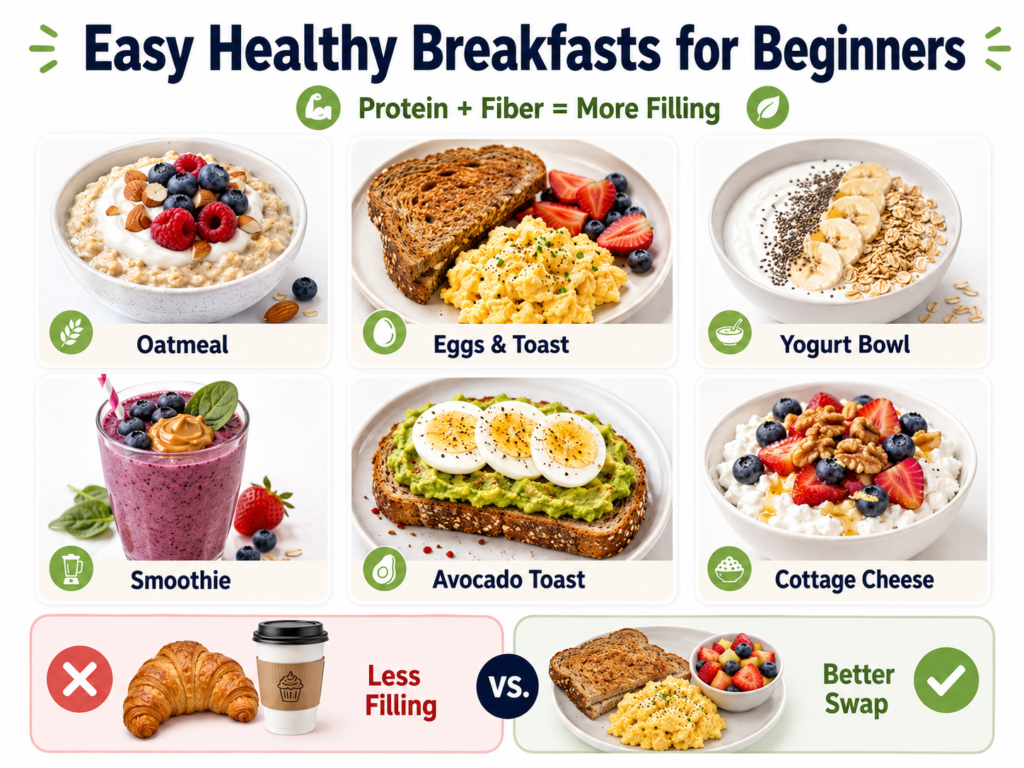
A healthy beginner breakfast should include protein and fiber. This combination helps the meal feel more filling than a breakfast built mostly from refined starch or sugar.
Easy breakfast ideas:
- Oatmeal with Greek yogurt, berries, and nuts.
- Eggs with whole-grain toast and fruit.
- Plain yogurt with banana, chia seeds, and oats.
- Smoothie with milk or fortified soy drink, berries, spinach, and peanut butter.
- Whole-grain toast with avocado and boiled eggs.
- Cottage cheese with fruit and walnuts.
Weak breakfast choice: a pastry and sweetened coffee. Better beginner swap: whole-grain toast, eggs, and fruit. You do not need perfection; you need a better default.
What Are Easy Healthy Lunch and Dinner Ideas for Beginners?
A healthy lunch or dinner should combine protein, vegetables, and a satisfying carbohydrate. This makes the meal balanced and easier to repeat.
Easy lunch and dinner ideas:
- Chicken, rice, vegetables, and olive oil dressing.
- Bean chili with vegetables and a side salad.
- Tuna or salmon salad with whole-grain bread.
- Lentil soup with fruit and yogurt.
- Stir-fry with tofu, vegetables, and brown rice.
- Turkey or hummus wrap with salad and fruit.
- Baked potato with beans, vegetables, and Greek yogurt.
For heart-health-focused eating, the American Heart Association recommends a dietary pattern with vegetables and fruits, whole grains, healthy protein sources, unsaturated fats, minimally processed foods, less added sugar, and foods prepared with little or no salt.
What Are Healthy Snack Ideas for Beginners?
A healthy snack should solve hunger, not just entertain your mouth. Choose snacks with protein, fiber, or both.
Good beginner snacks:
- Apple with peanut butter.
- Greek yogurt with berries.
- Carrots with hummus.
- Boiled eggs and fruit.
- Nuts with a piece of fruit.
- Cottage cheese with tomatoes.
- Whole-grain crackers with tuna.
- Roasted chickpeas.
If you are not physically hungry, snacking may be a habit, not a need. That is uncomfortable to admit, but it matters.
Which Beginner Diet Approach Is Easiest to Follow?
The easiest beginner diet approach is the plate method because it is visual, flexible, and does not require tracking apps. DASH-style eating and Mediterranean-style eating can also work well, but beginners should avoid rigid diets that remove entire food groups without a medical reason.
| Diet approach | Best for beginners? | Why it works or fails |
|---|---|---|
| Plate method | Yes | Simple visual structure; no tracking required |
| DASH-style eating | Yes | Flexible, evidence-based, built around normal foods |
| Mediterranean-style eating | Yes | Emphasizes plants, fish, whole grains, legumes, olive oil |
| Calorie counting | Sometimes | Useful for weight goals, but tedious for beginners |
| Very low-carb or very low-fat diets | Usually not first choice | Can be restrictive and harder to maintain |
| Detoxes and cleanses | No | Usually unnecessary, unsustainable, and often misleading |
| “Clean eating” with strict rules | Risky | Can become obsessive or socially difficult |
NHLBI describes DASH as flexible and balanced, with no special foods required, which makes it a better beginner model than a complicated rule-based diet.
What Foods Should Beginners Limit Without Becoming Too Restrictive?
Beginners should limit sugary drinks, frequent sweets, highly processed snacks, processed meats, fried foods, high-sodium packaged meals, and foods high in saturated or trans fat. You do not need to ban these foods completely, but they should not be your daily foundation.
Limit these most often:
- Soda, energy drinks, sweet tea, and sugary coffee drinks.
- Candy, pastries, cookies, cakes, and frequent desserts.
- Chips, instant noodles, and salty snack foods.
- Processed meats such as bacon, sausage, and salami.
- Fried fast food.
- Packaged meals high in sodium.
- Foods with industrial trans fats.
WHO states that many people now consume more highly processed foods high in unhealthy fats, free sugars, and sodium while not eating enough fruit, vegetables, or dietary fiber.
A smarter beginner rule is: reduce frequency before removing completely. If you drink soda daily, move to three times per week, then once per week. If you eat fast food five times per week, reduce it to two. This is less dramatic, but it works better.
How Can Beginners Read Food Labels Without Getting Confused?
Beginners should read food labels by checking serving size first, then looking for fiber, protein, added sugar, sodium, and saturated fat. Do not get distracted by front-package marketing.
The FDA says serving size is listed at the top of the Nutrition Facts label and that nutrition information is usually based on one serving, not always the whole package. The FDA also clarifies that serving size reflects what people typically eat, not how much they should eat.
Use this quick label-reading system:
- Check serving size: Is the package one serving or multiple servings?
- Check added sugar: Lower is usually better for everyday foods.
- Check sodium: High sodium adds up fast.
- Check saturated fat: Choose lower amounts most of the time.
- Check fiber: More fiber is usually a good sign in grains, cereals, breads, and snacks.
- Compare similar products: Choose the better option, not the perfect one.
The FDA says 5% Daily Value or less is considered low for a nutrient, while 20% Daily Value or more is considered high. The agency recommends choosing foods higher in dietary fiber, vitamin D, calcium, iron, and potassium, and lower in saturated fat, sodium, and added sugars.
What Is a Simple 7-Day Healthy Eating Starter Plan?
A simple 7-day starter plan should repeat easy meals so healthy eating becomes automatic. Beginners do not need seven completely different breakfasts, lunches, and dinners.
| Day | Breakfast | Lunch | Dinner | Snack |
|---|---|---|---|---|
| Day 1 | Oats, yogurt, berries | Chicken salad wrap | Rice bowl with beans and vegetables | Apple with peanut butter |
| Day 2 | Eggs, toast, fruit | Lentil soup | Salmon, potato, broccoli | Greek yogurt |
| Day 3 | Yogurt, banana, chia | Tuna sandwich and salad | Tofu stir-fry with brown rice | Carrots and hummus |
| Day 4 | Oatmeal with nuts | Bean chili | Chicken, vegetables, quinoa | Boiled eggs and fruit |
| Day 5 | Smoothie with spinach and berries | Hummus wrap | Turkey or bean tacos with salad | Cottage cheese |
| Day 6 | Eggs with vegetables | Leftover grain bowl | Pasta with vegetables and lean protein | Nuts and fruit |
| Day 7 | Yogurt, oats, fruit | Baked potato with beans | Vegetable omelet and salad | Whole-grain crackers with tuna |
Use this plan as a template, not a prison. Swap foods based on budget, culture, allergies, preferences, and medical needs. NHS advice also notes that people with special dietary needs or medical conditions should ask a doctor or registered dietitian for personalized guidance.
What Common Diet Mistakes Should Beginners Avoid?
Beginners should avoid extreme restriction, skipping meals, copying influencer diets, ignoring protein and fiber, drinking calories, and trying to change everything at once. These mistakes make healthy eating harder than it needs to be.
Common mistakes include:
- Starting too aggressively: Going from no structure to a perfect meal plan usually fails.
- Cutting all carbs: Whole grains, beans, fruit, and potatoes can fit into a healthy diet.
- Eating too little protein: Low-protein meals often leave beginners hungry.
- Avoiding all fat: Unsaturated fats from nuts, seeds, avocado, fish, and oils can support a balanced diet.
- Ignoring liquid calories: Sugary drinks can add a lot of sugar without much fullness.
- Buying “health” foods without reading labels: Marketing words do not guarantee nutritional quality.
- Making healthy eating too expensive: Beans, lentils, oats, eggs, frozen vegetables, canned fish, potatoes, and rice can be affordable staples.
- Quitting after one imperfect meal: One meal does not ruin your diet. Repeated habits matter more.
The biggest misconception is that healthy eating must be dramatic. It does not. The best beginner diet is boring in the right way: repeatable, affordable, flexible, and good enough to follow.
What are the Key Takeaways for a beginner’s healthy diet?
The key takeaway is simple: build meals around whole foods, protein, fiber, produce, and water most of the time. Limit added sugar, excess sodium, highly processed foods, and unhealthy fats without turning food into a moral issue.
Remember these beginner rules:
- Start by improving one meal per day.
- Use the plate method instead of complicated tracking.
- Eat vegetables and fruit daily.
- Include protein at meals.
- Choose whole grains and beans more often.
- Drink mostly water.
- Read labels for serving size, added sugar, sodium, fiber, and saturated fat.
- Keep meals repeatable.
- Do not chase perfection.
Healthy eating is not a 30-day challenge. It is a basic life skill.
FAQ
What is the easiest diet for beginners?
The easiest diet for beginners is the plate method. Fill half your plate with vegetables or fruit, one quarter with protein, and one quarter with whole grains or starchy foods, then add a small amount of healthy fat.
Do beginners need to count calories to eat healthily?
No. Beginners can start by improving food quality, portions, protein, fiber, and drinks. Calorie counting can help with specific weight goals, but it is not required to start eating healthier.
What should I stop eating first to become healthier?
Start by reducing sugary drinks, frequent sweets, salty packaged snacks, fried fast food, and highly processed meals. These foods are easy to overconsume and often displace more nutritious foods.
How many fruits and vegetables should beginners eat per day?
Most people over age 10 should aim for at least 400 grams of fruits and vegetables per day, according to the WHO. That is commonly understood as about five portions per day.
Is rice or bread bad for a beginner’s diet?
No. Rice and bread are not automatically bad. Beginners should choose whole-grain or higher-fiber versions more often and pair them with protein and vegetables.
What is a healthy breakfast for beginners?
A healthy beginner breakfast includes protein and fiber. Good examples include eggs with whole-grain toast and fruit, oatmeal with yogurt and berries, or Greek yogurt with oats and nuts.
Can I eat snacks and still eat healthy?
Yes. Snacks can fit into a healthy diet when they contain protein, fiber, or nutritious whole foods. Good options include fruit with nut butter, yogurt with berries, hummus with vegetables, or nuts with fruit.
How long does it take to get used to eating healthy?
Many people adjust within a few weeks when changes are simple and consistent. The goal is not to force a perfect diet immediately; the goal is to make better meals easier to repeat.
Conclusion
A beginner’s healthy diet should be simple, balanced, and realistic. Start with better defaults: more vegetables and fruit, more protein, more fiber, more water, and fewer highly processed foods.
Do not wait until you have the perfect plan. Build one better meal today, repeat it tomorrow, and improve from there.