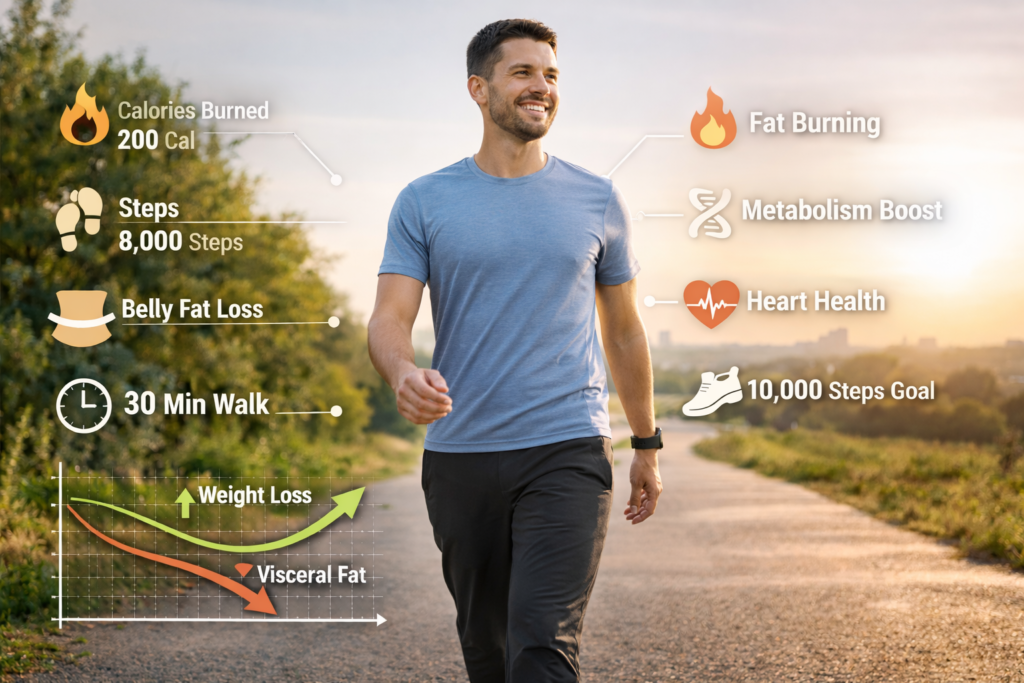
Does Walking Help Lose Weight?
Yes, walking can help you lose weight. Walking increases the number of calories your body uses, which can help create a calorie deficit, and that calorie deficit is what drives weight loss. But walking works best when it is done consistently, at a useful intensity, and alongside eating habits that support your goal.
That makes walking one of the most practical fat-loss tools for everyday people. It is low-impact, free, easy to start, and much easier to stick with than very intense exercise for many beginners. Public-health guidance also treats brisk walking as moderate-intensity aerobic activity, which means it counts toward the same weekly activity targets used for better health and weight management.
The important part is being realistic. Walking is effective, but it is not magic. Most people get the best results when walking is part of a bigger plan that includes a sensible diet, enough sleep, and some strength training.
What is the short answer on walking and weight loss?
Walking helps with weight loss because it raises daily energy expenditure, and that helps create the calorie deficit needed to lose body fat. The evidence is strongest when walking is done regularly and combined with calorie control or other lifestyle changes.
Research reviews have found that walking programs can reduce body weight, BMI, and body fat, though the average weight loss from exercise alone is usually modest. A broader 2024 meta-analysis of aerobic exercise found that at least 150 minutes per week was linked to clinically important reductions in waist circumference and body fat in adults with overweight or obesity. Because brisk walking is a form of moderate-intensity aerobic exercise, that evidence is highly relevant here.
How does walking actually help you lose weight?
Walking helps you lose weight by increasing calorie burn. When your body uses more energy than it takes in, the gap is called a calorie deficit, and that is the core mechanism of weight loss.
Walking also has practical advantages that matter in real life:
- It is easy to recover from compared with harder workouts.
- It is accessible for beginners, older adults, and many people with joint concerns.
- It can be spread into shorter sessions across the day.
- It helps many people move more without feeling like they are doing an extreme fitness program.
That matters because the “best” exercise for weight loss is often the one you can repeat week after week. A perfect workout that you quit is less useful than a walking habit you keep for months. That same consistency is also important for keeping weight off after you lose it.
How much walking do you need to lose weight?
A good starting target is 150 minutes per week of brisk walking. That is the standard public-health baseline for moderate-intensity activity, and it is enough to improve health and support fat-loss efforts. For greater benefits, many guidelines suggest building toward up to 300 minutes per week, and weight-management guidance often points to even higher totals for preventing regain after weight loss.
In practical terms, this often looks like:
- Beginner goal: 15 to 20 minutes, most days
- Standard goal: 30 minutes, 5 days per week
- Higher goal: 45 to 60 minutes on most days, built up gradually if tolerated
Is 30 minutes of walking a day enough?
Yes, 30 minutes a day can be enough to help with weight loss, especially if you are currently inactive and you walk at a brisk pace. Mayo Clinic notes that adding 30 minutes of brisk walking to your day can burn about 150 extra calories for some adults, though the actual burn varies by body size and pace.
But “enough” depends on context. Thirty minutes may be enough to start losing weight if:
- Your food intake supports a calorie deficit,
- You are consistent,
- And you are not cancelling out the extra movement by becoming more sedentary the rest of the day.
If progress stalls, the usual fix is simple: walk a bit longer, walk a bit faster, or tighten the nutrition side.
Do steps matter more than minutes?
Minutes are more useful for exercise intensity targets, while steps are useful for habit tracking. In other words, minutes help you dose the workout, and steps help you see your total daily movement.
There is no single magic number like 10,000 steps. NIH-supported research shows health benefits at lower levels, such as around 7,000 to 8,000 daily steps, and some guidance emphasizes that total steps matter more than a trendy round number.
A practical rule is:
- Use minutes to make sure some walks are brisk,
- Use steps to keep your whole day from becoming too sedentary.
What kind of walking is best for fat loss?
The best walking for fat loss is usually brisk, regular, and sustainable. Casual strolling still counts as movement, but brisk walking gives you more moderate-intensity work and more calorie burn per minute.
What counts as brisk walking?
Brisk walking is generally a pace where you can still talk, but you cannot sing comfortably. The CDC and NHS both use that “talk test” idea to describe moderate intensity. The NHS also notes that brisk walking is around 3 miles per hour for many people, though the right pace depends on the individual.
Signs your pace is useful:
- Your breathing is clearly faster,
- Your heart rate is up,
- conversation is possible,
- Singing is not.
Are hills, intervals, or longer walks better?
Yes, these can make walking more effective because they increase the workload. Walking uphill, adding short brisk intervals, or simply extending duration can all raise energy expenditure without forcing you to run.
Here is a simple comparison:
| Walking style | What it feels like | Best use |
|---|
| Casual walk | Easy enough to talk and sing | Extra daily movement, recovery, and habit building |
| Brisk walk | Can talk but not sing | Main walking zone for weight-loss support |
| Hill or interval walk | Noticeably harder in bursts | Burn more calories in less time, add challenge |
This table reflects current moderate-intensity guidance and common clinical advice on making walking harder by going faster, longer, or uphill.
Can walking help reduce belly fat?
Yes, walking can help reduce belly fat over time, but it does not “target” belly fat only. Walking supports overall fat loss, and that can include reductions in waist circumference and visceral fat.
That distinction matters. You cannot choose exactly where fat leaves first. Still, aerobic exercise is linked with improvements in waist size and body fat, and research reviews show exercise can reduce visceral fat, which is the deeper abdominal fat linked with metabolic risk.
So the practical answer is:
- Yes, walking can help shrink your waist over time,
- No, walking cannot guarantee spot reduction from only one area.
Is walking alone enough, or does diet matter more?
Walking alone can help, but diet still matters more for the size of the calorie deficit. The CDC states that most weight loss comes from decreasing calories, while physical activity is especially important for health and for maintaining weight loss over time.
That means the strongest setup is:
- a realistic eating pattern,
- regular walking,
- and enough consistency to repeat both for months.
If someone asks, “Can I lose weight by walking only?” the honest answer is: possibly, yes, but it is usually slower and less reliable than combining walking with nutrition changes. Mayo Clinic makes the same point: physical activity helps, but calorie reduction plus exercise tends to work better than exercise alone.
How does walking compare with running and strength training?
Walking burns fewer calories per minute than running, but it is easier to sustain and easier to recover from. Strength training usually burns fewer calories during the session than cardio, but it is valuable because it helps preserve lean mass during weight loss.
Here is the simplest way to think about it:
| Method | Main strength | Main limitation |
|---|
| Walking | Easy to start, low impact, highly sustainable | Lower calorie burn per minute than harder cardio |
| Running | Higher calorie burn in less time | More impact, harder for many beginners to sustain |
| Strength training | Helps preserve or build lean mass | Usually not the most efficient single tool for burning calories |
For many people, the smartest mix is:
- walking as the main calorie-burning habit,
- strength training 2 days per week,
- and diet to control the deficit.
What is a simple walking plan for beginners?
The best beginner plan is the one you will actually follow. Start below your limit, not above it. Health agencies recommend building up gradually.
Week 1–2
- Walk 15 minutes, 5 days per week
- Keep the pace comfortable but purposeful
Week 3–4
- Walk 20 to 25 minutes, 5 days per week
- Make 2 of those walks brisk
Week 5–6
- Walk 30 minutes, 5 days per week
- Make 3 to 4 brisk walks
After that
- Stay at 150 minutes per week, or
- slowly build toward 200 to 300 minutes per week if fat loss is a bigger goal and recovery is good.
If you are older, have a chronic condition, or are returning after illness or injury, it is smart to build even more gradually and tailor the plan to your health status.
How can you make walking more effective without overcomplicating it?
The easiest way to improve walking for weight loss is to adjust just a few variables:
- Walk briskly more often. Moderate intensity gives more value than a stroll.
- Walk longer when possible. More minutes usually mean more calories burned.
- Use hills or intervals. These raise intensity without needing to run.
- Track your walks. Pedometer-based walking programs are linked with more activity and modest weight loss.
- Add 2 strength sessions per week. This supports muscle retention during weight loss.
- Keep food intake aligned with your goal. Walking cannot fully overcome a large calorie surplus.
How should you track progress from walking?
Do not judge progress by body weight alone. Walking can improve body composition, waist size, fitness, and energy even before the scale changes much.
Track a few practical markers:
- body weight once or twice weekly,
- waist circumference,
- average daily steps,
- weekly brisk-walking minutes,
- how your clothes fit,
- How easy the same route feels after a few weeks.
This matters because sometimes fat loss is happening even when scale changes are slower than expected.
What mistakes stop walking from helping with weight loss?
The most common mistakes are simple:
- Walking too slowly all the time. Easy movement is good, but brisk walks usually do more for fitness and calorie burn.
- Doing too little overall. One short walk per week will not do much. Consistency matters more than motivation spikes.
- Ignoring food intake. Exercise helps, but a calorie deficit still drives fat loss.
- Expecting spot reduction. Walking can reduce overall fat, including abdominal fat over time, but not in a perfectly targeted way.
- Skipping strength work completely. Resistance training is useful for preserving lean mass during weight loss.
- Starting too aggressively. Gradual progression lowers injury risk and improves adherence.
What is the key takeaway on walking for weight loss?
Walking absolutely can help you lose weight. The best version of walking for fat loss is brisk, consistent, and paired with eating habits that create a manageable calorie deficit. Around 150 minutes per week is a strong starting point, while more weekly walking often produces better body-fat and waist results if you build up safely.
The real advantage of walking is not that it is the hardest exercise. It is that walking is one of the easiest forms of exercise to keep doing long enough for results to show.
FAQ
Can you lose weight by walking only?
Yes, you can, but it is usually slower than combining walking with dietary changes. Exercise helps, but calorie control makes weight loss more reliable.
Is 10,000 steps a day necessary for weight loss?
No. There is no universal magic step number, and health benefits appear below 10,000 steps.
Is brisk walking better than normal walking for fat loss?
Usually yes. Brisk walking gives you moderate-intensity exercise, which generally burns more calories per minute than a casual stroll.
How long does it take to see results from walking?
That depends on pace, diet, starting body size, and consistency. Many people notice fitness and energy improvements first, while visible fat-loss changes often take several weeks of consistent effort.
Can walking reduce belly fat?
Yes, walking can help reduce belly fat as part of overall fat loss, including visceral fat and waist circumference improvements over time.
Is walking better than running for weight loss?
Running burns more calories per minute, but walking is often easier to sustain and recover from. For many beginners, the better choice is the one they can keep doing consistently.
Should you add strength training if you are walking to lose weight?
Yes. Strength training helps preserve lean mass during weight loss and complements walking well.
Short conclusion
Walking is one of the simplest ways to start losing weight because it is practical, sustainable, and evidence-based. Do it consistently, walk with purpose, and pair it with smart eating habits, and it can become a very effective part of a long-term weight-loss strategy.
Sources:
The information in this article is based on guidance and research from the following trusted sources: