The Simple Walking Method That Changed David’s Life (Without Extreme Effort)
In a world where fitness is often associated with intensity, exhaustion, and pushing limits, David discovered something completely different—by accident.
This is not a story about running marathons or walking 100 kilometers a day.
It’s about doing less… and getting more.
The Problem With Modern Fitness Culture
Like many others, David believed that weight loss and fitness required extreme effort:
- Long hours of walking 🚶
- Constant fatigue 😓
- Pushing through pain 💥
Everywhere he looked, people were sharing their achievements—20 km, 30 km, even 100 km walks. These numbers became symbols of discipline and success.
But there was a hidden problem.
This approach wasn’t sustainable.
Some days David pushed himself hard. Other days, he couldn’t move because of soreness. It became a cycle:
Overwork → Exhaustion → Rest → Repeat
And deep down, he knew something wasn’t right.
The Accidental Discovery
One morning, without any plan, David did something unusual.
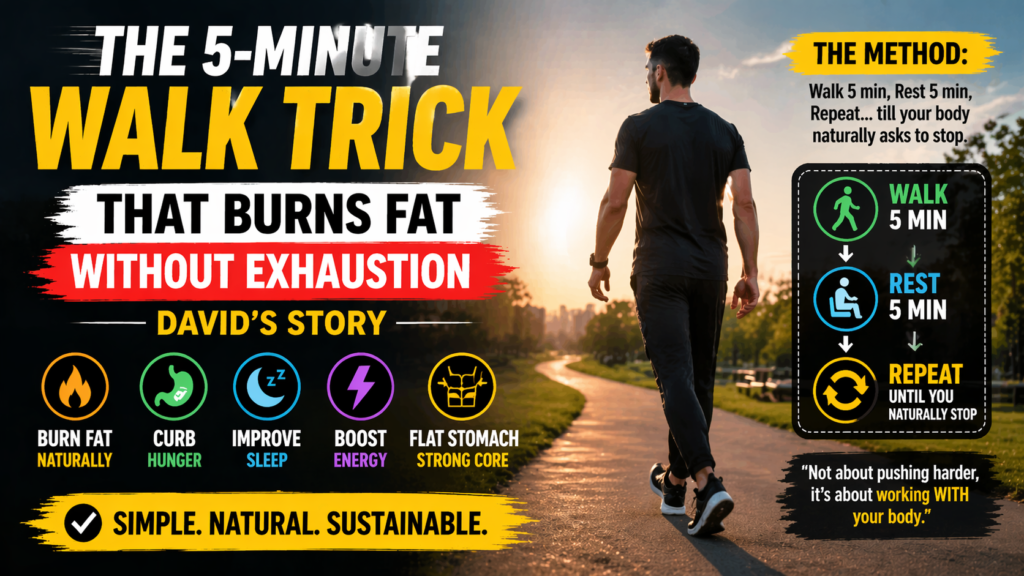
He walked for 5 minutes.
Then he stopped.
He rested for 5 minutes… and then walked again.
No strategy. No goal. No pressure.
Just:
Walk → Rest → Walk → Rest
At first, it felt too easy to be effective.
But something surprising happened.
- He didn’t feel exhausted
- He didn’t feel like quitting
- He actually wanted to continue
That was new.
How the Method Works
David continued this simple routine daily:
- Walk for 5 minutes
- Rest for 5 minutes
- Repeat until the body naturally feels tired
No forcing. No strict targets. No pressure.
Over time, something interesting happened.
His repetitions increased naturally:
- 5 rounds became 6
- 6 became 7
Not because he pushed harder—but because his body adapted.
The Changes He Noticed
After a few days, David began to experience real changes:
1. Stable Energy Levels
No sudden crashes. No extreme fatigue.
2. Less Muscle Soreness
His legs felt fresh—even the next day.
3. Better Sleep
Deeper, more restful sleep every night.
4. Controlled Hunger
His hunger became more balanced and less aggressive.
Why This Method Feels Easier
Traditional long walks (60–120 minutes) can:
- Increase stress hormones
- Lead to post-exercise hunger
- Cause fatigue and burnout
But David’s method is different.
Short walking sessions with rest:
- Reduce physical stress
- Allow recovery between efforts
- Make movement sustainable
In simple terms:
👉
Less stress = more consistency
A More Natural Way to Move
When David reflected on human movement in the past, he realized something important.
People didn’t train like athletes every day.
They moved in cycles:
This natural rhythm allowed the body to:
- Conserve energy
- Avoid burnout
- Adapt over time
And unknowingly, David had recreated that rhythm.
A Smarter Version of the Routine
If you want to try this method, here’s a simple and safe version:
Basic Structure:
- Walk: 5–10 minutes
- Rest: 2–5 minutes
- Repeat for 30–60 minutes total
Key Rules:
- Don’t force extra rounds
- Stop when your body feels tired
- Stay consistent instead of extreme
Important Reality Check
This method is helpful—but it’s not magic.
For real results, remember:
- Fat loss depends on overall calorie balance
- Walking alone won’t build significant muscle
- You still need proper nutrition
Also, avoid extreme fasting or skipping meals for long periods. Your body still needs nutrients to function properly.
Final Thoughts
David didn’t find a miracle.
He found something simpler—and more sustainable.
Instead of forcing his body, he started listening to it.
Instead of chasing extreme results, he chose consistency.
And that made all the difference.
The Takeaway
If you’re tired of exhausting workouts…
If you struggle with consistency…
If extreme fitness routines don’t work for you…
Try this:
Walk a little.
Rest a little.
Repeat.
Sometimes, the simplest methods are the ones that actually last.