
Table of Contents
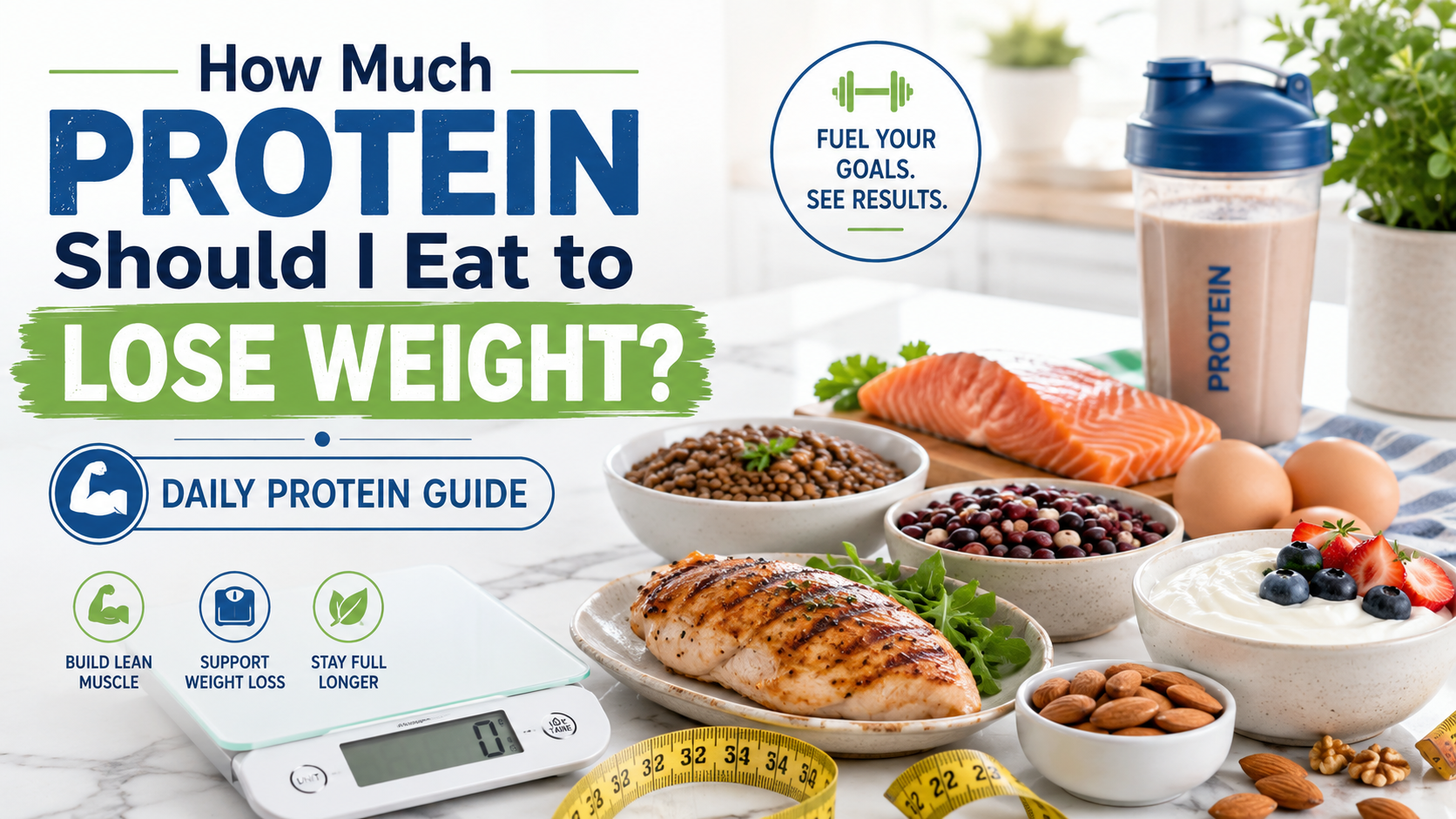
ToggleHow Much Protein Should I Eat to Lose Weight?
Protein is one of the most useful nutrients to focus on when you want to lose weight. It can help you feel fuller, protect lean muscle, and make your meals more satisfying while you stay in a calorie deficit.
For most adults trying to lose weight, a practical target is 1.2 to 1.6 grams of protein per kilogram of body weight per day. People who lift weights, train often, or are already lean may need more. Research on adults with overweight or obesity suggests that higher protein intake can help reduce muscle loss during weight loss, especially when intake is above basic minimum levels.
Protein is important, but it does not replace the need for a calorie deficit. Weight loss still happens when you consistently eat fewer calories than your body uses. Mayo Clinic explains that eating fewer calories than you burn leads to weight loss, although the rate varies by body size, sex, activity level, and other factors.
How Much Protein Should You Eat Per Day to Lose Weight?
Most adults should aim for 1.2 to 1.6 g/kg/day for weight loss, while active people often do well around 1.4 to 2.0 g/kg/day. This range is higher than the basic adult RDA of 0.8 g/kg/day, because weight loss increases the need to protect lean mass.
A simple daily protein guide:
| Person type | Practical protein target | Best for |
|---|---|---|
| Sedentary adult in a calorie deficit | 1.2–1.6 g/kg/day | General weight loss and fullness |
| Active adult | 1.4–2.0 g/kg/day | Fat loss with regular exercise |
| Strength-training adult | 1.6–2.0 g/kg/day | Fat loss with muscle preservation |
| Lean, resistance-trained person in a hard deficit | 2.3–3.1 g/kg fat-free mass/day | Advanced physique goals |
The International Society of Sports Nutrition states that 1.4–2.0 g/kg/day is sufficient for most exercising individuals, and higher intakes may be needed to retain lean body mass during calorie restriction in resistance-trained people.
How Do You Calculate Protein for Weight Loss by Body Weight?
To calculate protein for weight loss, multiply your body weight in kilograms by your chosen protein target. The simplest formula is:
Body weight in kg × protein target = grams of protein per day
Example:
- 70 kg person × 1.6 = 112 g protein per day
- 80 kg person × 1.6 = 128 g protein per day
- 90 kg person × 1.4 = 126 g protein per day
This gives you a clear daily target instead of guessing at each meal.
Should You Use Current Weight or Goal Weight?
Use your current weight if you are near a healthy weight or only moderately overweight. Use goal weight or adjusted body weight if you have a large amount of weight to lose.
This avoids setting an unnecessarily high protein target for someone with obesity. For example, a person who weighs 130 kg but has a goal weight of 90 kg may find a target based on 90 kg easier and more realistic.
A practical method:
- Small weight-loss goal: use current body weight.
- Larger weight-loss goal: use the goal weight.
- Strength training: consider the higher end of the range.
- Medical conditions: ask a doctor or dietitian first.
How Do You Convert Pounds to Kilograms for Protein Targets?
To convert pounds to kilograms, divide your weight in pounds by 2.2.
Example:
- 180 lb ÷ 2.2 = about 82 kg
- 82 kg × 1.6 = about 131 g protein per day
For people who prefer pounds, a rough target is 0.55 to 0.9 grams of protein per pound of body weight, depending on activity level and body composition goals.
How Much Protein Do Sedentary, Active, and Strength-Training Adults Need?
Sedentary adults usually need less protein than active adults, but weight loss still increases the importance of protein quality and consistency. A sedentary adult may start at 1.2 g/kg/day, while someone doing regular resistance training may aim closer to 1.6–2.0 g/kg/day.
Protein needs rise when:
- You are in a calorie deficit.
- You lift weights or do resistance training.
- You are older and want to protect your muscles.
- You have a higher lean body mass.
- You want to lose fat without looking or feeling weak.
A 2024 systematic review and meta-analysis of 47 studies involving 3,218 adults with overweight or obesity found that increased protein intake significantly helped prevent muscle mass decline during weight loss. The review also noted that intake above 1.3 g/kg/day was expected to support muscle mass better than lower intake.
Why Does Protein Help With Weight Loss?
Protein helps weight loss because it supports fullness, muscle preservation, and diet adherence. It does not “melt fat,” but it makes a calorie deficit easier to maintain.
Protein works best when it is part of a balanced plan that includes:
- A moderate calorie deficit
- High-fibre carbohydrates
- Healthy fats
- Strength training
- Enough sleep
- Consistent meal planning
The CDC notes that gradual weight loss of about 1 to 2 pounds per week is more likely to be maintained than faster weight loss.
Does Protein Help You Feel Fuller?
Yes. Protein generally increases satiety more than carbohydrates or fats, which may help people eat fewer calories without feeling as hungry.
This matters because hunger is one of the biggest reasons people struggle to stay consistent. A meal with chicken, beans, tofu, eggs, Greek yoghurt, or fish usually feels more satisfying than a low-protein meal with mostly refined carbohydrates.
A review in The American Journal of Clinical Nutrition reported that protein generally increases satiety more than carbohydrate or fat and may help reduce energy intake when people eat freely.
Does Protein Help Preserve Muscle During Fat Loss?
Yes. Protein helps preserve lean muscle during fat loss, especially when combined with resistance training.
When people lose weight, they often lose a mix of fat, water, and lean tissue. Mayo Clinic notes that weight loss usually includes fat, lean tissue, and water, not fat alone.
Preserving muscle matters because muscle supports strength, function, shape, and long-term weight maintenance. A higher-protein diet does not remove the need to exercise, but it gives your body more amino acids to repair and maintain muscle tissue.
Does Protein Increase Calorie Burn?
Protein has a higher thermic effect than fat and is generally more energy-demanding to digest and process. This means your body uses some calories to break down and metabolise protein.
The effect is helpful but modest. Protein should not be treated as a magic fat burner. Its bigger benefit is that it helps with fullness, muscle preservation, and better meal structure. Research reviews describe higher-protein diets as helpful for thermogenesis and satiety, especially in the short term.
What Are the Best High-Protein Foods for Weight Loss?
The best protein foods for weight loss are high in protein, filling, nutrient-rich, and not too high in added calories. Lean protein sources are usually easier to fit into a calorie deficit.
Good options include:
| Food | Why it helps weight loss |
|---|---|
| Chicken breast or turkey | High protein, low fat when skinless |
| Fish and seafood | Protein plus beneficial nutrients |
| Eggs or egg whites | Easy, affordable, versatile |
| Greek yoghurt | High protein and convenient |
| Cottage cheese | Filling and simple for snacks |
| Lentils and beans | Protein plus fibre |
| Tofu and tempeh | Plant-based protein options |
| Lean beef or pork | Useful in moderation if lean |
| Whey or plant protein powder | Convenient when whole foods are not enough |
USDA MyPlate encourages adults to eat different types of protein foods, including seafood, lean meats, poultry, beans, peas, lentils, nuts, seeds, soy products, and eggs.
For weight loss, the best protein choice is not only about grams. It is also about calories, fibre, sodium, saturated fat, and how well the food fits your routine.
Is Protein Powder Necessary for Weight Loss?
No. Protein powder is not necessary for weight loss. It is only a convenient way to reach your protein target when whole foods are difficult.
Protein powder may help if:
- You skip breakfast and need a quick option.
- You struggle to eat enough protein.
- You train and need an easy post-workout meal.
- You need a portable snack.
- You prefer a controlled protein serving.
Protein powder may not be ideal if:
- It adds too many calories.
- It replaces balanced meals too often.
- It causes digestive discomfort.
- It contains a lot of added sugar.
- It is not third-party tested.
The FDA states that dietary supplements are not approved for safety and effectiveness before they are marketed, so protein powders should be chosen carefully.
How Should You Spread Protein Across the Day?
Most people do better when they spread protein across meals instead of eating most of it at dinner. A practical target is 25 to 40 grams of protein per meal, depending on your daily goal.
Example for a 120 g/day target:
- Breakfast: 30 g
- Lunch: 35 g
- Snack: 20 g
- Dinner: 35 g
This approach can improve fullness during the day and make your target easier to hit. It also helps you build balanced meals instead of relying on one huge high-protein dinner.
What Are Common Protein Mistakes During Weight Loss?
The biggest protein mistake is eating more protein but not controlling total calories. Protein helps with weight loss only when it fits inside a calorie deficit.
Common mistakes include:
- Adding protein shakes on top of normal meals without reducing calories.
- Choosing processed meats often.
- Eating too little fibre from vegetables, fruits, beans, and whole grains.
- Ignoring strength training.
- Setting an unrealistic protein target.
- Eating very high protein but too few carbs and fats.
- Assuming protein alone causes fat loss.
Protein and calorie deficit must work together. A high-protein diet can still cause weight gain if total calorie intake is too high.
Can You Eat Too Much Protein While Trying to Lose Weight?
Yes, protein can be overdone, especially if it crowds out fibre, healthy fats, fruits, vegetables, and whole grains. For healthy adults, moderately high-protein diets are usually well tolerated, but people with kidney disease need medical guidance.
The National Academies list the adult acceptable macronutrient distribution range for protein as 10% to 35% of total energy intake. This means protein should fit within the wider diet, not replace all other nutrients.
Mayo Clinic warns that some high-protein diets restrict carbohydrates so much that fibre and nutrient intake may fall, and that high-protein diets may worsen kidney function in people with kidney disease. It also recommends choosing protein sources such as beans, lentils, fish, skinless chicken, lean meats, low-fat dairy, soy protein, nuts, seeds, and egg whites.
What Is a Simple One-Day Protein Example for Weight Loss?
A simple high-protein day can reach around 120 grams of protein without relying heavily on supplements.
Example:
| Meal | Example | Approx. protein |
|---|---|---|
| Breakfast | Greek yoghurt with berries and oats | 25–30 g |
| Lunch | Chicken salad bowl with beans | 35–40 g |
| Snack | Cottage cheese or protein shake | 20–30 g |
| Dinner | Fish, tofu, or lean meat with vegetables | 30–40 g |
This style works because it includes protein at each meal, fibre-rich foods, and controlled portions.
What Is the Key Takeaway About Protein Intake for Weight Loss?
The key takeaway is simple: most adults trying to lose weight should aim for 1.2 to 1.6 g/kg/day, while active or strength-training adults may need 1.4 to 2.0 g/kg/day.
Protein helps most when it is paired with:
- A realistic calorie deficit
- Resistance training
- Whole-food protein sources
- Enough fibre
- Consistent meal timing
- Sustainable eating habits
Protein is not a shortcut, but it is one of the most useful tools for making fat loss easier and protecting lean muscle.
What Questions Do People Ask About Protein Intake for Weight Loss?
How much protein should I eat to lose weight if I weigh 70 kg?
A good target is 84 to 112 grams per day. This is based on 1.2 to 1.6 g/kg/day for general weight loss.
How much protein should I eat to lose weight if I weigh 180 pounds?
A 180-pound person weighs about 82 kg. A practical target is 98 to 131 grams per day, depending on activity level.
Is 100 grams of protein a day enough for weight loss?
Yes, 100 grams may be enough for many adults, especially those weighing around 60–80 kg. Larger or more active people may need more.
Does protein burn belly fat?
Protein does not target belly fat directly. It supports fat loss by helping with fullness, calorie control, and muscle preservation.
Should I drink protein shakes to lose weight?
Protein shakes are optional. They can help you reach your target, but whole foods should provide most of your protein.
Is too much protein bad for weight loss?
Too much protein can be unhelpful if it adds excess calories or replaces fibre-rich foods. People with kidney disease should follow medical advice.
What is the best protein for weight loss?
The best protein is usually lean, filling, and minimally processed. Good choices include chicken, fish, eggs, Greek yoghurt, cottage cheese, lentils, beans, tofu, and tempeh.
What Is the Bottom Line on Protein Intake for Weight Loss?
The best daily protein intake for weight loss is usually 1.2 to 1.6 grams per kilogram of body weight, with higher needs for active people and strength trainers. Protein helps you stay full, preserve muscle, and follow a calorie deficit more comfortably.
Start with a realistic target, spread protein across meals, choose mostly whole-food sources, and adjust based on progress, hunger, training, and health needs.