
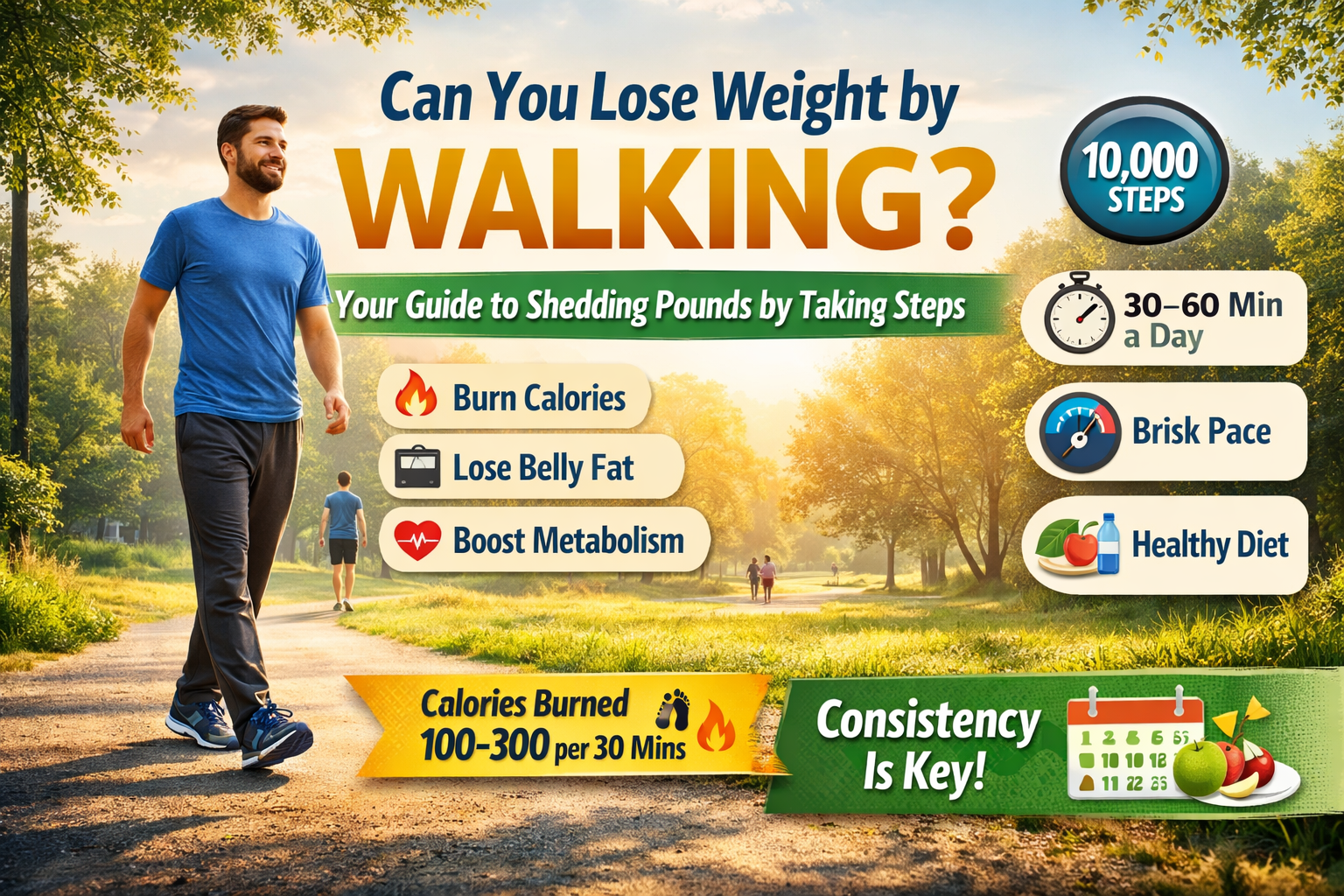
Is It Possible to Lose Weight by Walking?
Yes, it is absolutely possible to lose weight by walking—if it is done consistently and combined with a calorie deficit. Walking burns calories, improves metabolism, and supports fat loss over time.
Walking is one of the simplest, safest, and most sustainable ways to lose weight. Unlike intense workouts, it is accessible to almost everyone and easy to maintain long-term. According to the Centers for Disease Control and Prevention, regular physical activity like walking plays a key role in weight management and overall health.
Can walking alone help you lose weight?
Yes, walking alone can help you lose weight, but results depend on consistency, intensity, and diet.
Walking contributes to weight loss by increasing calorie expenditure. However, if calorie intake remains high, weight loss may be slow or minimal.
Key conditions for success:
- You burn more calories than you consume
- You walk consistently (most days of the week)
- You maintain a moderate pace (brisk walking)
Reality check:
- Walking alone = gradual weight loss
- Walking + diet control = faster results
How does walking lead to fat loss in the body?
Walking leads to fat loss by creating a calorie deficit and improving metabolic efficiency.
When you walk:
- Your body burns calories for energy
- If calorie intake is lower than expenditure → fat stores are used
- Over time, body fat decreases
Does walking create a calorie deficit?
Yes, walking increases daily energy expenditure, which helps create a calorie deficit.
How does walking affect metabolism?
Walking:
- Improves insulin sensitivity
- Supports fat oxidation
- Increases daily energy burn (NEAT)
According to the World Health Organization, regular physical activity reduces body fat and improves metabolic health.
How many calories can walking burn?
Walking can burn between 100 and 300 calories per 30 minutes, depending on speed and body weight.
Approximate calorie burn:
| Weight | Slow Walk (3 km/h) | Brisk Walk (5–6 km/h) |
|---|---|---|
| 60 kg | ~120 kcal | ~180 kcal |
| 75 kg | ~150 kcal | ~220 kcal |
| 90 kg | ~180 kcal | ~260 kcal |
Important factors:
- Body weight
- Walking speed
- Distance
- Terrain (inclines burn more calories)
How much walking is needed to lose weight?
To lose weight, most people need at least 150–300 minutes of walking per week.
The American Heart Association recommends:
- 150 minutes/week for general health
- 300 minutes/week for weight loss
Simple daily targets:
- 30–60 minutes per day
- 8,000–12,000 steps daily
What is the best walking speed for weight loss?
Brisk walking is the most effective speed for weight loss.
Brisk walking means:
- You can talk, but not sing
- Heart rate is moderately elevated
- Speed is around 5–6 km/h
What is brisk walking exactly?
It is walking fast enough to raise your heart rate into the fat-burning zone.
Why it works:
- Burns more calories than slow walking
- Improves cardiovascular fitness
- Increases fat utilization
Is walking better than running for weight loss?
Running burns more calories per minute, but walking is easier to sustain long-term.
| Factor | Walking | Running |
|---|---|---|
| Calories burned | Moderate | High |
| Injury risk | Low | Higher |
| Sustainability | High | Medium |
| Beginner-friendly | Yes | Not always |
Conclusion:
- Walking = best for beginners and consistency
- Running = faster results, but harder to maintain
Can you lose belly fat by walking?
Yes, walking can help reduce belly fat, especially visceral fat.
Walking reduces overall body fat, including abdominal fat. According to research published in Harvard Medical School, moderate-intensity exercise like brisk walking helps reduce harmful visceral fat.
Does walking reduce visceral fat?
Yes, consistent walking:
- Lowers insulin resistance
- Reduces inflammation
- Targets deep abdominal fat
What are the best walking strategies for faster weight loss?
The most effective walking strategies combine intensity, duration, and consistency.
Proven strategies:
- Brisk walking (not slow strolling)
- Interval walking (fast + slow cycles)
- Walking on inclines or stairs
- Walking after meals (improves glucose control)
- Increasing daily steps gradually
What mistakes make walking ineffective for weight loss?
Walking becomes ineffective when it lacks intensity, consistency, or dietary control.
Common mistakes:
- Walking too slowly
- Walking irregularly
- Overeating after walking
- Relying only on step count without intensity
- Not progressing over time
How long does it take to see weight loss results from walking?
Most people start seeing results within 3 to 6 weeks with consistent walking and a proper diet.
Typical timeline:
- Week 1–2: Increased energy, no visible change
- Week 3–4: Slight weight reduction
- Week 5–8: Noticeable fat loss
Weight loss rate:
- Safe target: 0.5–1 kg per week
What role does diet play alongside walking?
Diet is the most important factor in weight loss, even more than exercise.
Walking helps burn calories, but diet controls intake.
Best approach:
- Combine walking with a calorie deficit
- Focus on whole foods
- Reduce sugar and processed foods
Simple rule:
- You cannot outwalk a poor diet
What is a simple weekly walking plan for beginners?
A beginner can follow a gradual plan to build consistency and avoid burnout.
Sample plan:
Week 1–2:
- 20 minutes/day
- Comfortable pace
Week 3–4:
- 30 minutes/day
- Add brisk walking
Week 5+:
- 45–60 minutes/day
- Include intervals
Key Takeaways
- Yes, walking can help you lose weight
- Consistency matters more than intensity alone
- Brisk walking is more effective than slow walking
- Diet plays a critical role
- Results take time but are sustainable
FAQ Section
Is walking 30 minutes a day enough to lose weight?
Yes, 30 minutes daily can support weight loss, especially when combined with a calorie deficit.
How many steps should I walk daily to lose weight?
Aim for 8,000–12,000 steps per day for effective weight loss.
Can walking replace gym workouts?
Yes, for many people, walking can replace gym workouts if done consistently and at the right intensity.
Is walking every day safe?
Yes, walking daily is safe for most people and recommended for overall health.
Does walking slow metabolism?
No, walking actually improves metabolism and supports fat burning.
Should I walk before or after meals?
Walking after meals can help control blood sugar and improve digestion.
Can I lose 5 kg by walking?
Yes, it is possible with consistent walking and a proper diet over several weeks.
Conclusion
Walking is one of the most underrated yet powerful tools for weight loss. It is simple, accessible, and sustainable. When combined with a balanced diet and consistency, walking can help you lose weight, improve your health, and maintain long-term results.