
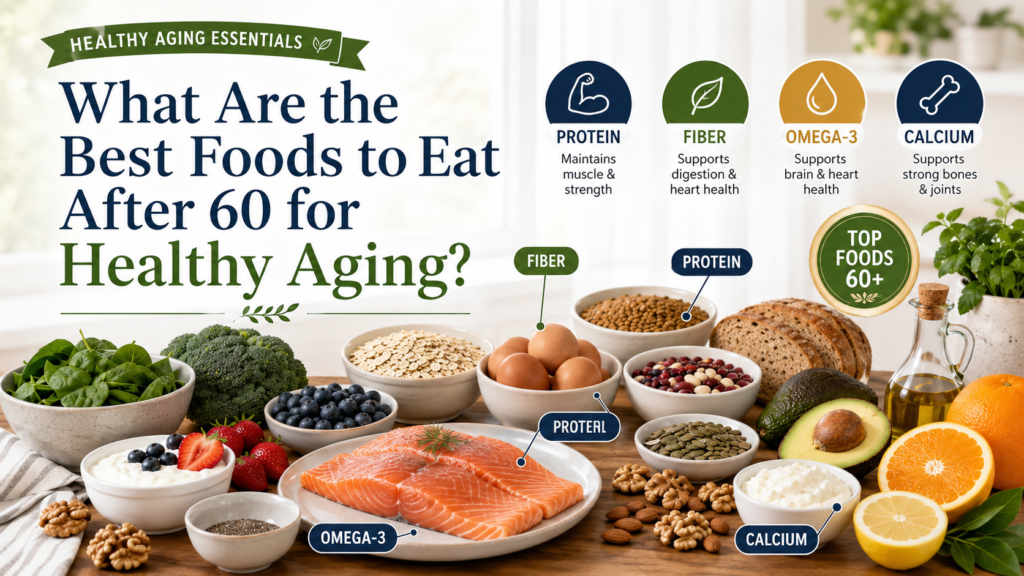
What Are the Best Foods to Eat After 60 for Healthy Aging?
The best foods to eat after 60 are protein-rich foods, colorful vegetables and fruits, beans and lentils, whole grains, nuts and seeds, dairy or fortified alternatives, fatty fish, olive oil, and hydrating foods like soups, yogurt, fruit, and vegetables.
These foods help older adults get more nutrition from fewer calories. That matters because many people need fewer calories as they age, but still need enough protein, vitamin B12, vitamin D, calcium, fiber, healthy fats, minerals, and fluids to maintain strength, mobility, bone health, digestion, heart health, and brain function.
Current U.S. Dietary Guidelines note that some older adults need fewer calories while still needing equal or greater amounts of key nutrients such as protein, vitamin B12, vitamin D, and calcium.
Food choices after 60 should be practical, not perfect. The goal is to build meals that are nutrient-dense, easy to chew, enjoyable, affordable, and realistic for your health conditions, appetite, medications, and lifestyle.
Table of Contents
ToggleWhat is the best overall diet after 60?
The best overall diet after 60 is a nutrient-dense, mostly whole-food eating pattern that includes protein, vegetables, fruits, whole grains, healthy fats, dairy or fortified alternatives, beans, nuts, seeds, seafood, and enough fluids. This pattern supports healthy aging better than focusing on one “superfood.”
The current Dietary Guidelines for Americans emphasize whole, nutrient-dense foods such as protein foods, dairy, vegetables, fruits, healthy fats, and whole grains while reducing highly processed foods, added sugars, excess sodium, unhealthy fats, and refined carbohydrates.
A strong, healthy-aging diet includes:
- Protein foods: fish, eggs, Greek yogurt, cottage cheese, poultry, tofu, lentils, beans, lean meats
- Colorful produce: leafy greens, berries, citrus, tomatoes, carrots, broccoli, peppers
- High-fiber carbohydrates: oats, barley, quinoa, brown rice, whole-grain bread, beans, lentils
- Bone-supporting foods: milk, yogurt, cheese, fortified soy milk, calcium-set tofu, sardines with bones
- Healthy fats: olive oil, avocado, nuts, seeds, fatty fish
- Hydrating foods and drinks: water, milk, tea, soups, smoothies, fruit, vegetables, yogurt
The simplest rule: build most meals around protein + plants + fiber-rich carbohydrates + healthy fat + fluid.
Why do food choices matter more after age 60?
Food choices matter more after 60 because aging can reduce calorie needs, appetite, muscle mass, bone density, thirst sensation, and nutrient absorption. This means each meal needs to deliver more nutrition per bite.
MedlinePlus, which includes information from the National Institute on Aging, notes that older adults may need fewer calories but still need enough nutrients, and some older adults need more protein. It also identifies common barriers such as medication effects, lower income, changes in taste and smell, chewing problems, swallowing problems, and difficulty cooking or feeding oneself.
Good nutrition after 60 can help support:
- Muscle strength and mobility
- Bone density and fracture prevention
- Heart and blood vessel health
- Blood sugar control
- Digestive regularity
- Immune function
- Brain health and daily energy
- Independence and quality of life
This does not mean every older adult needs the same diet. Someone with chronic kidney disease, heart failure, diabetes, swallowing problems, unintentional weight loss, or medication-related appetite changes may need individualized advice from a clinician or registered dietitian.
What are the best protein foods to eat after 60?
The best protein foods after 60 are fish, eggs, Greek yogurt, cottage cheese, poultry, tofu, tempeh, lentils, beans, nuts, seeds, and lean meats. Protein is especially important after 60 because it helps preserve muscle, strength, wound healing, immune function, and physical independence.
Older adults are at higher risk of muscle loss, also called sarcopenia. ESPEN geriatric nutrition guidance recommends at least 1 gram of protein per kilogram of body weight per day for older persons, with individual adjustment based on nutritional status, physical activity, disease status, and tolerance.
The same guidance notes that 1.0–1.2 g/kg/day is often suggested for healthy older people, and higher amounts may be needed during illness, frailty, injury, wounds, or malnutrition.
Best protein foods after 60 include:
| Food | Why does it help after 60 | Easy serving idea |
|---|---|---|
| Greek yogurt | Protein, calcium, and often easy-to-chew | Add berries and oats |
| Eggs | High-quality protein, vitamin B12, and choline | Scramble with spinach |
| Salmon, sardines, trout | Protein plus omega-3 fats | Serve with roasted vegetables |
| Lentils and beans | Protein plus fiber and minerals | Add to soup or salad |
| Tofu or tempeh | Plant protein, versatile texture | Stir-fry with vegetables |
| Cottage cheese | Protein and calcium, soft texture | Pair with fruit |
| Poultry | Lean protein | Add to grain bowls or soups |
| Nuts and seeds | Protein, healthy fats, minerals | Use as snacks or toppings |
How much protein do older adults need?
Most healthy older adults should aim for at least 1.0 gram of protein per kilogram of body weight daily, unless a healthcare professional recommends a different target. For a 70 kg adult, that equals about 70 grams of protein per day.
Protein needs may be higher during illness, recovery, pressure injuries, surgery recovery, frailty, or strength training. Protein intake may need to be moderated in certain kidney conditions, so people with kidney disease should not increase it without medical guidance.
A practical approach is to include protein at each meal:
- Breakfast: 20–30 grams
- Lunch: 20–30 grams
- Dinner: 20–30 grams
- Snacks: 5–15 grams when appetite is low
What are easy high-protein meal ideas after 60?
Easy high-protein meals after 60 include Greek yogurt bowls, egg-and-vegetable scrambles, lentil soup, tuna salad, tofu stir-fry, chicken soup, cottage cheese with fruit, and salmon with vegetables. These meals work well because they combine protein with fiber, vitamins, minerals, and fluid.
Simple ideas:
- Greek yogurt + berries + ground flaxseed
- Oatmeal cooked with milk + peanut butter
- Scrambled eggs + spinach + whole-grain toast
- Lentil soup + side salad
- Tuna or salmon salad + whole-grain crackers
- Cottage cheese + peaches or berries
- Tofu + vegetables + brown rice
- Chicken and vegetable soup
For low appetite, smaller protein-rich meals may work better than three large meals.
What are the best foods for stronger bones after 60?
The best foods for stronger bones after 60 are calcium-rich foods, vitamin D sources, protein foods, and foods that support overall mineral intake. Good choices include yogurt, milk, fortified soy milk, cheese, calcium-set tofu, sardines with bones, leafy greens, eggs, fatty fish, and fortified foods.
Bone health after 60 depends on more than calcium alone. Protein, vitamin D, physical activity, fall prevention, and medical conditions all matter. NIH Office of Dietary Supplements explains that vitamin D promotes calcium absorption and helps maintain bone mineralization; together with calcium, vitamin D helps protect older adults from osteoporosis.
Which foods provide calcium?
The best calcium foods after 60 include dairy foods, fortified plant milks, calcium-set tofu, canned fish with edible bones, and some leafy greens. Calcium helps maintain bones and teeth, but food sources are usually preferred before supplements unless intake is insufficient.
Good calcium sources:
- Milk
- Yogurt
- Cheese
- Fortified soy milk
- Fortified almond or oat milk
- Calcium-set tofu
- Sardines or canned salmon with bones
- Kale, bok choy, collards, and turnip greens
NIH notes that research on calcium and vitamin D supplementation for fractures is mixed, although some trials show calcium plus vitamin D may reduce total and hip fractures in adults over 50. This is why supplementation should be personalized rather than automatic.
Which foods provide vitamin D?
The best vitamin D foods after 60 include fatty fish, fortified milk, fortified plant milk, fortified cereals, egg yolks, and some mushrooms exposed to ultraviolet light. Vitamin D is naturally present in relatively few foods, so fortified foods or supplements may be needed for some older adults.
Good vitamin D sources include:
- Salmon
- Trout
- Sardines
- Tuna
- Fortified milk
- Fortified soy milk
- Fortified cereals
- Egg yolks
- UV-exposed mushrooms
Vitamin D supplements can be useful when blood levels are low or food and sunlight are not enough, but excessive vitamin D from supplements can be harmful. NIH states that vitamin D toxicity is almost always caused by excessive supplement intake and can lead to high calcium levels and serious complications.
Why does vitamin B12 become more important after 60?
Vitamin B12 becomes more important after 60 because many older adults have more trouble absorbing naturally occurring B12 from food. Vitamin B12 supports nerve cells, blood cells, DNA production, and the prevention of megaloblastic anemia.
NIH Office of Dietary Supplements states that B12 deficiency affects between 3% and 43% of older adults, and people over 50 should get most of their B12 from fortified foods or dietary supplements because many older adults do not have enough stomach acid to absorb B12 naturally attached to food protein.
Best B12 sources include:
- Fish
- Meat
- Poultry
- Eggs
- Milk
- Yogurt
- Cheese
- Fortified breakfast cereals
- Fortified nutritional yeast
People taking metformin or acid-reducing medicines should ask a clinician about B12 testing because NIH notes that these medications can interfere with B12 absorption.
What are the best high-fiber foods after 60?
The best high-fiber foods after 60 are beans, lentils, chickpeas, oats, barley, berries, apples, pears, vegetables, nuts, seeds, quinoa, brown rice, and whole-grain bread. Fiber supports bowel regularity, heart health, blood sugar control, fullness, and gut health.
The Administration for Community Living states that 95% of adults do not consume adequate fiber, and fiber is found in plant foods such as fruits, vegetables, whole grains, legumes, nuts, and seeds.
High-fiber foods to prioritize:
- Beans and lentils
- Chickpeas
- Oatmeal
- Barley
- Quinoa
- Broccoli
- Berries
- Apples with skin
- Pears with skin
- Chia seeds
- Ground flaxseed
- Almonds
- Whole-grain bread
- Brown rice
How much fiber do adults over 60 need?
Adults over 60 generally need about 30 grams of fiber per day for men and 21 grams per day for women. These Adequate Intake values apply to adults ages 51–70 and 71+.
A realistic daily fiber plan could look like this:
- Oatmeal at breakfast: 4 grams
- Apple as a snack: 4 grams
- Lentil soup at lunch: 8–12 grams
- Broccoli at dinner: 5 grams
- Whole-grain bread or brown rice: 2–4 grams
That pattern can get many older adults close to the target without relying on fiber supplements.
How can older adults add fiber without digestive discomfort?
Older adults should add fiber gradually and drink enough fluids to reduce bloating, gas, and constipation. A sudden jump from low fiber to very high fiber can cause cramps and digestive discomfort.
Start with one change at a time:
- Add fruit to breakfast.
- Replace white bread with whole-grain bread.
- Add half a cup of beans to the soup.
- Choose oatmeal instead of refined cereal.
- Add cooked vegetables to lunch or dinner.
- Use ground flaxseed or chia seeds in yogurt.
For people with irritable bowel syndrome, inflammatory bowel disease, diverticular complications, recent bowel surgery, or swallowing problems, fiber changes should be personalized.
What are the best foods for heart health after 60?
The best heart-healthy foods after 60 are vegetables, fruits, whole grains, beans, lentils, nuts, seeds, fish, seafood, olive oil, low-fat or fat-free dairy, and lean proteins. These foods support blood pressure, cholesterol, vascular health, and weight management.
The American Heart Association recommends a dietary pattern that includes a wide variety of vegetables and fruits, whole grains, healthy protein sources such as beans, peas, lentils, nuts, fish, seafood, low-fat or fat-free dairy, unsaturated fats, minimally processed foods, less added sugar, lower sodium, and limited alcohol.
Best choices:
- Oats and barley for soluble fiber
- Beans and lentils for fiber and plant protein
- Salmon and sardines for omega-3 fats
- Walnuts and flaxseed for unsaturated fats
- Leafy greens for potassium, magnesium, and nitrates
- Berries and citrus for polyphenols and fiber
- Olive oil instead of butter as the main added fat
- Unsalted nuts instead of chips
Limit heart-stressing choices such as processed meats, frequent fried foods, high-sodium frozen meals, sugary drinks, pastries, and highly processed snack foods.
What are the best foods for brain health after 60?
The best foods for brain health after 60 include leafy greens, berries, fish, nuts, beans, whole grains, olive oil, poultry, and vegetables. These foods appear often in Mediterranean and MIND-style dietary patterns, which are associated with healthier cognitive aging.
The MIND diet emphasizes plant-based foods such as green leafy vegetables, nuts, berries, fish, and other foods common to Mediterranean and DASH-style patterns. A major MIND diet trial described the pattern as emphasizing plant-based foods, including green leafy vegetables, nuts, berries, and fish.
Brain-supporting foods include:
- Spinach, kale, collards, and romaine
- Blueberries, strawberries, and blackberries
- Salmon, sardines, trout, and tuna
- Walnuts, almonds, and pistachios
- Beans and lentils
- Oats, quinoa, brown rice, and whole-grain bread
- Olive oil
- Herbs and spices instead of excess salt
The evidence is strongest for long-term dietary patterns, not single foods. A bowl of blueberries cannot cancel out a poor overall diet. The better target is a repeatable pattern: leafy greens most days, berries several times per week, fish regularly, beans often, whole grains daily, and olive oil as a main fat.
What foods help blood sugar and energy after 60?
The best foods for blood sugar and steady energy after 60 are non-starchy vegetables, lean proteins, beans, lentils, whole grains, fruit with fiber, low-fat dairy, nuts, seeds, and healthy fats. These foods digest more slowly and help reduce large blood sugar swings.
The American Diabetes Association’s plate method recommends filling half of a nine-inch plate with non-starchy vegetables, one-quarter with lean protein, and one-quarter with quality carbohydrates such as starchy vegetables, fruit, whole grains, or low-fat dairy.
Best blood-sugar-friendly foods:
- Broccoli, carrots, greens, peppers, tomatoes, and cauliflower
- Beans, lentils, hummus
- Greek yogurt or plain yogurt
- Oats, barley, quinoa, brown rice
- Apples, berries, oranges, pears
- Eggs, fish, poultry, tofu
- Nuts, seeds, avocado, olive oil
A useful meal formula is:
Half plate non-starchy vegetables + one-quarter protein + one-quarter high-fiber carbohydrate + a small amount of healthy fat.
This approach is useful even for people without diabetes because it supports stable energy, appetite control, and nutrient density.
What hydrating foods and drinks are best after 60?
The best hydrating choices after 60 are water, milk, tea, soups, smoothies, yogurt, fruit, vegetables, and foods with high water content, such as melon, cucumber, lettuce, zucchini, celery, strawberries, and oranges. Hydration matters because older adults may feel less thirsty even when they need fluids.
A health department hydration resource notes that age-related changes can make older people more prone to dehydration and that the thirst sensation may be reduced even in healthy older people.
Hydrating options:
- Water
- Milk or fortified soy milk
- Unsweetened tea
- Broth-based soups
- Smoothies
- Yogurt
- Watermelon
- Cucumber
- Strawberries
- Lettuce
- Zucchini
- Citrus fruits
A 2025 review in Nutrients notes that food contributes to daily fluid intake and that soups, fruit, vegetables, and yogurt can help hydration. It also states that fluid needs vary by body size, activity, weather, medical conditions, and medications, so the old “64 ounces a day” rule is not one-size-fits-all.
People with heart failure, kidney disease, liver disease, or fluid restrictions should follow their clinician’s fluid guidance.
Which foods should people over 60 limit?
People over 60 should limit highly processed foods, sugary drinks, excess sodium, processed meats, frequent fried foods, refined grains, and alcohol. These foods can crowd out protein, fiber, vitamins, minerals, and fluids while worsening blood pressure, blood sugar, weight, heart health, and inflammation.
Foods to limit:
- Sugary drinks
- Candy, pastries, cakes, and sweetened cereals
- Chips and salty snacks
- Processed meats such as bacon, sausage, hot dogs, and deli meats
- Fast-food fried meals
- Frozen meals high in sodium
- Refined white bread and low-fiber crackers
- Alcohol, especially with medications or a fall risk
Limiting these foods does not require perfection. The bigger issue is frequency. Occasional dessert is different from a diet built around low-protein, low-fiber, high-sodium convenience foods.
What is a simple healthy-aging plate after 60?
A simple healthy-aging plate after 60 includes half a plate of vegetables and fruit, one-quarter protein, one-quarter high-fiber carbohydrate, plus a small amount of healthy fat and a hydrating drink. This structure helps cover protein, fiber, vitamins, minerals, and fluids without complicated tracking.
Use this plate:
| Plate section | Best choices after 60 | Why it matters |
|---|---|---|
| Half plate vegetables and fruit | Leafy greens, broccoli, carrots, tomatoes, berries, citrus | Fiber, potassium, antioxidants, hydration |
| One-quarter protein | Fish, eggs, yogurt, poultry, tofu, beans, lentils | Muscle, immune function, strength |
| One-quarter high-fiber carbohydrate | Oats, quinoa, barley, brown rice, whole-grain bread, sweet potato | Energy, digestion, and blood sugar stability |
| Healthy fat | Olive oil, avocado, nuts, seeds | Heart health, flavor, nutrient absorption |
| Fluid | Water, tea, milk, soup, smoothie | Hydration and digestion |
For diabetes, prioritize non-starchy vegetables and quality carbohydrates. For low appetite, increase nutrient density with yogurt, eggs, smoothies, nut butter, olive oil, soups, and smaller frequent meals.
What does a healthy day of eating after 60 look like?
A healthy day of eating after 60 includes protein at each meal, fiber-rich plants, calcium-rich foods, healthy fats, and steady fluids. The exact foods can change based on culture, budget, appetite, chewing ability, and medical needs.
Example day:
Breakfast:
Oatmeal cooked with milk or fortified soy milk, topped with berries, ground flaxseed, and walnuts.
Lunch:
Lentil vegetable soup with a side of Greek yogurt or cottage cheese and fruit.
Snack:
Apple slices with peanut butter, or hummus with soft whole-grain pita.
Dinner:
Salmon or tofu with roasted vegetables, quinoa, olive oil, and a glass of water or unsweetened tea.
Evening option if appetite is low:
Plain yogurt, a boiled egg, a smoothie, or a small bowl of soup.
This kind of day works because it covers multiple healthy-aging targets at once: protein, fiber, calcium, vitamin D if fortified foods or fatty fish are included, B12 if animal or fortified foods are included, omega-3 fats, antioxidants, and hydration.
What common mistakes should older adults avoid?
The biggest mistake after 60 is eating too little protein, fiber, and nutrient-dense food while relying too heavily on tea, toast, sweets, refined snacks, or convenience meals. That pattern can leave calories high or low, but nutrients insufficient.
Common mistakes include:
- Eating toast or cereal for breakfast with little protein
- Skipping meals because the appetite is low
- Avoiding all fats instead of choosing healthy fats
- Eating too few vegetables because of chewing difficulty
- Drinking too little because thirst is reduced
- Depending on supplements while the overall diet stays poor
- Choosing processed “senior-friendly” foods that are soft but low in nutrients
- Increasing fiber too quickly without fluids
- Ignoring unintentional weight loss
- Not adjusting diet for diabetes, kidney disease, heart failure, swallowing problems, or medications
A better approach is to make each meal do more work. Add protein, add plants, add fluid, and choose foods that are easy to prepare and enjoyable enough to repeat.
What is the key takeaway about the best foods after 60?
The key takeaway is that the best foods after 60 are nutrient-dense whole foods that protect muscle, bones, heart, digestion, blood sugar, hydration, and brain health. The priority foods are protein foods, vegetables, fruits, legumes, whole grains, dairy or fortified alternatives, fatty fish, nuts, seeds, olive oil, and fluids.
A strong, healthy-aging diet is not extreme. It is consistent.
Eat protein at every meal. Eat colorful plants daily. Choose fiber-rich carbohydrates. Include calcium, vitamin D, and B12 sources. Drink before thirst becomes intense. Limit ultra-processed foods. Adapt the plan to medical needs.
What questions do people ask about the best foods after 60?
What is the number one food to eat after 60?
There is no single number one food after 60. The best choice is a pattern that includes protein, vegetables, fruits, whole grains, beans, healthy fats, dairy or fortified alternatives, and enough fluids.
Are eggs good for people over 60?
Yes, eggs can be a good food after 60 because they provide high-quality protein, vitamin B12, choline, and other nutrients. People with specific cholesterol or heart disease concerns should follow their clinician’s advice.
Is milk good after 60?
Milk can be useful after 60 because it provides protein, calcium, and often vitamin D. Fortified soy milk can be a good alternative for people who do not drink dairy.
What foods help maintain muscle after 60?
Protein-rich foods help maintain muscle after 60. Good options include fish, eggs, Greek yogurt, cottage cheese, poultry, tofu, beans, lentils, lean meats, nuts, and seeds.
What foods should older adults eat for constipation?
Older adults with constipation should often increase fiber-rich foods such as beans, lentils, oats, vegetables, fruits, whole grains, nuts, and seeds while also drinking enough fluids. Fiber should be increased gradually.
What foods are best for brain health after 60?
Brain-supportive foods include leafy greens, berries, fish, nuts, beans, whole grains, olive oil, and vegetables. These foods are common in Mediterranean and MIND-style eating patterns.
Should people over 60 take supplements?
Some people over 60 may need supplements, especially for vitamin D, vitamin B12, or calcium when intake or absorption is insufficient. Supplements should be personalized because excessive intake or medication interactions can be harmful.
What is the easiest healthy meal for someone over 60?
One easy, healthy meal is lentil soup with vegetables, Greek yogurt, fruit, and water or tea. It provides protein, fiber, fluid, calcium, and several vitamins and minerals in a simple format.