
What Is a Calorie Deficit and How Does It Help You Lose Weight?
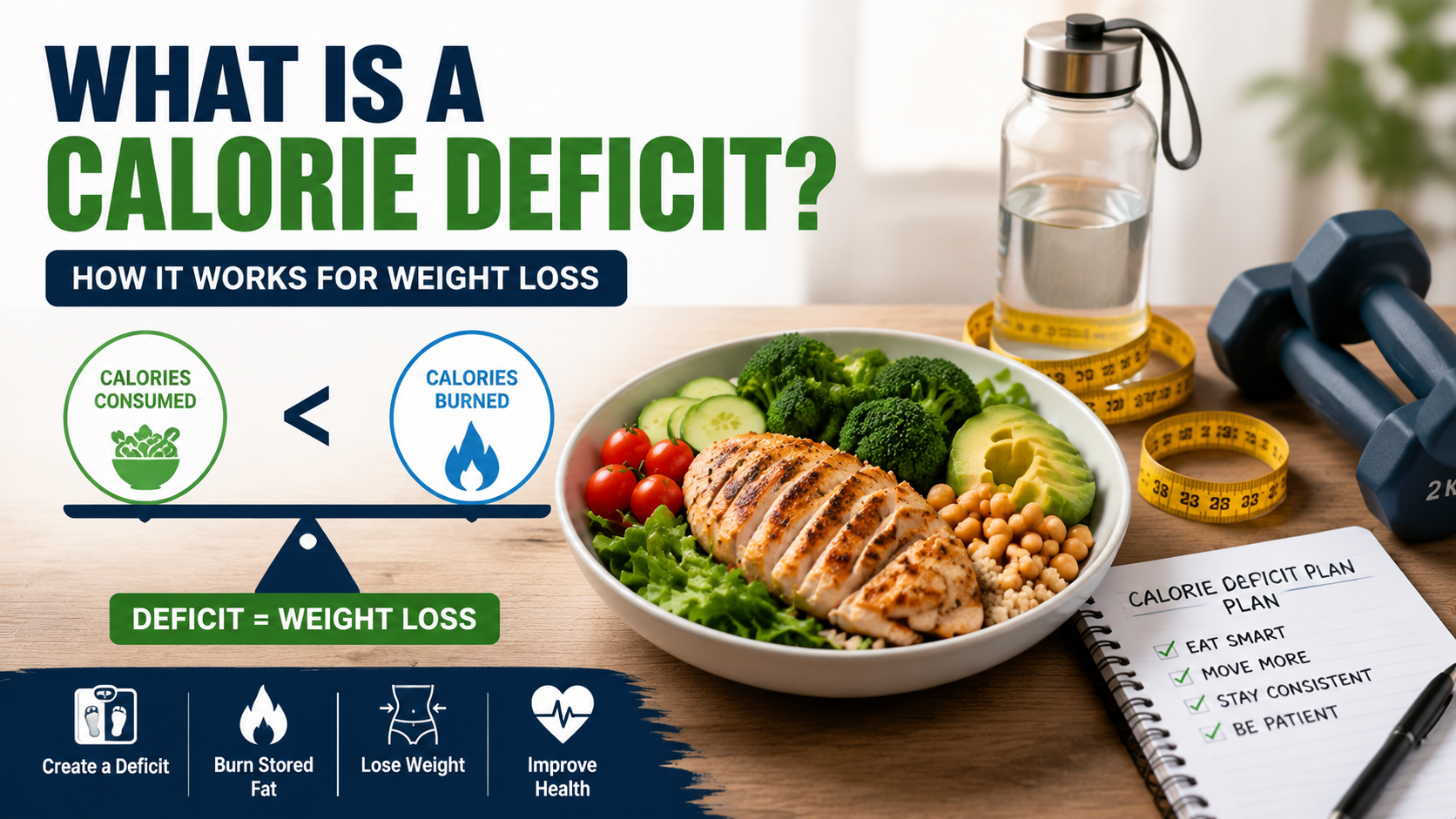
A calorie deficit means your body is using more calories for energy than you consume from food and drinks. When this happens consistently over time, your body uses stored energy, including stored fat, which can lead to weight loss.
In simple terms:
Calorie deficit = Calories burned > Calories consumed
For example, if your body needs 2,200 calories per day to maintain your current weight but you eat 1,700 calories, you have created a 500-calorie deficit.
A calorie deficit is one of the most widely used approaches for weight loss because it directly affects the body’s energy balance. However, creating a deficit does not mean simply eating as little as possible. A healthy calorie deficit should provide enough nutrients to support energy, muscle, hormones, and overall health.
What Is a Calorie Deficit?
A calorie deficit is a condition where you consume fewer calories than your body needs to maintain its current weight. The difference between your calorie intake and your calorie expenditure creates an energy shortage that encourages the body to use stored energy.
Your body needs calories for:
- Breathing
- Digestion
- Movement
- Exercise
- Brain function
- Organ function
- Maintaining body temperature
Food provides these calories through three main macronutrients:
| Macronutrient | Calories per gram | Main Function |
|---|---|---|
| Protein | 4 calories | Builds and repairs tissues |
| Carbohydrates | 4 calories | Provides energy |
| Fat | 9 calories | Supports hormones and energy storage |
A calorie deficit happens when your daily calorie intake is lower than your total energy needs.
How Does a Calorie Deficit Work Inside the Body?
A calorie deficit works by forcing the body to use stored energy when food intake does not provide enough calories to meet daily demands.
Your body normally gets energy from the food you eat. When fewer calories are available, the body begins accessing stored energy sources.
This process may involve:
- Breaking down stored body fat
- Using stored glycogen from carbohydrates
- Adjusting energy expenditure
For healthy fat loss, the goal is to create a deficit that encourages the body to use fat stores while preserving muscle mass.
Factors that influence how your body responds include:
- Protein intake
- Resistance training
- Sleep quality
- Hormonal health
- Starting body composition
- Size of the calorie deficit
Why Does a Calorie Deficit Lead to Weight Loss?
A calorie deficit leads to weight loss because the body must use stored energy when calorie intake is lower than energy expenditure.
Over time:
- You eat fewer calories than your body uses.
- Your body needs additional energy.
- Stored energy is released.
- Body weight decreases.
However, weight loss is not always only fat loss. A person can lose:
- Fat tissue
- Water weight
- Glycogen stores
- Sometimes muscle tissue
This is why a balanced approach is important. Maintaining adequate protein intake and including strength training can help protect muscle during weight loss.
How Does Energy Balance Affect Body Weight?
Energy balance describes the relationship between the calories you consume and the calories your body uses.
Three possible energy states influence your body weight:
| Energy Balance | Meaning | Possible Result |
|---|---|---|
| Calorie surplus | Eating more calories than burned | Weight gain |
| Calorie maintenance | Eating the same calories as burned | Stable weight |
| Calorie deficit | Eating fewer calories than burned | Weight loss |
What Happens When You Eat More Calories Than You Burn?
Eating more calories than your body uses creates a calorie surplus.
A calorie surplus means:
Calories consumed > Calories burned
The extra energy can be stored as:
- Body fat
- Glycogen
- Other energy reserves
A consistent calorie surplus over time can lead to weight gain.
What Happens When You Eat Fewer Calories Than You Burn?
Eating fewer calories than your body uses creates a calorie deficit.
A calorie deficit may result in:
- Reduced body weight
- Reduced fat stores
- Changes in body composition
The size and consistency of the deficit matter.
A small, sustainable deficit is often easier to maintain than a very aggressive approach.
How Do You Calculate a Calorie Deficit?
A calorie deficit is calculated by first estimating how many calories your body needs each day and then reducing that amount.
The basic process:
- Calculate your maintenance calories.
- Reduce calories by a reasonable amount.
- Monitor progress.
- Adjust if needed.
Your daily calorie needs depend on:
- Age
- Height
- Weight
- Sex
- Activity level
- Muscle mass
What Is Basal Metabolic Rate (BMR)?
Basal metabolic rate (BMR) is the number of calories your body needs at complete rest to maintain essential functions.
BMR supports:
- Breathing
- Blood circulation
- Brain activity
- Cell production
- Organ function
Even without exercise, your body burns calories every day.
A person with more muscle mass generally has a higher BMR because muscle tissue requires more energy to maintain.
What Is Total Daily Energy Expenditure (TDEE)?
Total daily energy expenditure (TDEE) is the total number of calories your body burns in a day.
TDEE includes:
Basal Metabolic Rate
Calories needed for basic survival functions.
Physical Activity
Calories burned through:
- Exercise
- Walking
- Daily movement
Thermic Effect of Food
Energy is used during the digestion and processing of food.
A simplified formula:
TDEE = BMR + Activity + Digestion Energy
Your calorie deficit is created by eating below your TDEE.
How Many Calories Should You Cut Each Day?
A common approach is to reduce daily intake by around 10–20% below maintenance calories.
For many adults, this may create a moderate deficit that supports gradual weight loss.
Example:
If maintenance calories are:
2,000 calories/day
A moderate deficit may be:
1,600–1,800 calories/day
The ideal deficit depends on:
- Current weight
- Health goals
- Activity level
- Medical conditions
- Lifestyle preferences
What Is the Best Calorie Deficit for Healthy Weight Loss?
The best calorie deficit is one that is effective but sustainable. A moderate calorie reduction is usually easier to maintain because it allows enough food for proper nutrition and energy.
A good calorie deficit should help you:
- Lose fat gradually
- Maintain muscle
- Avoid extreme hunger
- Continue normal activities
Is a 500-Calorie Deficit Safe?
A 500-calorie daily deficit is commonly used as a general example because it can create gradual weight loss over time.
However, the appropriate deficit varies from person to person.
A 500-calorie reduction may not be suitable for:
- Very active individuals
- Older adults with specific health needs
- People with certain medical conditions
- Individuals recovering from illness
A personalized approach is often better.
Why Are Extreme Calorie Deficits Risky?
Very large calorie deficits may cause problems because the body may not receive enough energy or nutrients.
Potential concerns include:
- Increased hunger
- Low energy
- Poor workout performance
- Nutrient deficiencies
- Difficulty maintaining results
- Increased risk of muscle loss
Healthy weight loss focuses on improving body composition, not simply reducing scale weight.
What Foods Should You Eat During a Calorie Deficit?
The best foods during a calorie deficit are nutrient-dense foods that provide vitamins, minerals, fiber, and protein while keeping calories controlled.
A successful calorie deficit is not only about eating less. It is also about choosing better foods.
Good choices include:
- Lean proteins
- Vegetables
- Fruits
- Whole grains
- Legumes
- Healthy fats
Why Is Protein Important During Weight Loss?
Protein is important during weight loss because it helps maintain muscle tissue and increases feelings of fullness.
Protein supports:
- Muscle repair
- Recovery after exercise
- Healthy body composition
- Appetite control
High-protein foods include:
- Chicken
- Fish
- Eggs
- Greek yogurt
- Cottage cheese
- Beans
- Lentils
- Tofu
Including protein at each meal can make a calorie deficit easier to follow.
Which Foods Help You Feel Full With Fewer Calories?
Foods that provide volume, fiber, and protein can help control hunger during a calorie deficit.
Examples:
| Food | Why It Helps |
|---|---|
| Vegetables | High volume, low calories |
| Fruits | Fiber and natural sweetness |
| Beans | Protein plus fiber |
| Oatmeal | Slow-digesting carbohydrates |
| Greek yogurt | Protein-rich snack |
| Lean meat | High protein |
A plate filled with vegetables and protein is often more satisfying than a smaller portion of highly processed foods.
Can You Lose Weight With a Calorie Deficit Without Exercise?
Yes, you can lose weight with a calorie deficit without exercise because weight loss is primarily driven by the difference between calories consumed and calories burned. However, adding physical activity can improve results by supporting muscle retention, fitness, and overall health.
A calorie deficit created through diet alone can reduce body weight, but exercise provides additional benefits:
- Helps preserve muscle mass
- Improves strength and mobility
- Supports heart health
- Increases daily calorie expenditure
- Improves mood and energy levels
The best approach for many people is combining a moderate calorie deficit with regular movement.
How Does Strength Training Help During Fat Loss?
Strength training helps during fat loss by encouraging the body to maintain muscle while reducing body fat.
When people lose weight, especially through aggressive dieting, some weight loss may come from muscle tissue. Resistance training sends a signal to the body that muscle is still needed.
Benefits of strength training during a calorie deficit include:
- Maintaining lean muscle
- Improving body shape and composition
- Supporting metabolism
- Increasing physical strength
- Improving bone health
Examples of strength exercises:
- Weight lifting
- Resistance band exercises
- Bodyweight movements
- Squats
- Push-ups
- Lunges
Even two to three strength sessions per week can support healthier weight management for many adults.
What Are Common Calorie Deficit Mistakes?
Many people struggle with calorie deficits because they focus only on eating fewer calories instead of creating a balanced approach.
Common mistakes include:
Eating Too Few Calories
A very aggressive calorie deficit may seem faster, but it can make weight loss harder to maintain.
Possible problems:
- Constant hunger
- Low energy
- Reduced exercise performance
- Increased cravings
- Difficulty staying consistent
A sustainable calorie deficit usually works better over time.
Ignoring Protein Intake
Reducing calories without eating enough protein can make it harder to maintain muscle.
Low protein intake may contribute to:
- Increased muscle loss
- Less satisfaction after meals
- Poor recovery after exercise
A balanced calorie deficit should include adequate protein sources.
Underestimating Liquid Calories
Many people forget that drinks can contribute significant calories.
Examples:
- Sugary coffee drinks
- Soft drinks
- Sweetened juices
- Alcoholic beverages
Choosing:
- Water
- Unsweetened tea
- Low-calorie beverages
can make maintaining a deficit easier.
Overestimating Exercise Calories
Fitness trackers and machines may estimate calories burned, but these numbers are not always exact.
A common mistake is:
“I exercised, so I can eat much more.”
Exercise supports health, but food intake still plays a major role in creating a calorie deficit.
Following an Unsustainable Diet
A diet that is extremely restrictive may work temporarily, but it often becomes difficult to maintain.
Examples:
- Eliminating entire food groups unnecessarily
- Extreme fasting without guidance
- Very low-calorie plans
Long-term success usually comes from habits that fit your lifestyle.
How Long Does It Take to See Results From a Calorie Deficit?
Results from a calorie deficit depend on factors such as the size of the deficit, starting weight, activity level, and consistency.
Some people notice changes within a few weeks, while others experience slower progress.
Factors affecting results include:
- Starting body weight
- Daily calorie intake
- Protein intake
- Exercise routine
- Sleep quality
- Stress levels
- Water retention
Weight loss is not always linear. Daily changes on the scale may happen because of:
- Water fluctuations
- Food volume
- Hormonal changes
- Sodium intake
A better way to measure progress includes:
- Weekly weight trends
- Body measurements
- Clothing fit
- Strength improvements
- Energy levels
What Is a Healthy Rate of Weight Loss?
A healthy rate of weight loss is generally gradual and sustainable rather than extremely rapid.
Many health organizations, including the Centers for Disease Control and Prevention (CDC), recommend gradual weight loss because it is more likely to be maintained.
A sustainable approach focuses on:
- Moderate calorie reduction
- Balanced nutrition
- Regular activity
- Long-term habits
The goal is not only to lose weight but also to maintain a healthier body composition.
How Can You Maintain Muscle While in a Calorie Deficit?
Maintaining muscle during weight loss requires a combination of proper nutrition and training.
Important strategies include:
Eat Enough Protein
Include protein sources throughout the day:
- Eggs
- Fish
- Chicken
- Greek yogurt
- Beans
- Lentils
Perform Resistance Training
Strength exercises help tell your body to preserve muscle tissue.
Avoid Extreme Dieting
A very large calorie deficit increases the risk of losing muscle instead of mainly losing fat.
Get Enough Sleep
Sleep supports:
- Recovery
- Hormone regulation
- Energy levels
- Exercise performance
What Is the Difference Between Weight Loss and Fat Loss?
Weight loss and fat loss are related but not the same.
Weight loss means a decrease in total body weight.
This can include:
- Fat
- Water
- Muscle
- Glycogen
Fat loss specifically refers to reducing stored body fat.
A successful calorie deficit plan focuses on maximizing fat loss while protecting muscle.
| Goal | Main Focus |
|---|---|
| Weight loss | Lower number on the scale |
| Fat loss | Reduce body fat while maintaining muscle |
| Healthy body composition | Improve the ratio of muscle to fat |
What Happens When You Stop a Calorie Deficit?
When you stop a calorie deficit, your body moves toward a maintenance calorie level where calories consumed match calories burned.
A successful transition involves:
- Slowly increasing calories if needed
- Continuing healthy habits
- Maintaining protein intake
- Staying physically active
Many people regain weight because they return to old eating habits rather than maintaining a balanced lifestyle.
Key Takeaways: Understanding Calorie Deficits
A calorie deficit is one of the most important concepts in weight management.
Remember:
- A calorie deficit means eating fewer calories than your body uses.
- The body uses stored energy when calorie intake is lower than energy needs.
- A moderate deficit is usually easier to maintain than an extreme restriction.
- Protein and strength training help protect muscle during weight loss.
- Healthy foods make a calorie deficit easier to follow.
- Long-term consistency matters more than short-term perfection.
A successful calorie deficit is not about starving yourself. It is about creating a sustainable balance between nutrition, activity, and your personal goals.
Frequently Asked Questions About Calorie Deficits
What is the simplest definition of a calorie deficit?
A calorie deficit means your body burns more calories than you consume. This causes the body to use stored energy, which can lead to weight loss.
How do I know if I am in a calorie deficit?
You are likely in a calorie deficit when your average calorie intake is lower than your estimated daily energy needs and your body weight gradually decreases over time.
How many calories should I eat in a deficit?
The ideal calorie intake depends on your age, body size, activity level, health goals, and metabolism. Many people start with a moderate reduction from their maintenance calories.
Does a calorie deficit always burn fat?
A calorie deficit encourages the body to use stored energy, but weight loss can include fat, water, and sometimes muscle. Protein intake and strength training help support fat loss.
Can I build muscle while in a calorie deficit?
Yes, some people can build or maintain muscle during a calorie deficit, especially beginners, people returning to training, or those with adequate protein and strength training.
Is a calorie deficit necessary for weight loss?
A calorie deficit is required for weight loss because the body must use more energy than it receives over time.
Why am I not losing weight in a calorie deficit?
Possible reasons include:
- The calorie intake is higher than estimated
- Portion sizes are underestimated
- Water retention is masking progress
- The deficit is inconsistent
- Metabolic adaptation has occurred
Is a calorie deficit safe for everyone?
A calorie deficit can be appropriate for many adults, but people with medical conditions, eating disorders, pregnancy, or specific health concerns should seek professional guidance before making major dietary changes.
Conclusion
A calorie deficit is a simple but powerful concept: when your body uses more energy than you consume, it begins using stored energy to meet its needs.
However, successful weight loss is not just about eating fewer calories. The best results come from combining a reasonable calorie deficit with nutritious foods, enough protein, regular movement, strength training, and sustainable habits.
Understanding how calorie deficits work allows you to make informed decisions and create a weight-loss approach that supports your health for the long term.
Sources & References
- National Institutes of Health (NIH): https://www.nih.gov/
- Centers for Disease Control and Prevention (CDC) – Healthy Weight: https://www.cdc.gov/healthy-weight-growth/
- USDA Dietary Guidelines: https://www.dietaryguidelines.gov/
- Harvard T.H. Chan School of Public Health – Nutrition Source: https://nutritionsource.hsph.harvard.edu/
- National Academy of Sports Medicine (NASM): https://www.nasm.org/