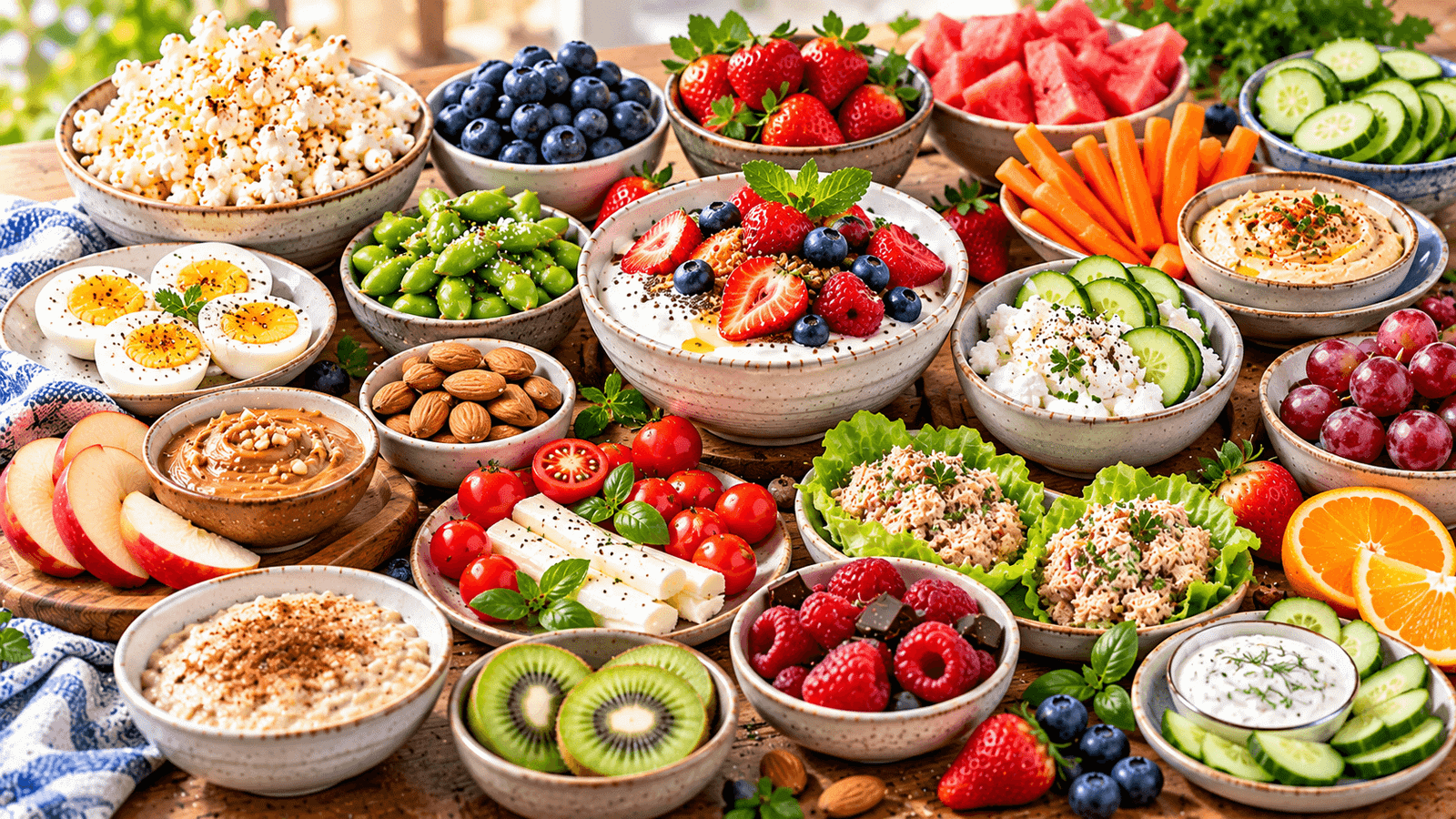
21 Best Low-Calorie Snacks That Are Actually Delicious and Satisfying
1. Greek Yogurt With Fresh Strawberries
Calories: Approximately 110 | Serving: 150g plain nonfat Greek yogurt + 60g strawberries
Thick, creamy Greek yogurt topped with juicy strawberries feels almost like dessert, especially when the berries are naturally sweet.
What makes this combination particularly appealing is its protein content. Greek yogurt provides a substantial amount of protein for relatively few calories, while strawberries add vitamin C, fiber, and refreshing sweetness.
Try adding a little cinnamon or vanilla extract for extra flavor without much additional energy.
2. Air-Popped Popcorn
Calories: Approximately 93 | Serving: 3 cups, without butter or oil
Few snacks deliver the same satisfying crunch as a big bowl of freshly popped popcorn.
Because air-popped popcorn is a whole grain, it provides fiber and plenty of volume without requiring a large calorie budget. Three cups make a surprisingly generous portion.
For a savory twist, sprinkle it with smoked paprika, garlic powder, or nutritional yeast. Skip the heavy butter coating if you’re trying to keep the calories low.
3. Hard-Boiled Eggs
Calories: Approximately 78 | Serving: 1 large egg
A hard-boiled egg is one of the simplest protein-rich snacks you can prepare ahead of time.
Each large egg provides roughly 6 grams of protein, along with choline, a nutrient involved in normal brain and nervous system function.
The firm white and creamy yolk make it satisfying on its own. Add black pepper, paprika, or a pinch of salt for flavor.
4. Watermelon Cubes
Calories: Approximately 46 | Serving: 1 cup diced
Cold, juicy watermelon is especially refreshing when you’re craving something sweet on a warm afternoon.
Its high water content helps make a full cup relatively low in calories. Watermelon also provides vitamin C and the red plant pigment lycopene.
Chill it before serving, or add a squeeze of fresh lime for a brighter flavor.
5. Cottage Cheese With Cucumber
Calories: Approximately 105 | Serving: ½ cup 1%-fat cottage cheese + 100g cucumber
Creamy cottage cheese and crisp cucumber create a refreshing contrast of textures.
Cottage cheese provides protein, while cucumber contributes water and crunch. Together, they make a savory snack that requires almost no preparation.
Finish with cracked black pepper, fresh dill, and a little lemon juice for a light, tangy flavor.
6. Fresh Blueberries
Calories: Approximately 84 | Serving: 1 cup
Blueberries are naturally sweet, juicy, and easy to enjoy straight from the refrigerator.
A cup provides fiber, vitamin K, and anthocyanins—the plant compounds responsible for their deep blue-purple color.
For a more substantial snack, pair a smaller portion of blueberries with plain yogurt. Frozen blueberries also work beautifully when fresh berries aren’t available.
7. Apple Slices With Peanut Butter
Calories: Approximately 110 | Serving: 1 small apple + 1 teaspoon peanut butter
The combination of crisp apple slices and smooth peanut butter never seems to get old.
Apples provide fiber and natural sweetness, while peanut butter contributes a little protein and unsaturated fat. Even a small amount of peanut butter adds rich, nutty flavor.
Spread the peanut butter thinly across the slices or use it as a dip. Measure the portion, since peanut butter is calorie-dense.
8. Steamed Edamame
Calories: Approximately 121 | Serving: 100g cooked, shelled edamame
Tender, slightly nutty edamame is a delicious option when you want something savory.
These young soybeans contain plant-based protein and fiber, making them particularly useful for a more substantial snack.
Serve them warm with a pinch of sea salt, chili flakes, or lemon juice. Frozen edamame makes this snack convenient to prepare in minutes.
9. Baby Carrots With Hummus
Calories: Approximately 110 | Serving: 100g baby carrots + 2 tablespoons hummus
Crunchy carrots dipped into creamy hummus offer a satisfying combination of sweetness, savory flavor, and texture.
Carrots provide beta-carotene, which the body can convert into vitamin A, while hummus contributes fiber and some protein from chickpeas.
Choose a hummus you enjoy, and check its label—calories can vary depending on the amount of tahini and oil.
10. Mozzarella String Cheese With Cherry Tomatoes
Calories: Approximately 100 | Serving: 1 part-skim string cheese stick + 100g cherry tomatoes
This colorful snack tastes a little like a miniature caprese salad.
Part-skim mozzarella provides protein and calcium, while juicy cherry tomatoes add vitamin C and bright, refreshing flavor.
Enjoy them separately, or slice the cheese and toss everything together with fresh basil and black pepper.
11. Kiwi Fruit
Calories: Approximately 45 | Serving: 1 medium kiwi, about 75g edible portion
Kiwi offers a bright, tangy sweetness that makes it an excellent alternative to sugary treats.
Its vibrant green flesh provides vitamin C and fiber, while the tiny black seeds add a subtle crunch.
Cut a kiwi in half and scoop it out with a spoon. It’s simple, refreshing, and requires almost no preparation.
12. Almonds
Calories: Approximately 87 | Serving: 15g, about 12–13 almonds
Almonds may be small, but their crunchy texture and rich flavor make a modest portion enjoyable.
They provide unsaturated fats, vitamin E, some protein, and fiber. Because nuts are calorie-dense, a measured serving is more useful than eating directly from a large bag.
Pair almonds with unsweetened tea or coffee for an easy afternoon snack.
13. Orange Slices
Calories: Approximately 62 | Serving: 1 medium orange
A fresh orange delivers natural sweetness with a refreshing burst of citrus flavor.
Oranges are rich in vitamin C and contain fiber, particularly when you eat the whole fruit rather than drink the juice.
Peel and separate the segments, or refrigerate them for an extra-refreshing snack.
14. Tuna Lettuce Cups
Calories: Approximately 100 | Serving: 80g drained canned light tuna in water + 40g lettuce
If you’re craving something savory and protein-rich, tuna lettuce cups are worth trying.
Flaky tuna provides lean protein, while crisp lettuce leaves create a refreshing alternative to bread or crackers.
Mix the tuna with lemon juice, black pepper, and a little mustard before spooning it into lettuce leaves. Choose canned light tuna and follow FDA advice on fish consumption.
15. Frozen Grapes
Calories: Approximately 104 | Serving: 150g seedless grapes
Frozen grapes are a surprisingly enjoyable alternative to candy-like frozen treats.
Their naturally sweet flavor becomes especially refreshing when served icy cold, and their firm texture encourages slower snacking.
Wash, dry, and freeze grapes in a single layer before transferring them to a freezer-safe container.
Serve them whole only to people who can safely manage them; whole grapes are a choking hazard for young children.
16. Plain Oatmeal With Cinnamon
Calories: Approximately 80 | Serving: 20g dry rolled oats cooked in water
Warm oatmeal isn’t just for breakfast.
A small bowl of rolled oats provides whole-grain carbohydrates and beta-glucan, a type of soluble fiber.
Cinnamon adds a naturally warm, comforting flavor without requiring added sugar. For extra sweetness, add a few fresh berries while keeping the overall portion in mind.
17. Celery Sticks With Peanut Butter
Calories: Approximately 110 | Serving: 100g celery + 1 tablespoon peanut butter
Celery’s refreshing crunch pairs beautifully with creamy peanut butter.
The celery provides water and volume, while the peanut butter adds richness and some protein. It’s a simple snack that feels more interesting than either ingredient alone.
Spread the peanut butter into the celery grooves for easy, bite-sized pieces.
18. Roasted Chickpeas
Calories: Approximately 110–125 | Serving: 60g cooked chickpeas, roasted without added oil
Crispy roasted chickpeas are a flavorful alternative when you’re craving something crunchy and salty.
Chickpeas contain plant-based protein and fiber, and roasting gives them a pleasantly firm texture.
Toss cooked, drained chickpeas with smoked paprika, cumin, and garlic powder. Roast until crisp. If you add oil, include its calories in the total.
19. Raspberries With Dark Chocolate
Calories: Approximately 95 | Serving: 100g raspberries + 8g dark chocolate
This snack feels indulgent without requiring a large portion.
Raspberries are naturally tart and particularly rich in fiber, while a small piece of dark chocolate provides a satisfying cocoa flavor.
Enjoy the berries with a few finely chopped chocolate pieces sprinkled over them. It’s a simple way to satisfy a chocolate craving while enjoying fresh fruit.
20. Cucumber Slices With Tzatziki
Calories: Approximately 60–90 | Serving: 150g cucumber + 50g prepared tzatziki
Cool cucumber slices and creamy tzatziki make an especially refreshing savory snack.
Tzatziki typically combines yogurt, cucumber, garlic, and herbs, giving it a tangy flavor that pairs beautifully with crunchy vegetables.
For the lightest version, prepare it using plain nonfat Greek yogurt. Store-bought versions vary in calories, so check the label.
21. Strawberries With Light Whipped Cream
Calories: Approximately 70–90 | Serving: 150g strawberries + 2 tablespoons light whipped cream
Sometimes you want something that feels like dessert, and strawberries with whipped cream deliver exactly that.
The berries bring natural sweetness, vibrant color, and vitamin C, while a small swirl of whipped cream adds a soft, creamy finish.
Serve in a chilled glass bowl for a dessert-like presentation. Keep the whipped cream portion modest, since calories vary by product.
Quick Calorie Comparison: 21 Low-Calorie Snacks
| Snack | Approximate calories |
|---|---|
| Greek yogurt with strawberries | 110 |
| Air-popped popcorn | 93 |
| Hard-boiled egg | 78 |
| Watermelon | 46 |
| Cottage cheese with cucumber | 105 |
| Blueberries | 84 |
| Apple with peanut butter | 110 |
| Edamame | 121 |
| Carrots with hummus | 110 |
| String cheese with tomatoes | 100 |
| Kiwi | 45 |
| Almonds | 87 |
| Orange | 62 |
| Tuna lettuce cups | 100 |
| Frozen grapes | 104 |
| Oatmeal with cinnamon | 80 |
| Celery with peanut butter | 110 |
| Roasted chickpeas | 110–125 |
| Raspberries with dark chocolate | 95 |
| Cucumber with tzatziki | 60–90 |
| Strawberries with whipped cream | 70–90 |
Nutrition note: These are estimated calories for the serving sizes described above, not universal values. Exact amounts vary with food size, brand, ingredients, and preparation method.
What Makes a Low-Calorie Snack Filling?
A snack’s calorie count tells only part of the story.
Some foods provide plenty of volume for relatively few calories, while others contain nutrients that can help you feel satisfied between meals.
Three factors are especially useful when choosing snacks:
Protein: Foods such as Greek yogurt, eggs, cottage cheese, tuna, and edamame provide protein, which can contribute to fullness.
Fiber: Fruits, vegetables, whole grains, chickpeas, and nuts provide fiber that supports digestion and can help you feel satisfied.
Water content: Water-rich foods such as watermelon, cucumber, strawberries, and oranges provide refreshing volume without many calories.
Combining these characteristics often creates a more satisfying snack than relying on low calories alone.
Are Low-Calorie Snacks Good for Weight Loss?
Low-calorie snacks can fit into a weight-loss eating plan, but they don’t automatically cause weight loss.
Overall energy intake, dietary quality, portion sizes, and individual needs matter more than whether one snack is low in calories.
For example, replacing a large bag of chips with air-popped popcorn or pairing fruit with Greek yogurt may help some people manage their daily intake while enjoying satisfying foods.
However, eating too little can leave you hungry and make it harder to meet your nutritional needs. A snack with more than 150 calories can still be a healthy choice.
Frequently Asked Questions
What are the best low-calorie snacks?
Greek yogurt, hard-boiled eggs, air-popped popcorn, berries, cottage cheese, carrots with hummus, and edamame are excellent choices. The best option depends on whether you want something sweet, savory, crunchy, or protein-rich.
What snacks are under 100 calories?
Examples include one hard-boiled egg, three cups of plain air-popped popcorn, one cup of blueberries, one medium orange, a cup of watermelon, or a measured portion of almonds.
What is the most filling low-calorie snack?
Protein-rich options such as Greek yogurt, cottage cheese, eggs, and edamame can be especially satisfying. Fiber-rich foods such as popcorn and berries are also useful choices.
Can I eat low-calorie snacks at night?
Yes. The time you eat a snack does not automatically make it unhealthy. Consider your hunger, daily nutritional needs, and whether eating close to bedtime affects your sleep or digestion.
Are low-calorie snacks always healthy?
No. A snack can be low in calories but still offer little nutritional value. Look beyond the calorie count and consider protein, fiber, vitamins, minerals, sodium, and added sugar.
The Bottom Line
Low-calorie snacking doesn’t have to mean sacrificing flavor or satisfaction.
Fresh fruit, crunchy vegetables, protein-rich dairy, eggs, legumes, and whole grains offer plenty of delicious possibilities. Some are naturally sweet, others are savory, and many take only minutes to prepare.
The smartest approach is to choose snacks you genuinely enjoy, pay attention to serving sizes, and focus on nutritional quality rather than calories alone.
References
USDA FoodData Central – Food composition and nutritional information. View Source
Centers for Disease Control and Prevention (CDC) – Healthy meals, snacks, and nutritious food choices. Read More
MedlinePlus – Healthy snack ideas and the importance of protein, fiber, and portion sizes. Read More
U.S. Food and Drug Administration (FDA) – Understanding calories and serving sizes on food labels. Read More
Mayo Clinic Health System – Practical guidance for choosing nutrient-dense snacks. Read More