
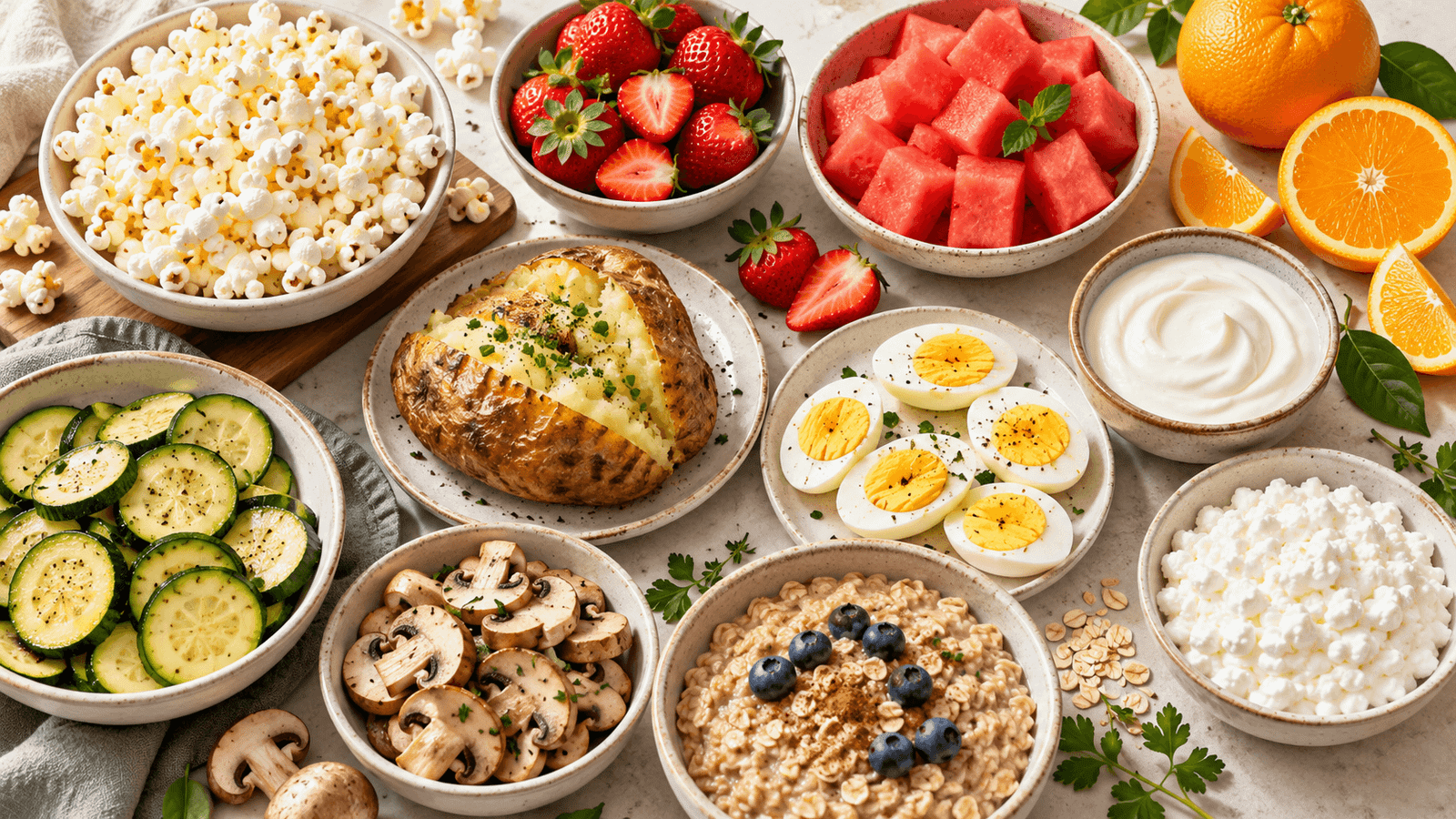
11 Everyday Foods That Are Surprisingly Low in Calories (Even Potatoes!)
A medium baked potato has about 161 calories. Three cups of plain air-popped popcorn have just 93 calories. And a creamy, protein-rich serving of nonfat Greek yogurt? Around 100 calories.
Surprising, right?
Some foods have a reputation for being heavy or fattening, but their actual calorie counts tell a different story. Others are so familiar that we overlook how easily they can fit into a balanced eating plan.
Here are 11 everyday foods that offer more than you might expect for their calories, along with simple ways to enjoy them without turning a light snack into a calorie-heavy meal.
1. Baked Potatoes: About 161 Calories per Medium Potato
Potatoes often get blamed for weight gain, but a plain baked potato is very different from a serving of French fries.
A medium baked potato with its skin, weighing approximately 173 grams, contains about 161 calories. It also provides potassium, carbohydrates for energy, and nearly 4 grams of fiber.
The real difference often comes down to preparation.
A potato baked without oil is relatively modest in calories for its size. Cover that same potato in butter, cheese, bacon, and sour cream, and the total can climb quickly.
Try this: Bake a potato with its skin on, then top it with plain Greek yogurt, chopped green onions, and black pepper. Add a side of vegetables and a source of protein for a more complete meal.
Worth knowing: Potatoes aren’t automatically high-calorie foods. Their portion size, cooking method, and toppings matter.
2. Air-Popped Popcorn: Just 31 Calories per Cup
Popcorn might seem like an indulgent movie-night snack, but plain air-popped popcorn is surprisingly light.
One cup contains approximately 31 calories, meaning you can enjoy three cups for around 93 calories before adding toppings.
Popcorn is also a whole grain and contains dietary fiber, making it a useful option when you’re craving something crunchy.
There’s a catch, though.
Movie theater popcorn, buttery microwave varieties, and caramel-coated popcorn can have dramatically different calorie counts.
Try this: Make popcorn in an air popper and season it with smoked paprika, garlic powder, cinnamon, or your favorite salt-free seasoning blend.
Worth knowing: Three cups of air-popped popcorn can be a satisfying, higher-volume alternative to a small serving of many calorie-dense crunchy snacks.
3. Plain Nonfat Greek Yogurt: Around 100 Calories per Container
Greek yogurt tastes rich and creamy, so it’s easy to assume it must be high in calories.
Yet a typical 170-gram serving of plain nonfat Greek yogurt contains approximately 100 calories and 17 grams of protein.
That protein is especially useful because it helps support muscle maintenance and contributes to feeling satisfied after eating.
Greek yogurt also works in both sweet and savory dishes.
Try this: Mix plain Greek yogurt with strawberries and cinnamon for a simple breakfast or afternoon snack. For a savory option, combine it with lemon juice, garlic, and herbs to make a creamy dip.
Worth knowing: Plain nonfat Greek yogurt and sweetened, flavored yogurt can have very different calorie and added-sugar amounts. Check the label before buying.
4. Eggs: About 72 Calories Each
An egg is one of the simplest foods you can keep in your kitchen.
One large egg contains approximately 72 calories and 6 grams of protein, along with nutrients such as choline and vitamin B12.
For something so versatile, that’s a relatively modest amount of energy.
Eggs can be boiled, poached, scrambled, or cooked into an omelet. But the preparation method changes the calorie total.
A hard-boiled egg needs no added cooking fat, while eggs scrambled with generous amounts of butter, cheese, or cream can become a much heavier meal.
Try this: Keep a few hard-boiled eggs refrigerated for convenient snacks, or make a vegetable omelet with mushrooms, spinach, and tomatoes.
Worth knowing: One egg is a light protein-containing food, but whether it’s enough for a satisfying snack depends on your appetite and what else you eat.
Very Interesting Topic : 13 Types of Vitamins and Their Functions: Complete Guide
5. Strawberries: About 53 Calories per Cup
Strawberries taste wonderfully sweet, yet a cup of sliced strawberries contains only about 53 calories.
That serving also provides vitamin C and dietary fiber.
Their natural sweetness makes them especially useful when you want something refreshing after a meal.
Unlike many prepared desserts, plain strawberries come without added syrups, frosting, or sweeteners.
Try this: Slice strawberries over plain yogurt, add them to oatmeal, or refrigerate them for a naturally sweet afternoon treat.
You can also combine sliced strawberries with a little fresh mint for a quick fruit bowl.
Worth knowing: Fresh and unsweetened frozen strawberries are both useful options. Strawberries packed in sugary syrup have additional calories.
6. Low-Fat Cottage Cheese: About 92 Calories per Half Cup
Cottage cheese doesn’t always get the attention that Greek yogurt does, but it deserves a place on this list.
A half-cup serving of cottage cheese made with 2% milk fat contains approximately 92 calories and nearly 12 grams of protein.
Its mild flavor makes it easy to use in different meals, while its protein content makes it a practical snack ingredient.
Try this: Pair cottage cheese with chopped tomatoes and black pepper for a savory snack. Prefer something sweet? Add sliced peaches or strawberries.
You can also spread it on whole-grain toast for a more substantial breakfast.
Worth knowing: Cottage cheese can contain a considerable amount of sodium. Compare brands and choose a lower-sodium variety if needed.
7. Watermelon: About 46 Calories per Cup
Watermelon tastes almost like a summer dessert, but one cup of diced watermelon contains approximately 46 calories.
The reason is simple: watermelon is more than 90% water.
That high water content makes it refreshing and gives it substantial volume for relatively few calories.
Watermelon also contains vitamin C and lycopene, a naturally occurring plant pigment.
Try this: Serve chilled watermelon cubes with fresh mint and a squeeze of lime, or add them to a salad with cucumber.
If you want a snack with more protein, pair the watermelon with plain Greek yogurt.
Worth knowing: Watermelon contains natural sugar, but that doesn’t make it equivalent to candy or sweetened beverages. Serving size and overall nutritional content matter.
8. Mushrooms: Just 15 Calories per Cup
Mushrooms have a savory, almost meaty flavor that can make dishes feel more substantial.
Yet one cup of sliced, raw white mushrooms contains approximately 15 calories.
They also provide nutrients such as potassium and certain B vitamins.
Because mushrooms bring depth of flavor without many calories, they’re useful for increasing the volume of familiar meals.
Try this: Add sliced mushrooms to omelets, soups, pasta sauces, or stir-fries.
You can also mix finely chopped mushrooms into ground turkey or beef dishes to increase vegetable content while keeping the familiar texture.
Worth knowing: The 15-calorie estimate is for raw mushrooms. Cooking them in butter or oil adds calories, and mushrooms shrink substantially during cooking.
9. Cooked Oatmeal: About 83 Calories per Half Cup
Oatmeal is often associated with a hearty breakfast, so its calorie count may come as a pleasant surprise.
A half-cup of plain oatmeal cooked with water contains approximately 83 calories.
Oats provide carbohydrates for energy and dietary fiber, including beta-glucan, a type of soluble fiber.
But there’s one important detail that can completely change how you count the calories.
Half a cup of dry oats is not the same as half a cup of cooked oatmeal.
Half a cup of dry oats typically contains around 150 calories. Once cooked, the oats absorb water and expand, but the water itself doesn’t add calories.
Try this: Prepare oatmeal with water and flavor it with cinnamon and strawberries. For a more complete breakfast, pair it with yogurt or another protein source.
Worth knowing: Measure oats consistently—either dry before cooking or cooked afterward—to avoid mixing up the serving sizes.
10. Zucchini: About 27 Calories per Cup
Zucchini is one of those vegetables that quietly makes meals bigger without adding much energy.
One cup of sliced zucchini that has been boiled and drained without added fat contains approximately 27 calories.
It has a mild flavor and a high water content, making it easy to combine with other ingredients.
Try this: Add zucchini to vegetable soups, omelets, or homemade pasta sauces.
You can also spiralize zucchini into noodles and mix them with regular pasta. This helps increase the vegetable portion without requiring you to give up pasta altogether.
Worth knowing: Zucchini absorbs flavors well, but added oil, cheese, cream sauces, and dressings can significantly change the total calories.
11. Oranges: About 62 Calories per Medium Fruit
Oranges taste sweet and juicy, which can make them seem more calorie-dense than they really are.
A medium orange weighing around 131 grams contains approximately 62 calories.
It also provides vitamin C, water, and about 3 grams of dietary fiber.
That makes a whole orange a convenient snack that requires almost no preparation.
Try this: Keep oranges on hand for work breaks, pack one with lunch, or add fresh orange segments to a fruit salad.
For a more filling snack, pair an orange with a boiled egg or a serving of plain yogurt.
Worth knowing: Eating a whole orange gives you fiber that is largely missing from orange juice. Juice is easier to consume quickly in larger quantities.
The Surprising Difference Between Low-Calorie Foods and Low-Calorie Meals
Here’s something worth remembering: A food can be naturally low in calories without the finished meal being low in calories.
A few everyday additions can make a significant difference:
Cooking fats: Butter and cooking oil add calories even when the main ingredient is a vegetable.
Dressings and sauces: Creamy dressings, sweet glazes, and rich sauces can change the total considerably.
Sweetened dairy products: Plain yogurt and flavored yogurt don’t necessarily have similar nutrition labels.
Portion sizes: Two cups of something will generally contain twice the calories of one cup when prepared the same way.
Preparation methods: A baked potato and French fries are not nutritionally identical preparations.
That doesn’t mean you need to avoid toppings or cooking fats. Healthy fats are an important part of a balanced diet. The goal is to understand what goes into your meals rather than focusing on one ingredient alone.
Which Low-Calorie Food Should You Choose?
The best choice depends on what you’re actually hungry for.
| If you’re craving… | Try this |
|---|---|
| Something crunchy | Air-popped popcorn |
| Something sweet | Strawberries or watermelon |
| A creamy snack | Plain Greek yogurt |
| A protein-rich snack | Eggs or cottage cheese |
| A warm breakfast | Oatmeal |
| Something savory | Mushrooms with eggs |
| A substantial side dish | A plain baked potato |
| A refreshing grab-and-go snack | An orange |
This is where these foods become genuinely useful. Rather than following rigid food rules, you can match your choice to your appetite, preferences, and nutritional needs.
How to Make Low-Calorie Foods More Satisfying
Choosing foods solely because they’re low in calories can leave you unsatisfied.
A better approach is to combine foods that offer different nutrients and textures.
For example:
Greek yogurt + strawberries: Combines protein with natural sweetness and fiber.
Boiled egg + orange: Offers protein alongside fruit, fiber, and vitamin C.
Baked potato + mushrooms + cottage cheese: Creates a more substantial meal with carbohydrates, vegetables, and protein.
Oatmeal + Greek yogurt + berries: Brings together whole grains, protein, and fruit.
These combinations are not magic weight-loss formulas. They’re simply practical ways to make balanced eating more satisfying.
According to the Centers for Disease Control and Prevention (CDC), replacing some higher-calorie ingredients with vegetables and fruits can help lower the energy content of meals without necessarily reducing food volume.
The key word is replacing. Adding low-calorie foods on top of everything you already eat doesn’t automatically reduce your overall calorie intake.
Frequently Asked Questions
Are potatoes good for weight loss?
Potatoes can fit into a weight-management eating plan. A plain medium baked potato has around 161 calories, but frying, adding large quantities of toppings, and eating oversized portions can substantially increase the calorie content. Overall eating patterns and energy intake matter more than any one food.
What low-calorie foods are also high in protein?
Plain nonfat Greek yogurt, eggs, and low-fat cottage cheese provide meaningful amounts of protein for their serving sizes. They can be useful ingredients when building satisfying meals and snacks.
Can you eat low-calorie foods every day?
Yes. Many low-calorie foods, especially fruits and vegetables, can be part of a healthy everyday diet. However, your body also needs adequate energy, protein, healthy fats, and other essential nutrients. Eating fewer calories is not always better.
Are low-calorie foods always healthy?
Not necessarily. Calories measure energy, not overall nutritional quality. A food can be low in calories but offer few essential nutrients, while higher-calorie foods such as nuts, olive oil, and avocados can contribute valuable nutrition.
Which foods contain the fewest calories?
Among the foods on this list, sliced raw white mushrooms and sliced cooked zucchini contain particularly few calories per specified cup serving. However, comparisons depend on serving weight, water content, and preparation.
The Bottom Line
Eating well doesn’t have to mean giving up the foods you enjoy.
A baked potato can be a perfectly reasonable side dish. Popcorn can make a crunchy snack. Greek yogurt can provide substantial protein without a large calorie count. And naturally sweet fruits such as strawberries, oranges, and watermelon can easily fit into everyday meals.
The biggest lesson isn’t that you should always choose the food with the fewest calories.
It’s that understanding portions, preparation methods, and nutritional value can help you make better food choices without unnecessary restrictions.
Nutrition note: Calorie counts are approximate and based on the stated serving sizes and preparation methods. Actual values can vary by food variety, brand, portion, and added ingredients.
Sources and References
USDA FoodData Central — Reference database for food composition and calorie information.
USDA SNAP-Ed: Strawberries — Strawberry serving size and nutritional information.
CDC: Tips for Increasing Vegetables and Fruits in Your Diet — Evidence-based guidance on food substitutions, fiber, and weight management.
CDC: Healthy Eating for a Healthy Weight — Guidance on nutritious, balanced eating patterns.
NC State Cooperative Extension: Watermelon Nutrition Facts — Watermelon nutrients and serving-size information.
This article is intended for general nutrition education and is not a substitute for individualized medical or dietary advice.





ARTICLE REVIEWED BY
Alex John
Nutritionist
Alex John is a nutritionist who provides practical guidance on balanced eating, walking, exercise, simple workouts, weight management, and natural ways to develop healthier daily habits.






2 Responses