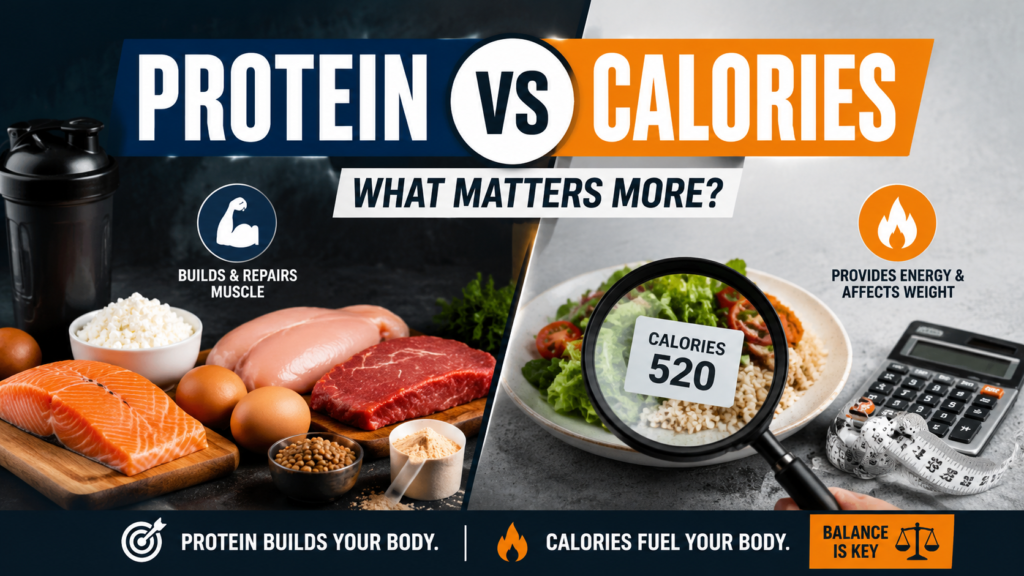
When people try to improve their health, lose weight, or build muscle, they often ask the same question: “Should I focus more on protein or calories?”
The answer depends on your goal, but the most important thing to understand is this:
Calories determine whether your body gains, loses, or maintains weight, while protein determines how well your body maintains muscle, controls hunger, and changes body composition.
Protein and calories are not competing factors. They work together. A person can eat plenty of protein but still gain weight if they consume more calories than their body needs. Similarly, a person can lose weight by reducing calories, but lose muscle if they do not consume enough protein.
Understanding the difference between protein and calories helps you create a diet that supports fat loss, muscle growth, healthy aging, and long-term wellness.
Protein vs Calories Comparison Table: Which Matters More?
| Category | Protein | Calories |
|---|---|---|
| Main purpose | Provides amino acids | Provides energy |
| Biggest impact | Muscle and body composition | Weight change |
| Important for | Muscle repair and maintenance | Fat loss or weight gain |
| During weight loss | Helps preserve muscle | Creates fat-loss deficit |
| During muscle gain | Supports growth | Provides growth energy |
| Measurement | Grams per day | Total daily energy intake |
| Does it work alone? | No | No |
What Matters More: Protein or Calories?
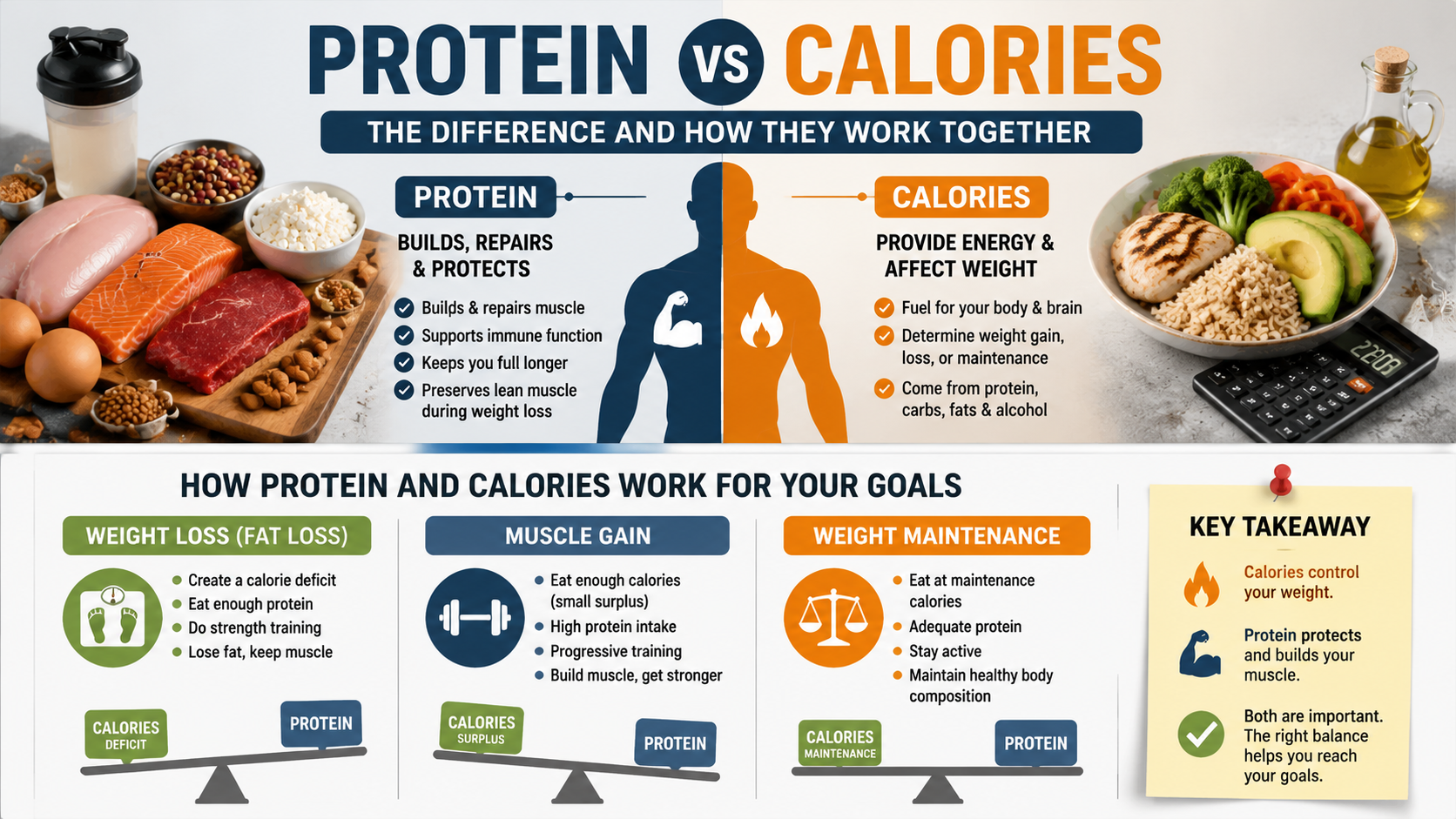
Calories matter more for changing body weight, while protein matters more for protecting and building muscle. The most effective nutrition approach considers both.
Calories provide the energy your body uses every day. If you consume fewer calories than you burn, your body usually loses weight. If you consume more calories than you burn, your body usually gains weight.
Protein provides amino acids, which are the building blocks your body uses for:
- Muscle repair
- Muscle growth
- Tissue maintenance
- Enzyme production
- Hormone production
- Immune function
The importance of each depends on the goal:
| Goal | More Important Factor | Why |
|---|---|---|
| Fat loss | Calories first, protein second | A calorie deficit reduces body fat, while protein helps preserve muscle |
| Muscle gain | Protein + calories | Muscle growth requires enough protein, energy, and resistance training |
| Weight maintenance | Balance of both | Adequate calories and protein support a healthy body composition |
| Healthy aging | Protein becomes increasingly important | Helps maintain muscle and strength |
The best approach is not choosing one over the other. It is understanding what each does.
Why Do Calories Control Weight Change?
Calories control weight change because they represent the amount of energy entering your body compared with the energy your body uses.
Your body constantly burns energy for:
- Breathing
- Heart function
- Brain activity
- Digestion
- Physical movement
- Exercise
- Daily activities
This total energy use is called total daily energy expenditure (TDEE).
Your body weight generally responds to the relationship between:
Calories consumed → Calories burned → Weight change
What Happens When You Eat Fewer Calories Than You Burn?
When you consume fewer calories than your body needs, you create a calorie deficit.
A calorie deficit forces the body to use stored energy, including stored body fat.
For example:
- Your body needs: 2,000 calories per day
- You eat: 1,700 calories per day
- Deficit: 300 calories
Over time, this energy difference can lead to weight loss.
However, the quality of that weight loss depends on other factors, especially protein intake and physical activity.
What Happens When You Eat More Calories Than You Burn?
When calorie intake exceeds energy needs, the body stores the extra energy.
This can lead to:
- Weight gain
- Increased body fat
- Increased body size
Even if those calories come from healthy foods, excess energy can still contribute to weight gain.
For example:
Eating:
- Nuts
- Avocado
- Olive oil
- Whole grains
- Protein-rich foods
can support health, but large amounts can still increase total calorie intake.
Healthy foods still contain calories.
Why Does Protein Affect Body Composition?
Protein affects body composition because it helps the body maintain lean muscle tissue while losing fat or building strength.
Body composition refers to what your body is made of:
- Fat mass
- Muscle mass
- Bone tissue
- Water
- Other tissues
Two people can weigh the same but have completely different body compositions.
Example:
Person A:
- 160 pounds
- Higher muscle mass
- Lower body fat
Person B:
- 160 pounds
- Lower muscle mass
- Higher body fat
The scale shows the same number, but their health and appearance may be very different.
How Does Protein Help the Body?
Protein supports several important functions:
1. Protein Supports Muscle Maintenance
Muscle tissue constantly breaks down and rebuilds.
This process is called muscle protein synthesis.
Adequate protein provides the amino acids needed for repair and growth.
This becomes especially important during:
- Weight loss
- Aging
- Strength training
- Recovery after exercise
2. Protein Helps Control Hunger
Protein is often more filling than carbohydrates or fats.
Higher protein meals may help people:
- Feel satisfied longer
- Reduce unnecessary snacking
- Maintain better appetite control
This is one reason high-protein diets are commonly used in weight management.
3. Protein Requires More Energy to Digest
The body uses energy to digest and process food.
Protein has a higher thermic effect of food (TEF) compared with carbohydrates and fats.
This means the body uses more energy processing protein.
However, this does not mean protein alone causes major weight loss. Total calorie balance still matters.
How Do Protein and Calories Work Differently in the Body?
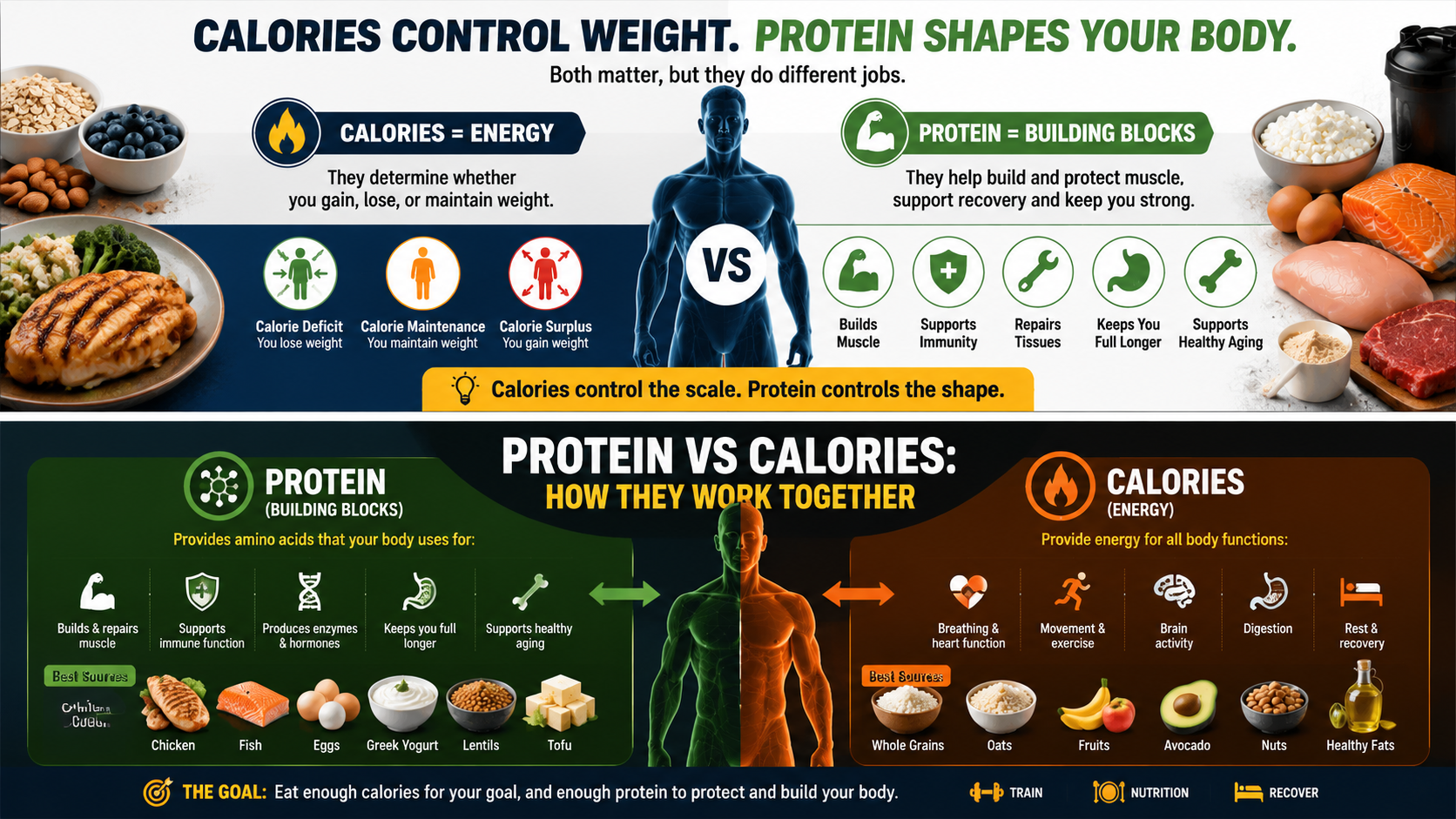
Calories provide energy, while protein provides the building materials needed for repair, growth, and maintaining lean tissue.
Think of calories as the body’s fuel and protein as the materials needed to maintain the structure.
A simple comparison:
| Protein | Calories |
|---|---|
| Provides amino acids | Provides energy |
| Helps build and maintain muscle | Determines energy balance |
| Supports recovery | Influences weight change |
| Improves fullness | Comes from protein, carbohydrates, fats, and alcohol |
| Important for body composition | Important for body weight |
Both are essential, but they solve different problems.
What Does Protein Do Beyond Building Muscle?
Protein supports many body functions beyond muscle growth, including immune health, tissue repair, and hormone production.
Many people associate protein only with bodybuilding, but protein is required by every human body.
Protein helps produce:
- Enzymes that control chemical reactions
- Antibodies that support immunity
- Collagen-related structures
- Transport proteins
- Hormones and signaling molecules
A diet extremely low in protein can affect:
- Muscle strength
- Recovery ability
- Physical function
- Overall health
What Role Do Calories Play in Energy Balance?
Calories determine whether the body has enough energy for daily activities and whether weight changes occur over time.
The body needs calories for survival and daily functioning.
Calories come mainly from:
Protein
- 4 calories per gram
Carbohydrates
- 4 calories per gram
Fat
- 9 calories per gram
Alcohol
- 7 calories per gram
The amount and combination of these nutrients determine total calorie intake.
Is Protein More Important Than Calories for Weight Loss?
For weight loss, calories are the primary factor because a calorie deficit is required to reduce body weight. Protein is important because it helps preserve muscle and improve fullness during the process.
A person cannot lose body fat without using less energy than they consume over time.
However, focusing only on calories can create problems.
For example:
A very low-calorie diet with insufficient protein may cause:
- Muscle loss
- Increased hunger
- Lower strength
- Poor workout performance
A better fat-loss strategy combines:
- Moderate calorie deficit
- Adequate protein intake
- Strength training
- Balanced nutrition
Why Does a Calorie Deficit Cause Fat Loss?
A calorie deficit reduces the amount of available energy from food.
When energy intake is lower than energy needs, the body uses stored energy.
This stored energy can come from:
- Body fat
- Stored carbohydrates
- Some muscle tissue
The goal during fat loss is to maximize fat loss while minimizing muscle loss.
That is where protein becomes important.
How Does Protein Help Preserve Muscle During Weight Loss?
During weight loss, the body does not automatically lose only fat.
Without enough protein and resistance training, some weight loss can come from muscle.
Protein helps by:
- Providing amino acids
- Supporting muscle repair
- Reducing muscle breakdown
- Improving recovery from exercise
Research from nutrition and sports science organizations generally supports higher protein intake during weight loss periods, especially for people doing resistance training.
Is Protein More Important Than Calories for Building Muscle?
For building muscle, protein and calories are both essential. Protein provides the building blocks for muscle growth, while calories provide the energy needed to support training and recovery.
Many people believe that eating more protein alone will automatically build muscle. However, muscle growth requires a combination of:
- Adequate protein intake
- Enough total calories
- Progressive resistance training
- Proper recovery
- Consistent habits
Protein without enough energy may limit muscle growth because the body needs fuel to perform exercise and repair tissues.
Why Is Protein Necessary for Muscle Growth?
Protein is necessary for muscle growth because muscles require amino acids to repair and rebuild after exercise.
During resistance training, muscles experience small amounts of damage. The body responds by repairing these tissues and making them stronger.
This process requires:
- Protein intake
- Mechanical tension from exercise
- Recovery time
- Adequate energy
Important amino acids include:
- Leucine
- Isoleucine
- Valine
These are known as branched-chain amino acids (BCAAs), which play a role in stimulating muscle protein synthesis.
Why Are Extra Calories Sometimes Needed to Gain Muscle?
Extra calories can support muscle growth because building new tissue requires additional energy.
A calorie surplus may help people gain muscle more efficiently, especially:
- Beginners starting strength training
- Athletes
- People focused on increasing muscle size
However, excessive calorie intake can lead to unnecessary fat gain.
A controlled surplus is usually more effective than overeating.
Example:
A person trying to gain muscle may increase daily intake slightly above maintenance rather than consuming hundreds of extra calories from unhealthy foods.
Should You Track Protein or Calories First?
The best thing to track depends on your goal. People trying to lose weight should usually focus on calories first while ensuring enough protein, while people trying to build muscle should focus on both protein and total energy intake.
There is no single nutrition rule that works for everyone.
Your priority changes based on your goal.
When Should You Prioritize Calories?
You should prioritize calories when your main goal is:
Fat Loss
Focus on:
- Creating a sustainable calorie deficit
- Eating enough protein
- Maintaining physical activity
Weight Maintenance
Focus on:
- Matching calorie intake with energy needs
- Eating balanced meals
Managing Body Weight
Calories help determine whether weight moves up, down, or stays stable.
When Should You Prioritize Protein?
You should pay extra attention to protein when your goal is:
Preserving Muscle During Weight Loss
Higher protein intake can help protect lean body mass.
Building Strength
Protein supports recovery after resistance training.
Healthy Aging
Protein becomes increasingly important because adults often experience age-related muscle loss, known as sarcopenia.
How Much Protein Do You Need Compared With How Many Calories?
Protein needs vary based on body size, age, activity level, and goals. Calorie needs vary based on energy expenditure and lifestyle factors.
There is no universal number that works for everyone.
What Is the Recommended Protein Intake?
For healthy adults, general dietary guidance often recommends approximately:
0.8 grams of protein per kilogram of body weight per day as a minimum requirement.
However, people with higher needs may benefit from more protein, including:
- Athletes
- People performing resistance training
- Older adults
- People are losing weight while trying to maintain muscle
A common range used in sports nutrition research for active individuals is approximately:
1.2–2.0 grams of protein per kilogram of body weight per day.
Individual needs depend on:
- Training level
- Body composition goals
- Medical conditions
- Total calorie intake
How Many Calories Does Your Body Need?
Your calorie needs depend on your total daily energy expenditure (TDEE), which includes your resting metabolism and physical activity.
Factors affecting calorie needs include:
- Age
- Body weight
- Height
- Gender
- Activity level
- Exercise habits
A person who works a physically demanding job may need significantly more calories than someone with a sedentary lifestyle.
What Happens If You Eat High Protein but Too Many Calories?
Eating a high-protein diet does not prevent weight gain if total calorie intake remains higher than your body’s needs.
Protein is important, but calories still determine energy balance.
Example:
A person eats:
- High-protein meals
- Healthy foods
- Plenty of vegetables
But consumes 3,000 calories while their body needs 2,000 calories.
The extra energy can still contribute to weight gain.
Can High Protein Prevent Weight Gain?
High protein can support weight management, but it cannot completely cancel out excess calories.
Protein may help by:
- Increasing fullness
- Supporting muscle
- Improving diet quality
But total calorie intake remains important.
A balanced approach works best:
- Enough protein
- Appropriate calories
- Nutritious food choices
What Happens If You Cut Calories but Eat Too Little Protein?
Eating too few calories with insufficient protein can increase the risk of losing muscle during weight loss.
Many people focus only on reducing food intake.
However, extreme calorie restriction may cause:
- Muscle loss
- Fatigue
- Increased hunger
- Lower exercise performance
- Difficulty maintaining weight loss
A better approach is gradual fat loss with:
- Adequate protein
- Strength training
- Sustainable calorie reduction
Why Does Muscle Preservation Matter During Fat Loss?
Maintaining muscle during weight loss helps improve strength, metabolism, and long-term weight management.
Muscle is important because it supports:
- Daily movement
- Physical independence
- Strength
- Functional health
This is especially important for older adults.
Protein vs Calories: Which Should Older Adults Focus On?
Older adults should pay special attention to protein because maintaining muscle becomes more challenging with age, but calorie balance remains important for healthy body weight.
Age-related muscle loss can affect:
- Strength
- Balance
- Mobility
- Independence
Older adults may benefit from:
- Protein-rich meals throughout the day
- Resistance exercise
- Adequate calories
- Nutrient-dense foods
Why Does Protein Become More Important With Aging?
Protein becomes more important with aging because older muscles may respond less strongly to small amounts of protein.
This concept is sometimes called anabolic resistance.
Older adults may need:
- Higher quality protein
- More evenly distributed protein intake
- Regular physical activity
Examples of protein-rich foods:
- Eggs
- Fish
- Chicken
- Greek yogurt
- Beans
- Lentils
- Tofu
How Can Older Adults Balance Protein and Calories?
A balanced approach includes:
Choose Protein at Each Meal
Examples:
Breakfast:
- Eggs
- Greek yogurt
Lunch:
- Chicken
- Beans
- Fish
Dinner:
- Lean meat
- Lentils
- Tofu
Avoid Excessive Calorie Restriction
Very low-calorie diets may make it harder to maintain muscle.
Focus on:
- Nutrient quality
- Adequate protein
- Sustainable portions
What Are the Biggest Mistakes People Make When Choosing Between Protein and Calories?
The biggest mistake is treating protein and calories as if only one matters. Both play different roles.
Mistake 1: Thinking Protein Cancels Out Excess Calories
High protein does not mean unlimited calories.
A calorie surplus can still cause weight gain.
Mistake 2: Cutting Calories Too Low
Extreme calorie restriction may produce fast weight loss but can make it harder to maintain muscle.
Mistake 3: Ignoring Food Quality
Calories and protein are important, but food quality also matters.
A healthy diet should include:
- Fruits
- Vegetables
- Whole grains
- Healthy fats
- Quality protein sources
Key Takeaway: Should You Focus More on Protein or Calories?
Calories decide whether your weight changes, while protein helps decide what type of weight you lose or gain.
For most people:
- Losing fat → prioritize calorie control and adequate protein.
- Building muscle → prioritize protein, calories, and strength training.
- Maintaining health → balance both.
- Aging well → pay close attention to protein intake.
The best nutrition plan is not about choosing protein over calories. It is about using both strategically.
FAQs
Is protein more important than calories for losing weight?
No. Calories are the main driver of weight loss because a calorie deficit is required. Protein helps preserve muscle and control hunger.
Can I lose weight by only increasing protein?
Increasing protein alone may help some people eat fewer calories, but fat loss still depends on overall calorie balance.
Do calories matter if I eat healthy foods?
Yes. Healthy foods still contain calories. Eating more energy than your body needs can lead to weight gain.
How much protein should I eat every day?
Protein needs vary, but many active adults benefit from higher intake than the minimum recommendation. Needs depend on body weight, age, activity, and goals.
Should I count calories or protein first?
Choose based on your goal. Weight loss usually requires calorie awareness, while muscle building requires attention to protein and calories together.
Is protein more important after age 60?
Protein becomes increasingly important after age 60 because maintaining muscle can become more difficult with aging. However, calorie needs still matter.
Can I build muscle without eating more calories?
Yes, especially beginners or people returning to training may gain muscle without a large calorie surplus. However, adequate calories can make muscle growth easier.
Does eating more protein burn fat?
Protein can support fat loss by improving fullness and preserving muscle, but it does not directly override excessive calorie intake.
Conclusion
Protein and calories are not rivals. They perform different jobs inside the body.
Calories control the amount of energy available, while protein supports the structure and function of your body.
A successful nutrition strategy combines:
- The right calorie intake
- Enough protein
- Regular movement
- Strength training
- Sustainable eating habits
The right balance depends on your personal goal, but understanding both gives you a stronger foundation for improving health and body composition.
Sources & References
- National Institutes of Health (NIH) – Protein and Nutrition Research
https://www.nih.gov/ - Harvard T.H. Chan School of Public Health – Protein, Calories & Healthy Eating
https://nutritionsource.hsph.harvard.edu/ - International Society of Sports Nutrition (ISSN) – Protein Intake and Exercise Position Stand
https://jissn.biomedcentral.com/ - World Health Organization (WHO) – Healthy Diet and Nutrition Guidelines
https://www.who.int/health-topics/healthy-diet - National Academy of Medicine – Dietary Reference Intakes for Macronutrients
https://nap.nationalacademies.org/ - Academy of Nutrition and Dietetics – Protein and Weight Management Information
https://www.eatright.org/ - American College of Sports Medicine (ACSM) – Exercise, Nutrition and Muscle Health
https://www.acsm.org/