
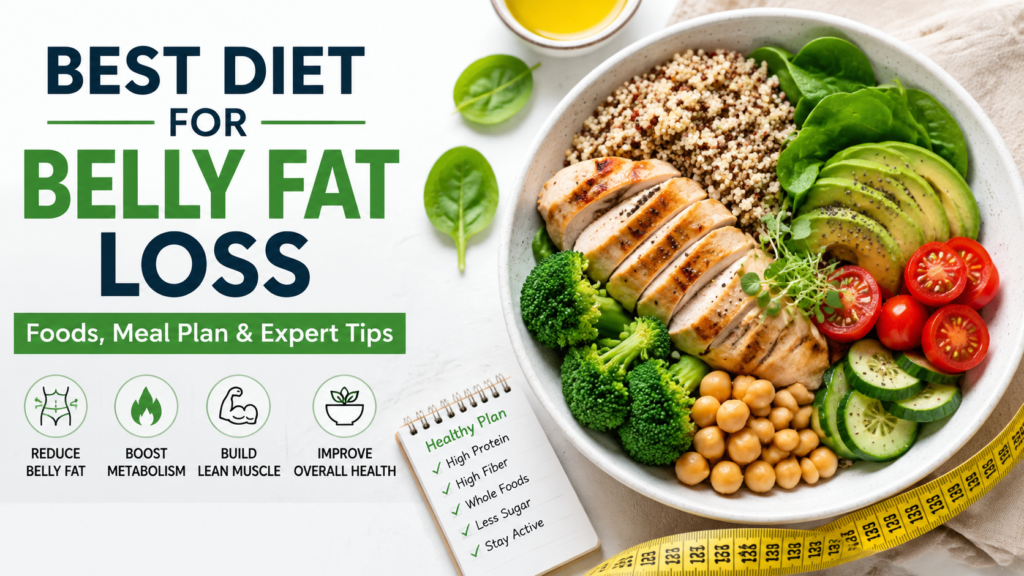
What Is the Best Diet for Belly Fat Loss and Which Foods Help Reduce Abdominal Fat?
Belly fat loss is achieved through a combination of healthy eating, calorie control, regular movement, and sustainable lifestyle habits. There is no single food or diet that can remove belly fat instantly, but a well-balanced diet can help reduce overall body fat and improve abdominal fat levels over time.
The best diet for belly fat loss focuses on high-protein foods, fiber-rich carbohydrates, healthy fats, and a controlled calorie intake. These foods help manage hunger, support metabolism, preserve muscle, and make fat loss easier to maintain.
Many people search for “foods that burn belly fat,” but the body does not burn fat from one specific area through diet alone. Instead, reducing belly fat happens when the body gradually loses stored fat through consistent nutrition and energy balance.
Table of Contents
ToggleWhat Is a Diet for Belly Fat Loss and How Does It Work?
A diet for belly fat loss is a nutrition plan designed to reduce excess body fat by creating a sustainable calorie deficit while providing enough nutrients for health and muscle maintenance.
The main goal is not simply eating less food. The goal is eating the right balance of foods that help the body use stored energy while keeping you satisfied.
A successful belly fat loss diet usually includes:
- Adequate protein
- High-fiber foods
- Minimally processed foods
- Healthy sources of carbohydrates
- Unsaturated fats
- Controlled portions
According to research from organizations such as the National Institutes of Health (NIH), reducing total body fat through calorie control can also reduce abdominal fat, including unhealthy visceral fat.
Can a Specific Diet Target Belly Fat Directly?
No, a specific diet cannot directly target only belly fat. Fat loss occurs throughout the body based on genetics, hormones, age, sex, and overall energy balance.
However, certain dietary patterns can help reduce abdominal fat more effectively because they improve:
- Appetite control
- Blood sugar regulation
- Insulin sensitivity
- Body composition
For example:
| Eating Pattern | How It May Support Fat Loss |
|---|---|
| High-protein diet | Helps maintain muscle and reduces hunger |
| Mediterranean diet | Supports metabolic health and balanced nutrition |
| High-fiber diet | Improves fullness and digestion |
| Calorie-controlled diet | Creates conditions for fat loss |
Why Does a Calorie Deficit Matter for Losing Abdominal Fat?
A calorie deficit occurs when you consume fewer calories than your body uses for daily energy needs.
This is the fundamental requirement for fat loss because the body begins using stored energy when energy intake is lower than energy expenditure.
A sustainable calorie deficit can be created by:
- Eating more vegetables
- Increasing protein intake
- Reducing sugary foods
- Controlling portion sizes
- Increasing physical activity
Extreme calorie restriction is usually not recommended because it can increase hunger, reduce energy, and make long-term adherence difficult.
Which Foods Should You Eat More Often for Belly Fat Loss?
The best foods for belly fat loss are nutrient-dense foods that provide protein, fiber, vitamins, minerals, and long-lasting energy.
A belly fat loss-friendly plate should generally contain:
- ½ plate vegetables
- ¼ plate protein
- ¼ plate quality carbohydrates
- Small amount of healthy fats
Which Protein Foods Support Belly Fat Reduction?
Protein is one of the most important nutrients for fat loss because it helps maintain muscle and increases feelings of fullness.
High-protein foods include:
- Eggs
- Chicken breast
- Fish
- Greek yogurt
- Cottage cheese
- Lentils
- Beans
- Tofu
- Lean meat
Protein supports belly fat loss by:
- Reducing unnecessary snacking
- Supporting muscle maintenance during weight loss
- Increasing the calories used during digestion
Research suggests higher protein intake can support improved body composition during weight reduction.
Which High-Fiber Foods Help Control Hunger and Weight?
Fiber-rich foods can support belly fat loss because they slow digestion and help people feel full for longer periods.
Excellent fiber sources include:
Vegetables
- Broccoli
- Spinach
- Carrots
- Cauliflower
- Leafy greens
Fruits
- Apples
- Berries
- Oranges
- Pears
Whole grains
- Oats
- Brown rice
- Quinoa
- Whole wheat products
Legumes
- Lentils
- Chickpeas
- Beans
Fiber may also support a healthier gut environment, which researchers continue to study for its relationship with metabolism and weight management.
Which Healthy Fats Should Be Included in a Fat Loss Diet?
Healthy fats should not be completely removed during belly fat loss. They provide important nutrients and help improve meal satisfaction.
Better fat sources include:
- Extra virgin olive oil
- Avocado
- Almonds
- Walnuts
- Chia seeds
- Flax seeds
- Fatty fish
Healthy fats are calorie-dense, so portion control is important.
Which Carbohydrates Are Better Choices for Reducing Belly Fat?
Carbohydrates are not automatically harmful for belly fat loss. The quality and quantity of carbohydrates matter.
Better carbohydrate choices include:
| Better Choices | Limit More Often |
|---|---|
| Oats | Candy |
| Brown rice | Sugary cereals |
| Sweet potatoes | White bread |
| Quinoa | Pastries |
| Fruits | Sweetened drinks |
Complex carbohydrates provide fiber and nutrients that support energy levels and exercise performance.
What Is an Ideal Daily Meal Plan for Belly Fat Loss?
A balanced belly fat loss meal plan should provide enough nutrients while maintaining a calorie deficit.
Example:
| Meal | Example Foods |
|---|---|
| Breakfast | Eggs + vegetables + oats |
| Lunch | Chicken/fish + vegetables + brown rice |
| Snack | Greek yogurt + berries |
| Dinner | Lentils/fish + salad + vegetables |
This is an example structure. Individual calorie needs depend on age, body size, activity level, and health goals.
What Should You Eat for Breakfast to Support Belly Fat Loss?
A belly fat loss breakfast should include protein and fiber to reduce hunger throughout the day.
Good options include:
- Omelet with vegetables
- Greek yogurt with berries and nuts
- Oatmeal with chia seeds
- Whole grain toast with eggs
Avoid breakfasts high in:
- Added sugar
- Sweetened cereals
- Pastries
because they may increase hunger later.
What Should You Eat for Lunch When Trying to Lose Belly Fat?
A fat-loss lunch should combine:
- Protein
- Vegetables
- High-quality carbohydrates
Examples:
Option 1:
Grilled chicken + salad + quinoa
Option 2:
Lentil bowl + vegetables + yogurt
Option 3:
Fish + brown rice + steamed vegetables
A balanced lunch helps prevent afternoon cravings and overeating.
What Should You Eat for Dinner to Reduce Abdominal Fat?
A belly fat loss dinner should be high in protein, rich in vegetables, and moderate in carbohydrates. A lighter but nutritious evening meal can help control total calorie intake while providing nutrients needed for recovery.
Good dinner options include:
Option 1:
- Grilled salmon
- Steamed vegetables
- Small portion of sweet potato
Option 2:
- Lentil soup
- Vegetable salad
- Greek yogurt
Option 3:
- Chicken breast
- Roasted vegetables
- Brown rice
A common mistake is completely avoiding dinner or skipping carbohydrates at night. Fat loss depends more on total daily calorie intake and food quality rather than the specific time you eat.
Which Snacks Are Better for Belly Fat Loss?
Healthy snacks can support belly fat loss when they prevent excessive hunger between meals.
Better snack choices include:
- Greek yogurt
- Boiled eggs
- Nuts
- Fruit with nut butter
- Cottage cheese
- Carrots with hummus
- Protein smoothie
A good snack contains protein, fiber, or both because these nutrients help improve fullness.
Which Foods Should You Limit When Trying to Lose Belly Fat?
Foods that make belly fat loss more difficult are usually those that provide many calories with little nutritional value.
Common examples include:
- Sugary drinks
- Candy and sweets
- Fried foods
- Ultra-processed snacks
- Excess refined carbohydrates
- Large portions of high-calorie foods
These foods do not directly “create belly fat” by themselves, but regularly consuming excess calories can contribute to overall fat gain.
Do Sugary Foods and Drinks Increase Belly Fat?
Yes, frequently consuming high amounts of added sugar can make belly fat loss more difficult because sugary foods and drinks can increase calorie intake without creating much fullness.
Common sources of added sugar include:
- Soft drinks
- Energy drinks
- Sweetened coffee beverages
- Cakes
- Cookies
- Processed desserts
Liquid calories are especially important because they are often consumed quickly and may not reduce hunger as much as solid foods.
Better alternatives include:
- Water
- Unsweetened tea
- Black coffee
- Sparkling water without added sugar
Do Refined Carbohydrates Affect Abdominal Fat?
Refined carbohydrates may make weight management harder when consumed frequently because they are often lower in fiber and easier to overeat.
Examples include:
- White bread
- Sugary cereals
- Pastries
- Many packaged snacks
Replacing refined carbohydrates with higher-fiber options may improve fullness and support healthier eating patterns.
Better choices include:
- Oats
- Whole grains
- Beans
- Vegetables
- Fruits
Can Alcohol Make Belly Fat Loss More Difficult?
Alcohol can interfere with belly fat loss because it adds calories and may reduce food choices.
Alcohol-related challenges include:
- Increased calorie intake
- More cravings for high-calorie foods
- Poorer sleep quality
- Reduced exercise performance
If someone chooses to drink alcohol, moderation and overall calorie balance remain important.
How Does Protein Help With Belly Fat Loss?
Protein supports belly fat loss by helping maintain muscle, improving fullness, and making calorie control easier.
During weight loss, the goal is usually to reduce fat while preserving lean muscle tissue.
Protein-rich meals may help by:
- Reducing hunger hormones
- Increasing satisfaction after meals
- Supporting strength training results
- Helping maintain metabolic activity
Good protein sources include:
| Animal Protein | Plant Protein |
|---|---|
| Eggs | Lentils |
| Chicken | Chickpeas |
| Fish | Beans |
| Greek yogurt | Tofu |
| Lean meat | Soy products |
How Much Protein Do You Need During Fat Loss?
Protein needs vary depending on body weight, activity level, age, and health goals.
A commonly used range for active adults is approximately:
1.2–2.0 grams of protein per kilogram of body weight per day,
according to sports nutrition research.
People with specific medical conditions should discuss protein needs with a qualified healthcare professional.
Does Fiber Help Reduce Belly Fat?
Yes, fiber can support belly fat loss by improving fullness, digestion, and appetite control.
Fiber is a type of carbohydrate that the body does not fully digest. It helps slow digestion and can support healthier eating patterns.
Why Is Soluble Fiber Important for Weight Management?
Soluble fiber absorbs water and forms a gel-like substance during digestion.
Sources include:
- Oats
- Beans
- Lentils
- Apples
- Chia seeds
Benefits may include:
- Increased fullness
- Better appetite control
- Improved digestive health
Research has linked higher fiber intake with healthier body weight outcomes.
What Lifestyle Habits Make a Belly Fat Loss Diet More Effective?
A diet works best when combined with healthy lifestyle habits.
Important supporting factors include:
- Regular exercise
- Adequate sleep
- Stress management
- Consistent routines
Nutrition creates the foundation, but lifestyle determines long-term success.
How Does Exercise Support Abdominal Fat Reduction?
Exercise helps belly fat loss by increasing energy expenditure and improving body composition.
The most effective approach usually combines:
Strength Training
Examples:
- Weight lifting
- Resistance exercises
- Bodyweight training
Benefits:
- Preserves muscle
- Improves metabolism
- Supports body shape changes
Aerobic Activity
Examples:
- Walking
- Cycling
- Swimming
- Jogging
Benefits:
- Improves cardiovascular health
- Helps increase calorie expenditure
A combination of resistance training and aerobic activity is generally recommended by health organizations for overall health.
How Does Sleep Affect Belly Fat?
Sleep plays an important role in appetite regulation and weight management.
Poor sleep may affect:
- Hunger hormones
- Food cravings
- Energy levels
- Exercise motivation
Adults generally benefit from approximately 7 or more hours of quality sleep per night, according to guidance from organizations such as the Centers for Disease Control and Prevention (CDC).
Can Stress Increase Belly Fat Storage?
Chronic stress can make weight management harder because it may influence:
- Eating behaviors
- Sleep quality
- Physical activity levels
Stress management techniques may include:
- Walking
- Meditation
- Breathing exercises
- Relaxation routines
- Social connection
What Are the Biggest Mistakes People Make When Trying to Lose Belly Fat?
Many people struggle with belly fat loss because they follow unrealistic strategies.
Common mistakes include:
Mistake 1: Expecting Spot Reduction
You cannot choose where your body loses fat first.
Doing hundreds of abdominal exercises does not specifically remove belly fat.
Mistake 2: Following Extreme Diets
Very restrictive diets may cause:
- Hunger
- Low energy
- Difficulty maintaining results
A sustainable eating pattern is usually more effective.
Mistake 3: Removing Entire Food Groups
Eliminating carbohydrates or fats is unnecessary for most people.
The focus should be:
- Better food quality
- Proper portions
- Balanced nutrition
Mistake 4: Ignoring Protein Intake
Low protein intake may make it harder to preserve muscle during weight loss.
Mistake 5: Only Focusing on Weight Scale Numbers
Body composition changes can happen even when scale weight changes slowly.
Other measurements include:
- Waist circumference
- Energy levels
- Strength improvements
- Clothing fit
What Is the Difference Between Losing Weight and Losing Belly Fat?
Weight loss refers to reducing total body weight, while belly fat loss specifically refers to reducing fat stored around the abdominal area.
A person may lose weight from:
- Water
- Muscle
- Fat
A successful fat loss approach aims to:
- Reduce fat
- Maintain muscle
- Improve health markers
How Long Does It Take to Lose Belly Fat With Diet?
The time required to lose belly fat depends on:
- Starting weight
- Calorie deficit
- Diet consistency
- Activity level
- Genetics
- Age
A safe and sustainable rate of weight loss is often considered around 0.5 to 1 kilogram per week for many adults, although individual results vary.
Visible belly fat reduction usually requires consistent habits over several weeks or months rather than quick fixes.
Key Takeaways for a Belly Fat Loss Diet
A successful diet for belly fat loss focuses on:
✅ Creating a moderate calorie deficit
✅ Eating enough protein
✅ Choosing fiber-rich foods
✅ Including healthy fats
✅ Limiting added sugars and ultra-processed foods
✅ Exercising regularly
✅ Sleeping well
✅ Maintaining habits consistently
The best belly fat loss diet is not the most restrictive. It is the one a person can follow consistently while supporting overall health.
Frequently Asked Questions (FAQ)
What is the best diet for belly fat loss?
The best diet for belly fat loss is a balanced eating pattern that creates a calorie deficit while providing enough protein, fiber, healthy fats, and nutrients.
Which foods help reduce belly fat?
Foods that support belly fat loss include vegetables, fruits, lean proteins, legumes, whole grains, nuts, seeds, and healthy fats.
Can I lose belly fat without exercise?
Yes, diet alone can reduce body fat if it creates a calorie deficit. However, exercise helps improve results, preserve muscle, and support overall health.
Does drinking water reduce belly fat?
Water does not directly burn belly fat, but staying hydrated can support healthy eating habits and may reduce unnecessary calorie intake from sugary drinks.
Are carbohydrates bad for belly fat loss?
No. High-quality carbohydrates such as oats, vegetables, fruits, and whole grains can be part of a healthy fat loss diet.
Does intermittent fasting help reduce belly fat?
Intermittent fasting may help some people reduce calories and lose weight, but it works mainly through calorie control rather than a unique fat-burning effect.
How can women lose belly fat after age 40?
Women after age 40 may benefit from focusing on protein intake, strength training, adequate sleep, and sustainable calorie control because metabolism and body composition can change with age.
What is the fastest way to lose belly fat?
The safest approach is consistent nutrition, regular activity, sufficient protein, good sleep, and a sustainable calorie deficit rather than extreme diets.
Conclusion
A diet for belly fat loss is not about finding one magical food or eliminating entire food groups. It is about creating a balanced nutrition strategy that helps the body gradually reduce excess fat while maintaining health.
By focusing on protein-rich foods, fiber, quality carbohydrates, healthy fats, and consistent lifestyle habits, most people can make meaningful progress toward reducing abdominal fat and improving overall wellness.
Sources & References
The information in this article is based on guidance and research from trusted health and nutrition organizations:
- National Institutes of Health (NIH) – Nutrition & Weight Management
https://www.nih.gov/ - Centers for Disease Control and Prevention (CDC) – Healthy Weight & Nutrition
https://www.cdc.gov/healthy-weight-growth/ - World Health Organization (WHO) – Healthy Diet Guidelines
https://www.who.int/health-topics/healthy-diet - Harvard T.H. Chan School of Public Health – Nutrition Source
https://nutritionsource.hsph.harvard.edu/ - U.S. Department of Agriculture (USDA) – Dietary Guidelines for Americans
https://www.dietaryguidelines.gov/ - National Library of Medicine (PubMed) – Nutrition Research Studies
https://pubmed.ncbi.nlm.nih.gov/ - Mayo Clinic – Nutrition, Weight Loss, and Healthy Lifestyle Guidance
https://www.mayoclinic.org/healthy-lifestyle/weight-loss - National Institute of Diabetes and Digestive and Kidney Diseases (NIDDK) – Weight Management Information
https://www.niddk.nih.gov/health-information/weight-management