Diet Terms Glossary: Simple Nutrition Words, Food Labels, and Popular Diet Types Explained
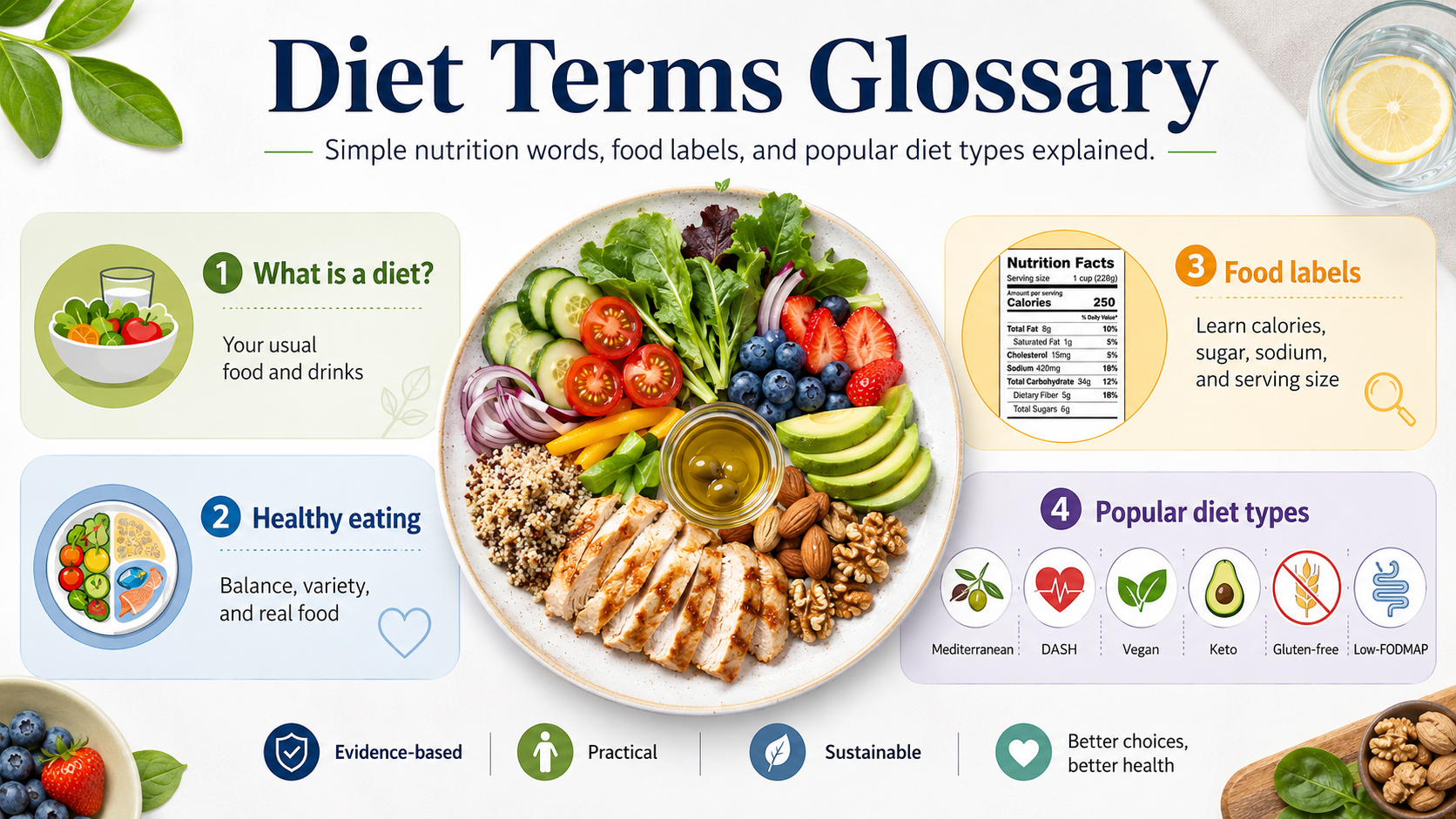
Diet language can be confusing. People talk about calories, carbs, protein, macros, keto, fasting, gluten-free food, clean eating, plant-based meals, and many other terms. Some of these words are useful. Some are medical terms. Some are marketing words. Some are misunderstood.
This guide explains common diet terms in simple language. It also explains popular diet types, food label words, misleading diet claims, and how to choose an eating pattern that fits your health goals.
A diet is not only a weight-loss plan. A diet simply means the food and drinks a person usually consumes. Everyone has a diet, whether it is healthy, unhealthy, planned, cultural, medical, or based on personal preference.
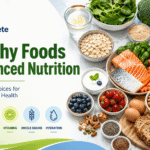
A healthy diet usually includes a variety of mostly whole or minimally processed foods, such as vegetables, fruits, legumes, whole grains, lean protein foods, nuts, seeds, healthy fats, and water. The World Health Organization recommends eating a variety of foods while limiting excess sodium, free sugars, saturated fat, and trans fat.
This article is for general education only. People with medical conditions such as diabetes, kidney disease, celiac disease, irritable bowel syndrome, food allergies, pregnancy, or eating disorder history should speak with a qualified healthcare professional before making major diet changes.
Quick Answer: What Is a Diet?
A diet is the usual pattern of food and drinks a person consumes. A diet may be used for general health, weight loss, muscle gain, blood sugar control, heart health, digestion, ethical beliefs, religious rules, sports performance, or medical treatment.
A healthy diet is not about one perfect food. It is about the overall pattern of eating. The best diet is usually safe, realistic, nutrient-rich, and possible to follow consistently.
What Is a Healthy Diet?
A healthy diet gives the body enough energy and nutrients to function well. It supports the heart, brain, muscles, bones, digestion, immunity, and metabolism.
A healthy eating pattern usually includes:
- Vegetables and fruits
- Whole grains or high-fiber starches
- Protein foods
- Healthy fats
- Enough water
- Limited added sugar
- Limited excess sodium
- Limited trans fat
- Sensible portions
A healthy diet does not need to be expensive, perfect, or complicated. It should fit real life.
Simple Example of a Healthy Meal
A simple healthy meal may include grilled fish, brown rice, vegetables, olive oil dressing, and water.
Another example is lentil soup with whole-grain bread, salad, yogurt, and fruit.
The key is balance: enough protein, enough fiber, enough vitamins and minerals, and not too much added sugar, sodium, or unhealthy fat.
What Is a Balanced Diet?
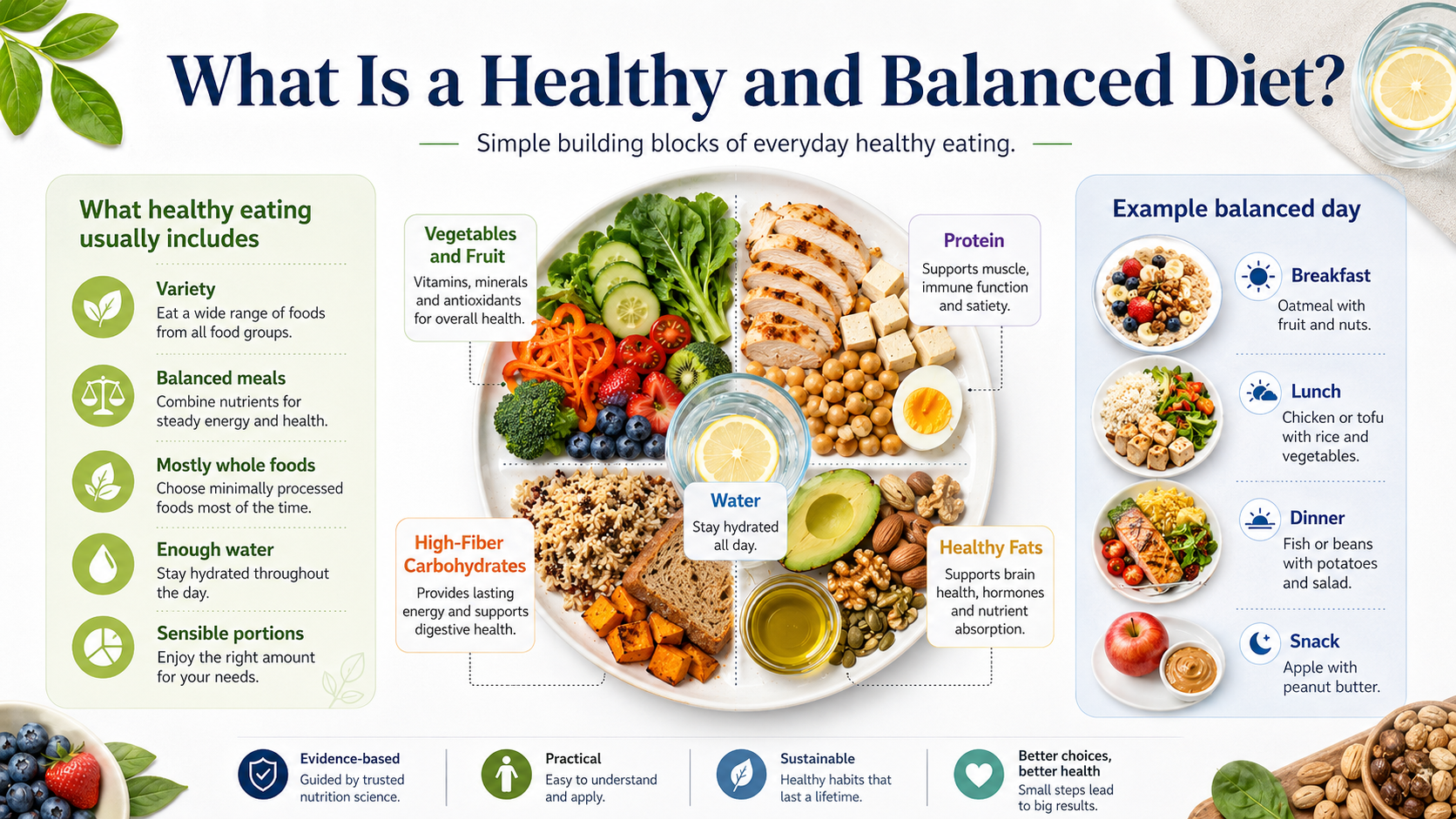
A balanced diet includes different food groups in sensible amounts. It does not mean eating perfectly every day. It means the overall pattern gives the body what it needs.
A balanced meal often includes:
| Part of the Meal | Examples |
|---|---|
| Protein | Eggs, fish, chicken, tofu, beans, lentils, yogurt |
| Carbohydrate | Rice, oats, potatoes, whole-grain bread, quinoa |
| Vegetables or Fruit | Broccoli, carrots, spinach, apples, berries, oranges |
| Healthy Fat | Olive oil, avocado, nuts, seeds |
| Drink | Water, unsweetened tea, or another low-sugar drink |
Example Balanced Day
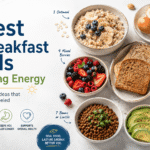
Breakfast: Oatmeal with banana, nuts, and milk
Lunch: Chicken or tofu with rice and vegetables
Snack: Apple with peanut butter
Dinner: Fish, potatoes, salad, and yogurt
A balanced diet works because different foods do different jobs. Protein helps repair the body. Carbohydrates provide energy. Fats support cells and hormones. Vitamins and minerals help body systems work properly.
Core Diet Terms Explained
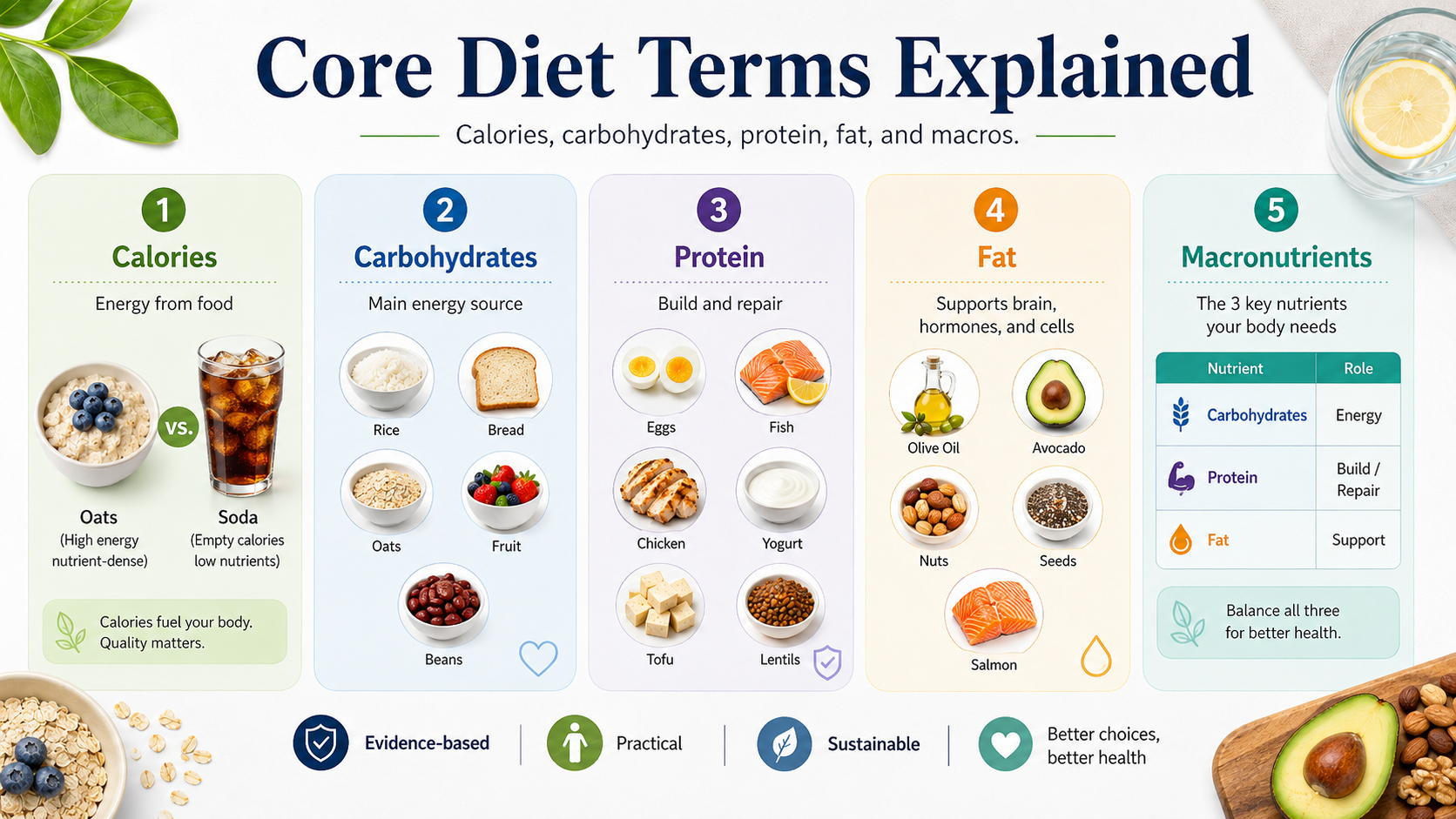
Calories
Calories measure the energy from food and drinks.
The body uses calories for breathing, walking, thinking, digestion, exercise, and normal body functions. Eating more calories than the body uses over time can lead to weight gain. Eating too few calories for too long can cause fatigue, muscle loss, nutrient gaps, and poor health.
Calories matter, but they are not the only thing that matters. Food quality also matters.
For example, a soda and a bowl of oats may both provide calories, but oats also provide fiber, vitamins, minerals, and longer-lasting fullness.
Carbohydrates
Carbohydrates, often called carbs, are one of the body’s main energy sources.
Common carbohydrate foods include:
- Rice
- Bread
- Pasta
- Oats
- Potatoes
- Corn
- Fruit
- Beans
- Lentils
- Milk
- Yogurt
Not all carbs are the same. Oats, beans, fruit, and potatoes provide more nutrients than soda, candy, and pastries.
A useful way to think about carbs is this: choose more high-fiber carbs and fewer sugary, low-nutrient carbs.
Protein
Protein helps build and repair body tissues. It supports muscles, skin, organs, enzymes, hormones, hair, nails, and immune function.
Protein foods include:
- Eggs
- Fish
- Chicken
- Turkey
- Lean beef
- Greek yogurt
- Cottage cheese
- Beans
- Lentils
- Tofu
- Tempeh
- Nuts
- Seeds
People who exercise often, older adults, and people trying to maintain muscle usually need to pay closer attention to protein.
Fat
Fat is a nutrient the body needs. It supports the brain, cells, hormones, nerves, and absorption of certain vitamins.
Healthier fat sources include:
- Olive oil
- Avocado
- Nuts
- Seeds
- Fatty fish
- Nut butters
Fats to limit include trans fat and too much saturated fat, especially from highly processed foods, fatty meats, butter-heavy meals, fried foods, and many packaged snacks. The American Heart Association recommends choosing foods with less sodium, added sugar, and saturated fat as part of a heart-healthy eating pattern.
Fat is not automatically bad. The type, amount, and overall diet pattern matter.
Macronutrients
Macronutrients are nutrients the body needs in large amounts.
The three main macronutrients are:
| Macronutrient | Main Job | Food Examples |
|---|---|---|
| Carbohydrates | Energy | Rice, oats, potatoes, fruit, beans |
| Protein | Build and repair | Eggs, fish, chicken, tofu, lentils |
| Fat | Cells, hormones, and brain support | Olive oil, avocado, nuts, seeds |
Macronutrients are often called “macros.”
Micronutrients
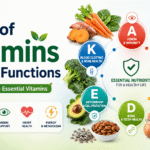
Micronutrients are vitamins and minerals that the body needs in smaller amounts.
Examples include:
- Vitamin A
- B vitamins
- Vitamin C
- Vitamin D
- Vitamin K
- Iron
- Calcium
- Magnesium
- Zinc
- Iodine
- Potassium
The body needs small amounts of micronutrients, but they are still essential. Low intake of important vitamins or minerals can affect energy, bones, blood, immunity, thyroid function, and overall health.
Fiber
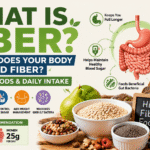
Fiber is a type of carbohydrate found in plant foods. The body does not fully digest fiber, but fiber is very useful.
Fiber helps:
- Support digestion
- Feed helpful gut bacteria
- Support fullness
- Improve bowel regularity
- Support heart and metabolic health
High-fiber foods include:
- Beans
- Lentils
- Oats
- Berries
- Apples
- Vegetables
- Whole grains
- Nuts
- Seeds
Most people benefit from eating more fiber-rich whole foods.
Added Sugar
Added sugar is sugar added to food during processing, cooking, or preparation.
Examples include sugar added to:
- Soda
- Candy
- Sweet cereal
- Cakes
- Cookies
- Syrups
- Sweetened coffee drinks
- Sweetened yogurt
- Energy drinks
Added sugar is different from the natural sugar found inside whole fruit or plain milk.
The FDA says added sugars are listed on the Nutrition Facts label, and the Daily Value for added sugars is 50 grams per day based on a 2,000-calorie diet.
Sodium
Sodium is a mineral found in salt. The body needs some sodium, but too much sodium can raise blood pressure in many people.
High-sodium foods often include:
- Chips
- Processed meats
- Instant noodles
- Fast food
- Canned soups
- Salty sauces
- Frozen meals
- Packaged snacks
A food does not need to taste extremely salty to be high in sodium. This is why reading food labels matters.
Cholesterol
Cholesterol is a waxy substance found in the blood. The body needs cholesterol to make cells and hormones, but high levels of certain types of cholesterol can increase heart disease risk.
LDL Cholesterol
LDL cholesterol is often called “bad cholesterol” because high levels can contribute to plaque buildup in arteries.
HDL Cholesterol
HDL cholesterol is often called “good cholesterol” because it helps move cholesterol away from the arteries.
Blood Sugar
Blood sugar means glucose in the blood. Glucose is a type of sugar the body uses for energy.
Blood sugar balance is especially important for people with diabetes, prediabetes, insulin resistance, and metabolic health concerns.
Meals that include fiber, protein, and healthy fat often raise blood sugar more gradually than meals made mostly of refined carbs and sugar.
Glycemic Index
The glycemic index ranks carbohydrate foods by how quickly they raise blood sugar.
Low-glycemic foods usually raise blood sugar more slowly. Examples include lentils, beans, oats, and many non-starchy vegetables.
High-glycemic foods can raise blood sugar faster. Examples include white bread, sugary drinks, and many sweets.
The glycemic index can be useful, but it is not perfect. Portion size, food combinations, cooking method, and individual response also matter.
Hydration
Hydration means having enough fluid in the body.
Water is the best everyday drink for most people. Hydration needs vary depending on body size, activity level, sweat, weather, diet, and health conditions.
Signs of poor hydration may include thirst, dark urine, dry mouth, headache, tiredness, or dizziness.
Electrolytes
Electrolytes are minerals that help with fluid balance, nerves, and muscles.
Common electrolytes include:
- Sodium
- Potassium
- Magnesium
- Calcium
- Chloride
Electrolytes matter more during heavy sweating, intense exercise, vomiting, diarrhea, or very hot weather.
Metabolism
Metabolism is the process the body uses to turn food into energy and building materials.
A person’s metabolism is affected by many things, including:
- Age
- Body size
- Muscle mass
- Activity level
- Sleep
- Hormones
- Genetics
- Medications
- Health conditions
- Food intake
A “slow metabolism” is often blamed for weight gain, but body weight is usually affected by several factors at the same time.
Nutrient Density
Nutrient density means how many useful nutrients a food gives compared with its calories.
Nutrient-dense foods include:
- Eggs
- Fish
- Beans
- Lentils
- Vegetables
- Fruit
- Yogurt
- Oats
- Nuts
- Seeds
Low nutrient-density foods often provide many calories but few vitamins, minerals, or fiber. Examples include soda, candy, and many fried snacks.
Ultra-Processed Foods
Ultra-processed foods are foods made with many industrial ingredients, such as refined starches, added sugars, flavorings, preservatives, emulsifiers, and colorings.
Examples include:
- Soda
- Candy bars
- Packaged cakes
- Many chips
- Instant meals
- Many frozen fast-food products
- Some sugary cereals
Not every packaged food is unhealthy. Frozen vegetables, canned beans, plain yogurt, oats, and canned fish can be useful, affordable, and nutritious.
The issue is relying too often on foods high in added sugar, sodium, refined grains, and unhealthy fats.
How to Read a Nutrition Label?
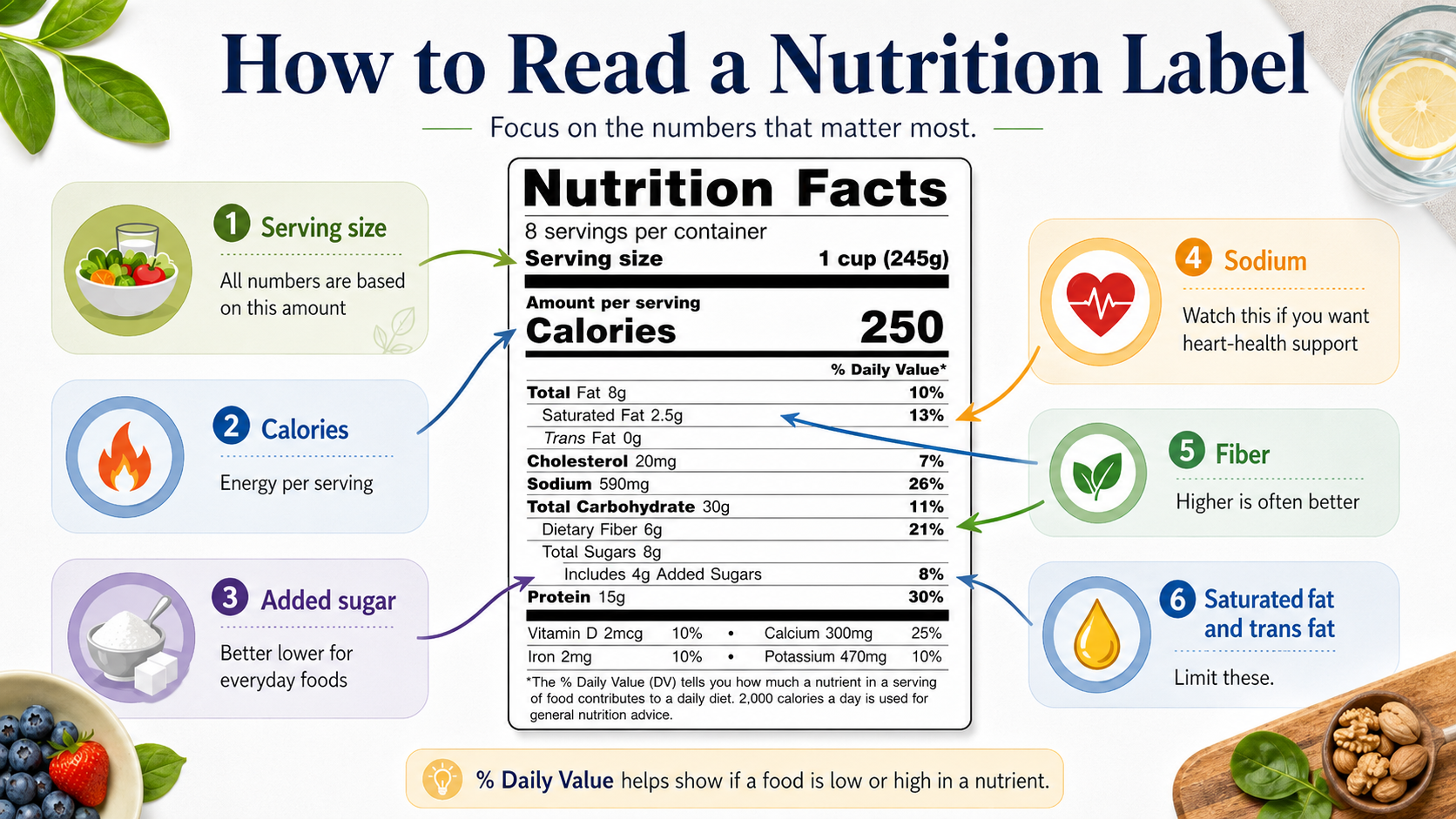
Food labels help people understand what is inside packaged food. The most useful parts are serving size, calories, protein, carbohydrates, fiber, added sugar, saturated fat, trans fat, sodium, and vitamins or minerals.
The FDA explains that the Percent Daily Value shows how much a nutrient in one serving contributes to a total daily diet. A food with 5% Daily Value or less is generally low in that nutrient, while 20% Daily Value or more is generally high.
Serving Size
Serving size tells you the amount of food the label is based on.
If a label says one serving is 1 cup and you eat 2 cups, you ate double the listed calories, sugar, sodium, and nutrients.
Calories
Calories show how much energy one serving provides.
Calories are useful, but they should not be the only thing you check. A food can be low in calories and still low in nutrients.
Added Sugar
Added sugar shows how much sugar was added during processing or preparation.
Lower added sugar is usually better for everyday foods.
Sodium
Sodium shows how much salt-related minerals are in the food.
People with high blood pressure or heart-health goals often need to watch sodium closely.
Fiber
Fiber is usually a nutrient to increase. Foods higher in fiber can support digestion and fullness.
Saturated Fat and Trans Fat
Saturated fat should usually be limited, and trans fat should be avoided as much as possible.
Popular Diet Types Compared
| Diet Type | Main Idea | Common Foods | Often Limited | Best For | Main Warning |
|---|---|---|---|---|---|
| Balanced diet | Eat many food groups in sensible amounts | Vegetables, fruit, grains, protein, healthy fats | Excess sugar, sodium, trans fat | Most people | Needs consistency |
| Mediterranean diet | Plant-rich diet with olive oil and fish | Vegetables, legumes, fish, olive oil, nuts | Processed foods, excess sweets | Heart health, general health | Whole pattern matters |
| DASH diet | Lower-sodium diet for blood pressure | Fruit, vegetables, low-fat dairy, grains, beans | Salt, processed meats, sugary foods | High blood pressure | Sodium control matters |
| Vegetarian diet | No meat, poultry, or seafood | Beans, eggs, dairy, tofu, vegetables | Meat, fish, poultry | Ethical, religious, or health reasons | Nutrient planning matters |
| Vegan diet | No animal foods | Beans, tofu, grains, nuts, and vegetables | Meat, dairy, eggs, animal foods | Fully plant-based eating | Vitamin B12 is essential |
| Plant-based diet | Mostly plant foods | Vegetables, fruits, beans, grains, nuts | Depends on the person | Eating more plants | Can still include junk food |
| Low-carb diet | Reduce carbohydrate intake | Eggs, fish, meat, tofu, low-carb vegetables | Bread, rice, pasta, sweets | Some weight or blood sugar goals | Can become low in fiber |
| Keto diet | Very low carb, high fat | Eggs, meat, fish, oils, avocado | Bread, rice, pasta, sugar | Specific cases, short-term weight loss | Restrictive; not for everyone |
| Gluten-free diet | Removes gluten | Rice, potatoes, corn, meat, and vegetables | Wheat, barley, rye | Celiac disease, gluten sensitivity | Not automatically healthier |
| Low-FODMAP diet | Reduces certain fermentable carbs | Rice, eggs, tofu, carrots, potatoes | Onion, garlic, wheat, and some fruits | IBS symptom management | Should be temporary and guided |
Popular Diet Types Explained With Examples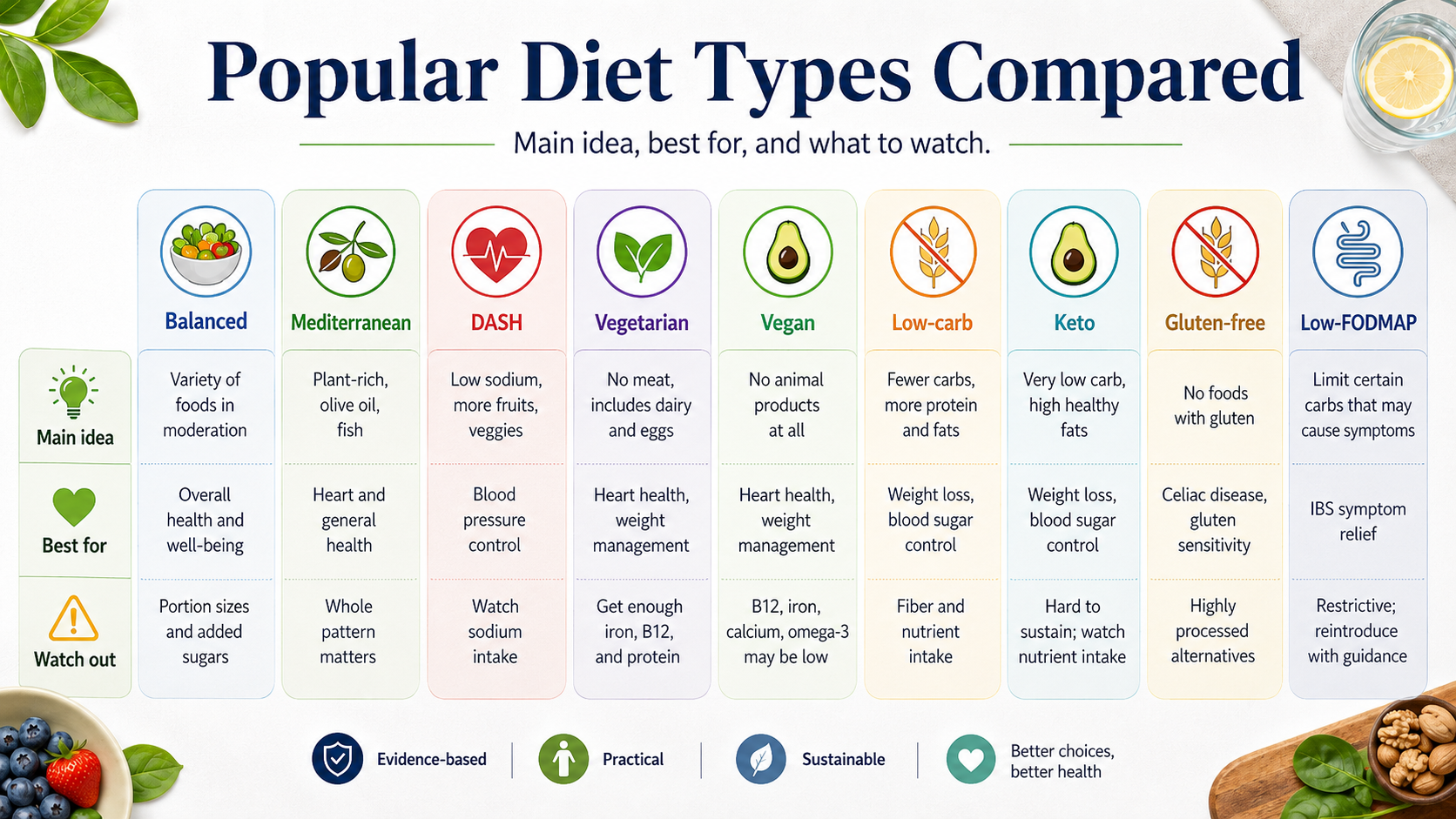
1. Balanced Diet
A balanced diet includes different food groups in sensible amounts.
Simple meaning: Eat a variety of foods that give the body energy, protein, fiber, vitamins, minerals, and healthy fats.
Main foods: Vegetables, fruits, whole grains, beans, lentils, fish, eggs, poultry, tofu, yogurt, nuts, seeds, olive oil.
Foods are usually limited: Sugary drinks, excess sweets, too much fried food, high-sodium packaged foods, and trans fat.
Example breakfast: Oatmeal with banana, nuts, and milk.
Example lunch: Chicken or tofu with rice and vegetables.
Example dinner: Fish, potatoes, salad, and yogurt.
Best for: Most people who want a realistic long-term eating pattern.
Be careful if: The word “balanced” is used as an excuse for eating mostly low-nutrient foods. Balance still needs structure and food quality.
2. Mediterranean Diet
The Mediterranean diet is based on traditional eating patterns from countries near the Mediterranean Sea. It focuses on vegetables, fruits, beans, lentils, whole grains, nuts, seeds, olive oil, herbs, and fish.
Simple meaning: A mostly plant-based diet with olive oil, fish, legumes, whole grains, and many colorful foods.
Main foods: Tomatoes, cucumbers, leafy greens, chickpeas, lentils, fish, olive oil, whole-grain bread, yogurt, berries, nuts, and herbs.
Foods are usually limited: Processed meats, sugary foods, refined grains, fried fast food, and large amounts of red meat.
Example breakfast: Greek yogurt with berries and nuts.
Example lunch: Chickpea salad with olive oil, cucumber, tomatoes, herbs, and whole-grain bread.
Example dinner: Grilled fish with vegetables and brown rice.
Best for: General health, heart health, and long-term sustainable eating.
Be careful if: You add olive oil to a poor diet and call it Mediterranean. The full eating pattern matters.
Harvard’s Nutrition Source notes that the Mediterranean diet has been consistently associated with lower cardiovascular disease risk and overall mortality in research.
3. DASH Diet
DASH stands for Dietary Approaches to Stop Hypertension. It was designed to help lower blood pressure.
Simple meaning: A heart-friendly diet that focuses on fruits, vegetables, whole grains, low-fat dairy, lean protein, beans, nuts, and lower sodium.
Main foods: Bananas, spinach, oats, beans, yogurt, fish, chicken, nuts, brown rice, vegetables, and fruits.
Foods are usually limited: Salt, processed meats, fast food, sugary drinks, sweets, and high-sodium packaged foods.
Example breakfast: Oatmeal with fruit and low-fat milk.
Example lunch: Turkey or bean wrap with salad and fruit.
Example dinner: Baked chicken or beans with vegetables and brown rice.
Best for: People with high blood pressure or heart-health goals.
Be careful if: You eat DASH-style foods but still use very salty sauces, processed meats, and packaged snacks. Sodium control is a major part of DASH.
The NHLBI describes DASH as an eating plan that requires no special foods and provides daily and weekly nutrition goals, including vegetables, fruits, whole grains, fish, poultry, beans, nuts, and low-fat dairy.
4. Vegetarian Diet
A vegetarian diet avoids meat, poultry, and seafood. Some vegetarians eat eggs and dairy.
Simple meaning: No meat, chicken, or fish, but eggs and dairy may be included depending on the type.
Main foods: Beans, lentils, tofu, eggs, yogurt, cheese, vegetables, fruit, rice, oats, nuts, seeds.
Foods usually limited: Meat, poultry, seafood.
Example breakfast: Eggs with whole-grain toast and fruit.
Example lunch: Lentil soup with salad and whole-grain bread.
Example dinner: Tofu stir-fry with rice and vegetables.
Best for: People who avoid meat for health, ethical, religious, environmental, or personal reasons.
Be careful if: The diet is low in protein, iron, zinc, vitamin B12, calcium, vitamin D, iodine, or omega-3 fats.
The Academy of Nutrition and Dietetics states that appropriately planned vegetarian and vegan diets can be nutritionally adequate and may offer health benefits.
5. Vegan Diet
A vegan diet avoids all animal foods. This means no meat, fish, eggs, milk, cheese, yogurt, butter, or other animal-derived foods.
Simple meaning: A fully plant-based diet.
Main foods: Beans, lentils, tofu, tempeh, soy milk, oats, rice, vegetables, fruit, nuts, seeds.
Foods usually limited: Meat, poultry, seafood, dairy, eggs, butter, and other animal foods.
Example breakfast: Oatmeal with soy milk, berries, and chia seeds.
Example lunch: Black bean tacos with avocado, salsa, lettuce, and corn tortillas.
Example dinner: Tofu stir-fry with rice, broccoli, carrots, and sesame seeds.
Best for: People who want a fully plant-based diet for ethical, environmental, religious, or health reasons.
Be careful if: You do not plan key nutrients. Vitamin B12 is especially important because reliable natural plant sources are limited. Vegan diets also need attention to protein, iron, calcium, iodine, zinc, vitamin D, and omega-3 fats.
6. Plant-Based Diet
A plant-based diet focuses mostly on plant foods. It does not always mean fully vegan.
Simple meaning: Plants are the main part of the diet, but animal foods may or may not be included.
Main foods: Vegetables, fruits, beans, lentils, chickpeas, oats, brown rice, nuts, seeds, tofu, and whole grains.
Foods are usually limited: Highly processed foods, though strict rules vary.
Example breakfast: Oats with berries and nuts.
Example lunch: Chickpea bowl with rice, salad, and tahini sauce.
Example dinner: Lentil pasta with vegetables.
Best for: People who want to eat more plants without strict rules.
Be careful if: You assume plant-based automatically means healthy. Fries, soda, candy, and many processed snacks can be plant-based but still poor everyday choices.
7. Flexitarian Diet
A flexitarian diet is mostly vegetarian but sometimes includes meat, fish, or poultry.
Simple meaning: Mostly plant-based, but flexible.
Main foods: Beans, lentils, vegetables, grains, eggs, yogurt, tofu, nuts, seeds, occasional chicken or fish.
Foods are usually limited: Frequent meat-heavy meals and highly processed foods.
Example breakfast: Yogurt with fruit and nuts.
Example lunch: Bean chili with vegetables.
Example dinner: Salmon or chicken with vegetables once or twice a week.
Best for: People who want to reduce meat without fully removing it.
Be careful if: You replace meat with ultra-processed meat-free products too often instead of eating whole plant foods.
8. Pescatarian Diet
A pescatarian diet avoids meat and poultry but includes fish and seafood.
Simple meaning: No meat or chicken, but fish and seafood are included.
Main foods: Fish, shrimp, eggs, dairy, beans, lentils, vegetables, fruits, rice, oats, nuts.
Foods usually limited: Meat and poultry.
Example breakfast: Yogurt with fruit and oats.
Example lunch: Tuna salad sandwich with vegetables.
Example dinner: Salmon with potatoes and salad.
Best for: People who want a mostly plant-based diet but still eat seafood.
Be careful if: You eat high-mercury fish too often or rely heavily on fried seafood.
9. Low-Carb Diet
A low-carb diet reduces carbohydrate intake, especially refined carbs and added sugars.
Simple meaning: Less bread, rice, pasta, sweets, sugary drinks, and refined carbs.
Main foods: Eggs, fish, chicken, tofu, salad vegetables, nuts, seeds, Greek yogurt, avocado.
Foods usually limited: White bread, pasta, rice, sweets, soda, cakes, pastries, and large portions of starchy foods.
Example breakfast: Eggs with spinach and tomatoes.
Example lunch: Chicken salad with avocado and nuts.
Example dinner: Fish with roasted vegetables.
Best for: Some people aiming for blood sugar control, appetite control, or weight loss.
Be careful if: The diet becomes too low in fiber because beans, fruit, vegetables, and whole grains are removed. People with diabetes, kidney disease, or medication concerns should get professional advice first.
10. Ketogenic Diet
The ketogenic diet, or keto diet, is a very-low-carbohydrate, high-fat diet. It pushes the body to use ketones as a fuel source.
Simple meaning: Very few carbs, much more fat.
Main foods: Eggs, fish, meat, cheese, oils, avocado, nuts, seeds, and low-carb vegetables.
Foods are usually limited: Bread, rice, pasta, potatoes, sweets, sugary drinks, and many fruits.
Example breakfast: Omelet with spinach, cheese, and avocado.
Example lunch: Tuna salad lettuce wraps.
Example dinner: Chicken with non-starchy vegetables and olive oil.
Best for: Specific medical uses under supervision and some short-term weight-loss plans.
Be careful if: You have kidney disease, liver disease, pregnancy, a history, or use certain diabetes medications. Keto is restrictive and not suitable for everyone.
Harvard’s Nutrition Source notes that long-term ketogenic diets may carry risks such as kidney stones, osteoporosis, increased uric acid, and possible nutrient deficiencies if poorly planned.
11. Low-Fat Diet
A low-fat diet reduces high-fat foods.
Simple meaning: Less oil, butter, fried food, fatty meats, cream, and high-fat snacks.
Main foods: Vegetables, fruits, beans, whole grains, lean proteins, and low-fat dairy.
Foods are usually limited: Fried foods, butter, cream, fatty meats, oils, pastries, and high-fat snacks.
Example breakfast: Cereal or oats with low-fat milk and fruit.
Example lunch: Turkey sandwich with salad.
Example dinner: Beans, rice, vegetables, and fruit.
Best for: People who need to reduce fat intake for medical reasons or personal preference.
Be careful if: You replace fat with sugar and refined carbs. Low-fat does not automatically mean healthy.
12. High-Protein Diet
A high-protein diet increases protein intake.
Simple meaning: More foods that help build and repair body tissue.
Main foods: Eggs, Greek yogurt, chicken, fish, tofu, beans, lentils, cottage cheese, lean meat.
Foods usually limited: This depends on the plan, but many high-protein diets reduce sugary snacks and refined carbs.
Example breakfast: Greek yogurt with berries.
Example lunch: Chicken or tofu bowl with quinoa and vegetables.
Example dinner: Fish with potatoes and salad.
Best for: Athletes, older adults, and people trying to preserve muscle.
Be careful if: You have kidney disease or replace fiber-rich foods with too much animal protein. Protein should not push out vegetables, fruits, beans, and whole grains.
13. Intermittent Fasting
Intermittent fasting focuses on when a person eats rather than what they eat.
A common method is 16:8 fasting, where a person fasts for 16 hours and eats during an 8-hour window.
Simple meaning: Eating during certain hours and fasting during others.
Main methods: 16:8 fasting, 14:10 fasting, alternate-day fasting, and 5:2 fasting.
Example: Eating between 10 a.m. and 6 p.m., then drinking only water or unsweetened drinks outside that window.
Best for: Some adults who prefer time-based eating instead of tracking calories.
Be careful if: You are pregnant, underweight, recovering from an eating disorder, using blood sugar medication, or dealing with a medical condition. Food quality still matters during the eating window.
14. Gluten-Free Diet
A gluten-free diet removes gluten, a protein found in wheat, barley, and rye.
Simple meaning: No wheat, barley, or rye.
Main foods: Rice, potatoes, corn, quinoa, beans, vegetables, fruit, eggs, fish, meat, milk, and certified gluten-free oats.
Foods usually limited: Regular bread, pasta, cakes, crackers, wheat flour, barley, rye, and many processed foods containing gluten.
Example breakfast: Gluten-free oats with fruit and nuts.
Example lunch: Rice bowl with chicken, vegetables, beans, and salsa.
Example dinner: Potatoes with fish and salad.
Best for: People with celiac disease, wheat allergy, or medically diagnosed gluten sensitivity.
Be careful if: You assume gluten-free automatically means healthier. Gluten-free cookies are still cookies.
NIDDK explains that people with celiac disease need to avoid gluten-containing grains such as wheat, barley, and rye, and carefully read food labels to prevent gluten exposure and cross-contact.
15. Low-FODMAP Diet
A low-FODMAP diet reduces certain fermentable carbohydrates that can trigger digestive symptoms in some people with irritable bowel syndrome, also called IBS.
Simple meaning: A temporary digestive diet used to find food triggers.
Main foods during the low-FODMAP phase: Rice, eggs, chicken, firm tofu, carrots, cucumber, potatoes, oranges, grapes, lactose-free milk.
Foods often tested or reduced: Onion, garlic, wheat, apples, pears, beans, milk, and some sweeteners.
Example breakfast: Lactose-free yogurt with low-FODMAP fruit.
Example lunch: Rice with chicken, carrots, and cucumber.
Example dinner: Firm tofu with potatoes and vegetables.
Best for: People with medically diagnosed IBS.
Be careful if: You try to follow it permanently without guidance. Low-FODMAP is not meant to remove foods forever.
Monash University describes the low-FODMAP diet as a structured process that starts by swapping high-FODMAP foods for low-FODMAP alternatives and is used for people with IBS symptoms.
16. Paleo Diet
The paleo diet tries to copy the idea of eating like ancient hunter-gatherers.
Simple meaning: Meat, fish, eggs, vegetables, fruit, nuts, and seeds, while avoiding grains, beans, dairy, and many processed foods.
Main foods: Meat, fish, eggs, vegetables, fruit, nuts, and seeds.
Foods usually limited: Grains, beans, dairy, refined sugar, and many processed foods.
Example breakfast: Eggs with vegetables.
Example lunch: Chicken salad with avocado.
Example dinner: Grilled fish with sweet potato and vegetables.
Best for: People who want to reduce ultra-processed foods.
Be careful if: Removing grains, beans, and dairy leads to low fiber, low calcium, or unnecessary restriction.
17. Whole-Food Diet
A whole-food diet focuses on foods close to their natural form.
Simple meaning: Eat foods that are minimally processed.
Main foods: Apples, oats, beans, potatoes, eggs, fish, vegetables, nuts, plain yogurt.
Foods are usually limited: Soda, candy, packaged cakes, refined snacks, and heavily processed meals.
Example breakfast: Oatmeal with berries and nuts.
Example lunch: Bean soup with vegetables.
Example dinner: Fish or tofu with potatoes and salad.
Best for: Most people as a general healthy eating approach.
Be careful if: Whole-food eating becomes a fear of all packaged foods. Frozen vegetables, canned beans, plain yogurt, oats, and canned fish can still be excellent choices.
18. Raw Food Diet
A raw food diet focuses on uncooked or lightly heated foods.
Simple meaning: Mostly uncooked foods.
Main foods: Raw fruits, vegetables, nuts, seeds, sprouted grains, salads, smoothies.
Foods are usually limited: Cooked foods, processed foods, and sometimes animal foods.
Example breakfast: Smoothie with fruit, greens, and seeds.
Example lunch: Large salad with avocado and nuts.
Example dinner: Raw vegetable bowl with seeds and dressing.
Best for: People who want to eat more fresh plant foods.
Be careful if: The diet becomes too strict. Cooking improves safety and digestibility for many foods. Strict raw diets may be low in protein, vitamin B12, iron, calcium, and calories.
19. Macrobiotic Diet
A macrobiotic diet focuses on simple, mostly plant-based foods, especially whole grains, beans, vegetables, and fermented foods.
Simple meaning: Simple meals based mostly on grains, beans, and vegetables.
Main foods: Brown rice, barley, beans, miso soup, seaweed, vegetables, tofu.
Foods are usually limited: Highly processed foods, refined sugar, and often animal foods.
Example breakfast: Oats or brown rice porridge.
Example lunch: Miso soup with rice and vegetables.
Example dinner: Brown rice with tofu and steamed greens.
Best for: People who prefer structured, simple, mostly plant-based meals.
Be careful if: Strict versions become too restrictive and lack important nutrients.
20. Elimination Diet
An elimination diet removes certain foods for a short time, then adds them back one at a time to identify possible triggers.
Simple meaning: A temporary food-testing diet.
Main foods: Depends on what is being tested.
Foods usually limited: Suspected trigger foods, such as dairy, gluten, eggs, soy, nuts, or specific carbohydrates.
Example: Removing dairy for a short period, then testing it again to see whether symptoms return.
Best for: Suspected food intolerance, allergy investigation, or digestive symptoms.
Be careful if: You remove too many foods without guidance. This can cause nutrient gaps and unnecessary food fear.
21. Diabetic Diet
A diabetic diet is an eating pattern designed to help manage blood sugar. It is not one fixed diet.
Simple meaning: Food choices that help blood sugar stay more stable.
Main foods: Vegetables, lean proteins, beans, lentils, whole grains, nuts, seeds, fruit in sensible portions, and unsweetened drinks.
Foods usually limited: Sugary drinks, large portions of refined carbs, sweets, and low-fiber snacks.
Example breakfast: Eggs with whole-grain toast and berries.
Example lunch: Chicken or tofu salad with beans.
Example dinner: Fish with brown rice and vegetables.
Best for: People with diabetes, prediabetes, or blood sugar concerns.
Be careful if: You use insulin or blood sugar medication. Food, medication, and activity all affect blood sugar, so advice should be personalized.
22. Heart-Healthy Diet
A heart-healthy diet supports blood pressure, cholesterol, arteries, and overall cardiovascular health.
Simple meaning: Foods that support the heart and blood vessels.
Main foods: Vegetables, fruits, beans, lentils, whole grains, fish, nuts, seeds, olive oil.
Foods usually limited: Trans fat, too much saturated fat, excess sodium, sugary drinks, and processed meats.
Example breakfast: Oatmeal with berries.
Example lunch: Lentil soup and salad.
Example dinner: Grilled fish with vegetables.
Best for: People who want to support heart health or lower cardiovascular risk.
Be careful if: You focus on one “heart-healthy” food but ignore the total eating pattern. The overall diet matters most.
Best Diet Types by Goal
| Goal | Diets Often Considered | Important Note |
|---|---|---|
| General health | Balanced diet, Mediterranean diet, whole-food diet | Consistency matters more than perfection |
| Heart health | Mediterranean diet, DASH diet, heart-healthy diet | Watch sodium, saturated fat, and fiber |
| Blood pressure | DASH diet | Sodium control is important |
| Blood sugar control | Balanced diet, Mediterranean diet, moderate low-carb diet | Medication users need professional guidance |
| Digestive symptoms | Low-FODMAP diet, elimination diet | Should be guided when symptoms are ongoing |
| Ethical eating | Vegan diet, vegetarian diet | Nutrient planning matters |
| Weight loss | Balanced calorie deficit, high-protein diet, Mediterranean diet, low-carb diet | Sustainability matters most |
| Muscle gain | High-protein balanced diet | Requires enough calories and resistance training |
| Celiac disease | Gluten-free diet | Must avoid gluten strictly |
| IBS symptom management | Low-FODMAP diet | Usually temporary and personalized |
Which Diets Have Stronger Evidence?
| Diet | Evidence Strength | Why |
|---|---|---|
| Mediterranean diet | Strong | Often linked with heart and metabolic health benefits |
| DASH diet | Strong | Designed and studied for blood pressure support |
| Balanced whole-food diet | Strong | Matches broad public health nutrition guidance |
| Gluten-free diet for celiac disease | Strong | Necessary treatment for celiac disease |
| Low-FODMAP diet for IBS | Strong for symptom management | Used to identify and manage IBS food triggers |
| Vegetarian or vegan diet | Moderate to strong when well planned | Can be nutritionally adequate but needs planning |
| Low-carb diet | Mixed | May help some people, but quality and sustainability vary |
| Keto diet | Mixed | Restrictive; may help in some cases but not ideal for everyone |
| Detox diets | Weak | Often based more on marketing than strong evidence |
| Fat burner diets | Weak | Usually overpromise results |
This does not mean every person gets the same result from the same diet. Health history, preferences, food access, culture, budget, medications, and consistency all matter.
Misleading Diet Words to Understand
Detox
Detox is often used in marketing. The body already has systems that remove waste, including the liver, kidneys, lungs, gut, and skin.
A juice cleanse does not magically clean the body. Better habits include enough water, fiber, sleep, movement, and balanced meals.
Clean Eating
Clean eating usually means eating less processed food. That can be useful. But the phrase can also make people feel guilty about normal foods.
A better phrase is: mostly whole, nutrient-rich foods.
Cheat Day
Cheat day makes food sound like a moral failure. Food is not a test of character.
A better phrase is: planned treat or flexible eating.
Superfood
Some foods are very nutritious, but no single food can protect health by itself.
Blueberries, salmon, spinach, oats, and beans are nutritious. But the full eating pattern matters more than one “superfood.”
Fat Burner
Fat burner is a marketing term. No supplement replaces calorie balance, protein, movement, sleep, and consistency.
Natural
Natural sounds healthy, but it does not always mean nutritious. A food can be natural and still be high in sugar, calories, sodium, or saturated fat.
Sugar-Free
Sugar-free means a food contains very little sugar per serving. It may still contain calories, refined starches, fats, or sugar alcohols.
Low-Fat
Low-fat means a food has less fat, but it does not automatically mean healthy. Some low-fat products are high in added sugar.
No-Carb
No-carb is usually unrealistic and unnecessary. Many healthy foods contain carbohydrates, including vegetables, fruit, beans, lentils, oats, and yogurt.
Guilt-Free
Food should not be tied to guilt. A better question is whether the food fits your overall eating pattern.
How to Choose the Right Diet
The best diet is not always the strictest diet. The best diet is the one that is safe, realistic, nutritious, and possible to follow.
Ask these questions before starting a diet:
1. What Is the Goal?
Different goals need different strategies.
A person eating for heart health may need a different plan from someone eating for muscle gain, digestion, or blood sugar control.
2. Does the Diet Remove Many Foods?
The more foods a diet removes, the more planning it needs.
Removing one food for a clear reason may be useful. Removing many foods without a reason can make eating harder and increase nutrient gaps.
3. Can the Diet Be Followed for One Year?
If a diet only works for two weeks, it may not be a good long-term plan.
A realistic diet should fit your schedule, culture, budget, appetite, and social life.
4. Does It Provide Enough Protein and Fiber?
Protein helps repair the body and maintain muscle. Fiber supports digestion and fullness.
Many poor diets fail because they are low in one or both.
5. Does It Fit Your Budget?
A diet does not need expensive powders, supplements, or specialty products to be healthy.
Affordable foods such as oats, beans, lentils, eggs, frozen vegetables, rice, potatoes, canned fish, and yogurt can support a healthy diet.
6. Does It Require Medical Guidance?
Some diets should be guided by a professional, especially when used for medical conditions.
Professional guidance is important for diabetes, kidney disease, celiac disease, IBS, pregnancy, food allergies, eating disorder history, and very-low-calorie diets.
Diet Safety Checklist
Before starting a new diet, check the following:
| Question | Why It Matters |
|---|---|
| Does it include enough calories? | Very low intake can cause fatigue and nutrient gaps |
| Does it include enough protein? | Protein supports muscle and repair |
| Does it include enough fiber? | Fiber supports digestion and fullness |
| Does it include vegetables or fruits? | These provide vitamins, minerals, and fiber |
| Does it remove entire food groups? | Restrictive diets need careful planning |
| Does it require expensive products? | A healthy diet should not depend on unnecessary supplements |
| Does it promise fast results? | Extreme claims are often unreliable |
| Does it fit your health condition? | Medical conditions can change what is safe |
| Can you follow it long term? | Consistency matters more than intensity |
Simple Glossary of Common Diet and Nutrition Terms
| Term | Simple Meaning |
|---|---|
| Adipose tissue | Body fat tissue that stores energy |
| Amino acids | Building blocks of protein |
| Antioxidants | Compounds that help protect cells from damage |
| Appetite | Desire to eat |
| BMI | A height-to-weight screening number |
| Calorie | A unit of energy from food |
| Carbohydrates | The main energy nutrient found in grains, fruit, beans, milk, and starchy foods |
| Cholesterol | Waxy substance in the blood |
| Electrolytes | Minerals that help fluid balance, nerves, and muscles |
| Fiber | Plant carbohydrate that supports digestion |
| Glucose | Sugar used by the body for energy |
| Glycemic index | A scale showing how fast carb foods raise blood sugar |
| HDL cholesterol | Often called good cholesterol |
| LDL cholesterol | Often called bad cholesterol |
| Hydration | Having enough fluid in the body |
| Macronutrients | Carbs, protein, and fat |
| Metabolism | How the body turns food into energy and body materials |
| Micronutrients | Vitamins and minerals |
| Minerals | Nutrients such as iron, calcium, magnesium, zinc, and potassium |
| Nutrient density | Nutrients compared with calories |
| Prebiotics | Fibers that feed helpful gut bacteria |
| Probiotics | Helpful live bacteria in some foods and supplements |
| Protein | Nutrient that builds and repairs the body |
| Saturated fat | Fat found in butter, cheese, fatty meat, and some oils |
| Sodium | Mineral found in salt |
| Trans fat | Unhealthy fat best avoided |
| Triglycerides | A type of fat in the blood |
| Ultra-processed foods | Foods made with many industrial ingredients |
| Vegan diet | Diet with no animal foods |
| Vegetarian diet | Diet without meat, poultry, or seafood |
| Whole grains | Grains that keep their bran, germ, and endosperm |
| Yo-yo dieting | Repeated weight loss and regain |
Frequently Asked Questions
What Does Diet Mean?
Diet means the food and drinks a person usually consumes. It does not only mean a weight-loss plan.
What Is the Healthiest Diet?
There is no single perfect diet for everyone. Many healthy diets include vegetables, fruits, whole grains, protein foods, healthy fats, and enough water while limiting added sugar, excess sodium, trans fat, and too much saturated fat.
What Is the Best Diet for Weight Loss?
The best weight-loss diet is one that creates a calorie deficit while still providing enough protein, fiber, vitamins, minerals, and satisfaction. The diet also needs to be realistic enough to continue.
What Is the Best Diet for Heart Health?
Mediterranean-style and DASH-style diets are commonly used for heart health because they focus on vegetables, fruits, whole grains, beans, nuts, fish, and lower sodium intake.
Is Keto Healthy?
Keto may help some people in specific cases, but it is restrictive and not ideal for everyone. It can be hard to follow and may cause nutrient gaps if poorly planned.
Is a Vegan Diet Healthy?
A vegan diet can be healthy if it is well planned. It needs reliable vitamin B12 and enough protein, iron, calcium, iodine, zinc, vitamin D, and omega-3 fats.
Is Gluten-Free Healthier?
Gluten-free is necessary for people with celiac disease and useful for some people with diagnosed gluten sensitivity. For people without these conditions, gluten-free food is not automatically healthier.
What Is the Easiest Healthy Diet to Follow?
For many people, the easiest healthy diet is a balanced whole-food pattern: more vegetables, fruits, protein, whole grains, beans, nuts, seeds, healthy fats, and water, with fewer sugary drinks and highly processed foods.
Are Detox Diets Necessary?
No. The body already has organs that process and remove waste. Detox diets are often based on marketing claims. Better daily habits include balanced meals, hydration, fiber, sleep, and regular movement.
What Diet Should I Choose?
Choose a diet based on your goal, health condition, budget, food preferences, and ability to follow it consistently. Avoid extreme diets that promise fast results or remove many foods without a clear reason.
Final Summary
A diet is the usual food and drink pattern a person follows. A healthy diet is not about one magic food or one perfect rule. It is about the overall pattern.
Calories provide energy. Carbohydrates fuel the body. Protein builds and repairs tissues. Fat supports the brain, cells, and hormones. Fiber helps digestion. Vitamins and minerals help the body work properly.
Different diets have different purposes. The Mediterranean diet supports general and heart health. The DASH diet helps with blood pressure. Vegan and vegetarian diets remove animal foods to different degrees. Low-carb and keto diets reduce carbohydrates. Gluten-free diets are necessary for celiac disease. Low-FODMAP diets are used for IBS symptom management.
The best diet is safe, realistic, nutrient-rich, and sustainable. A diet should support your life, not make eating confusing, stressful, or unnecessarily restrictive.
References
- World Health Organization — Healthy Diet
- U.S. Food and Drug Administration — How to Understand and Use the Nutrition Facts Label
- U.S. Food and Drug Administration — Added Sugars on the Nutrition Facts Label
- National Heart, Lung, and Blood Institute — DASH Eating Plan
- National Institute of Diabetes and Digestive and Kidney Diseases — Eating, Diet, and Nutrition for Celiac Disease
- Harvard T.H. Chan School of Public Health — Mediterranean Diet
- Harvard T.H. Chan School of Public Health — Ketogenic Diet
- Monash University — Starting the Low-FODMAP Diet
- Academy of Nutrition and Dietetics — Position on Vegetarian Diets