What Is Fiber and Why Does Your Body Need Fiber?
Many people know that fiber is “good for health,” but they often do not understand what fiber actually does inside the body or why it is an essential part of a healthy diet.
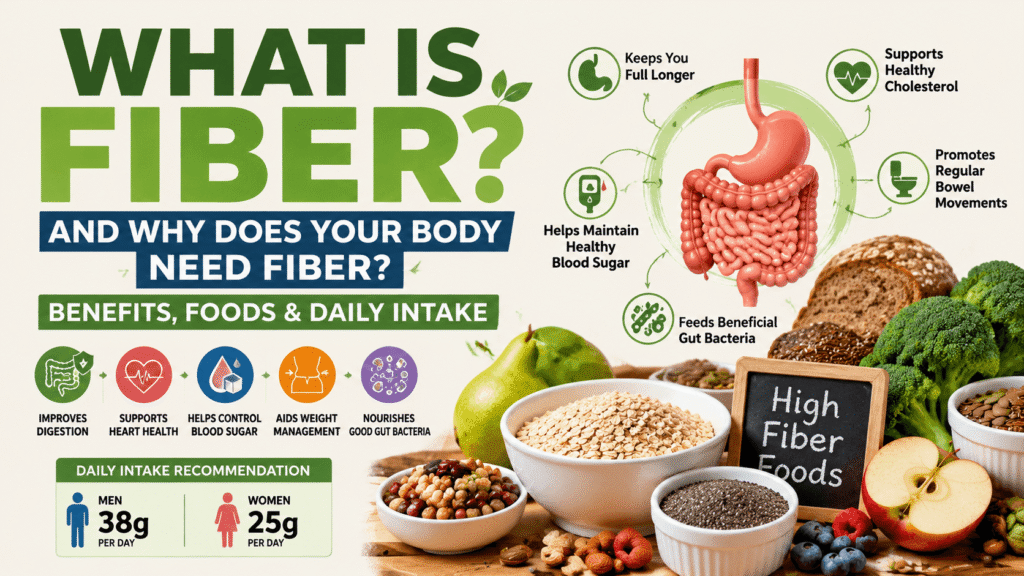
Fiber is a type of carbohydrate found naturally in plant foods that the human body cannot fully digest. The body needs fiber because it supports digestion, gut health, blood sugar control, cholesterol management, and healthy weight management.
Unlike sugars and starches, which are broken down and absorbed for energy, fiber passes through the digestive system and performs important functions along the way.
A diet rich in fiber usually includes:
- Fruits
- Vegetables
- Whole grains
- Beans and lentils
- Nuts and seeds
Understanding fiber helps you make better food choices and build a healthier eating pattern.
What Is Dietary Fiber and How Does It Work in the Body?
Dietary fiber is the part of plant foods that the body cannot completely break down and absorb. Instead, fiber travels through the digestive system and supports several important body processes.
Fiber is naturally found in plant cell structures. It is mainly present in foods such as:
- Vegetables
- Fruits
- Whole grains
- Legumes
- Nuts
- Seeds
Although fiber does not provide the same energy as digestible carbohydrates, it plays an important role in maintaining overall health.
When you eat fiber-rich foods:
- Fiber enters the digestive system.
- Some fiber absorbs water and forms a gel-like substance.
- Other fiber adds bulk to stool.
- Certain fibers feed beneficial gut bacteria.
- The digestive system functions more efficiently.
Why Is Fiber Different From Other Carbohydrates?
Fiber is different from other carbohydrates because the body cannot fully digest it into glucose for energy.
Most carbohydrates are broken down into simple sugars that the body uses as fuel.
Fiber behaves differently because human digestive enzymes cannot completely break down fiber.
This difference allows fiber to support functions such as:
- Slowing digestion
- Improving bowel movement regularity
- Supporting healthy blood sugar levels
- Increasing fullness after meals
For example:
A sugary drink is quickly absorbed and can raise blood glucose rapidly.
A fiber-rich food like oats digests more slowly and provides longer-lasting fullness.
Why Can the Body Not Fully Digest Fiber?
The body cannot fully digest fiber because humans lack the enzymes required to break down certain plant fibers.
Instead of being absorbed in the small intestine like sugars and starches, fiber moves into the large intestine.
There, different types of fiber may:
- Hold water
- Increase stool volume
- Become fermented by gut bacteria
This process allows fiber to influence:
- Digestive health
- Gut bacteria balance
- Metabolic health
What Are the Different Types of Dietary Fiber?
The main types of dietary fiber are soluble fiber and insoluble fiber. Both types support health but work differently inside the body.
Fiber is often classified based on how it interacts with water and digestion.
The two major categories are:
- Soluble fiber
- Insoluble fiber
Some fibers are also classified as fermentable because they interact with beneficial bacteria in the gut.
What Is Soluble Fiber and Why Is It Important?
Soluble fiber dissolves in water and forms a gel-like substance that slows digestion and supports healthy cholesterol and blood sugar levels.
Common sources of soluble fiber include:
- Oats
- Barley
- Beans
- Lentils
- Apples
- Citrus fruits
- Psyllium husk
Soluble fiber may help by:
Supporting Blood Sugar Control
Soluble fiber slows the movement of food through digestion, which can reduce rapid increases in blood glucose after meals.
Supporting Heart Health
Certain soluble fibers can help reduce LDL cholesterol levels by affecting cholesterol absorption.
Improving Fullness
Because soluble fiber slows digestion, it may help people feel satisfied for longer after eating.
What Is Insoluble Fiber and How Does It Support Digestion?
Insoluble fiber does not dissolve in water and helps add bulk to stool, supporting regular bowel movements.
Common sources include:
- Whole wheat
- Brown rice
- Vegetables
- Nuts
- Seeds
Insoluble fiber helps:
- Improve stool consistency
- Support digestive movement
- Reduce the likelihood of constipation
Examples:
Eating vegetables, whole grains, and nuts regularly provides insoluble fiber that supports normal digestive function.
What Is Fermentable Fiber and How Does It Support Gut Health?
Fermentable fiber is a type of fiber that beneficial gut bacteria can use as a food source.
The digestive system contains trillions of microorganisms known as the gut microbiome.
Certain fibers are fermented by these bacteria and produce compounds called:
Short-chain fatty acids (SCFAs)
These compounds may support:
- Intestinal health
- Gut barrier function
- Healthy inflammation responses
Sources of fermentable fiber include:
- Onions
- Garlic
- Bananas
- Beans
- Lentils
- Asparagus
Why Does the Body Need Fiber Every Day?
The body needs fiber every day because fiber supports digestion, heart health, blood sugar regulation, appetite control, and overall wellness.
Fiber is not just important for preventing constipation. It affects multiple systems throughout the body.
The main benefits include:
- Better digestion
- Improved bowel regularity
- Support for healthy cholesterol levels
- Better blood sugar management
- Increased fullness
- Support for healthy gut bacteria
How Does Fiber Improve Digestive Health?
Fiber improves digestive health by adding bulk to stool, supporting regular bowel movements, and helping maintain normal intestinal function.
One of the best-known benefits of fiber is supporting healthy digestion.
Fiber helps by:
- Increasing stool volume
- Softening stool when it absorbs water
- Supporting movement through the digestive tract
Low fiber intake is commonly associated with:
- Constipation
- Irregular bowel movements
- Poor digestive comfort
Increasing fiber gradually can help improve digestive regularity.
How Does Fiber Support Heart Health?
Fiber supports heart health by helping maintain healthy cholesterol levels and improving overall dietary quality.
Soluble fiber has been studied for its relationship with cholesterol management.
Foods rich in fiber often replace less nutritious foods and provide additional nutrients such as:
- Potassium
- Magnesium
- Antioxidants
- Plant compounds
Heart-healthy high-fiber foods include:
- Oats
- Beans
- Fruits
- Vegetables
- Whole grains
How Does Fiber Help Control Blood Sugar?
Fiber helps control blood sugar by slowing digestion and reducing the speed at which glucose enters the bloodstream.
Meals containing fiber generally digest more slowly than meals with refined carbohydrates alone.
For example:
White bread alone:
- Digests quickly
- May cause faster blood sugar changes
Whole-grain bread with vegetables and protein:
- Digests more slowly
- Provides more balanced nutrition
Fiber-rich eating patterns are often recommended as part of healthy dietary habits for metabolic health.
How Does Fiber Support Weight Management?
Fiber supports weight management because high-fiber foods often increase fullness while providing fewer calories per volume compared with many processed foods.
Fiber can help with weight control by:
- Increasing satiety
- Reducing unnecessary snacking
- Supporting healthier food choices
Examples of filling high-fiber foods:
- Vegetables
- Beans
- Lentils
- Fruits
- Whole grains
A bowl of lentil soup or vegetables can provide more fullness than a small processed snack with similar calories.
How Much Fiber Does the Body Need Daily?
Most adults need around 25–38 grams of dietary fiber per day, depending on age, sex, and individual needs.
Fiber requirements vary because nutritional needs are influenced by:
- Age
- Gender
- Total calorie intake
- Activity level
- Overall health
General guidance:
| Group | Recommended Daily Fiber Intake |
|---|
| Adult women | About 25 grams per day |
| Adult men | About 38 grams per day |
| Adults over 50 | Slightly lower needs due to lower calorie requirements |
Many people do not consume enough fiber because modern diets often contain more refined grains and processed foods.
A simple way to increase fiber intake is to replace low-fiber foods with whole-food alternatives.
Examples:
Instead of:
- White bread → Whole-grain bread
- White rice → Brown rice or quinoa
- Processed snacks → Fruits or nuts
Why Should Fiber Intake Increase Gradually?
Fiber intake should increase gradually because suddenly eating large amounts of fiber can cause digestive discomfort.
When someone quickly increases fiber, they may experience:
- Gas
- Bloating
- Stomach discomfort
- Changes in bowel habits
A better approach is:
- Add one high-fiber food at a time.
- Increase portions slowly.
- Drink enough water.
- Allow the digestive system to adjust.
Example:
Week 1:
- Add one serving of vegetables daily.
Week 2:
- Add beans or lentils several times per week.
Week 3:
- Increase whole grains and fruits.
Which Foods Are Highest in Fiber?
The best sources of fiber are whole plant foods, including fruits, vegetables, legumes, whole grains, nuts, and seeds.
Fiber is naturally found in plants, so eating a variety of plant-based foods is the easiest way to meet daily needs.
Which Fruits Provide the Most Fiber?
Many fruits provide fiber, especially when eaten whole with their natural skin and pulp.
High-fiber fruits include:
| Fruit | Fiber Benefits |
|---|
| Raspberries | Very high in fiber |
| Pears | Good source of fiber |
| Apples | Fiber-rich when eaten with skin |
| Oranges | Provide fiber plus vitamin C |
| Berries | Fiber and antioxidants |
A whole fruit is usually better than fruit juice because juice removes much of the natural fiber.
Example:
Whole orange:
Orange juice:
Which Vegetables Are Rich in Fiber?
Vegetables are excellent fiber sources because they provide fiber with vitamins, minerals, and antioxidants.
High-fiber vegetables include:
- Broccoli
- Brussels sprouts
- Carrots
- Green peas
- Sweet potatoes
- Spinach
- Artichokes
Simple ways to add more vegetables:
- Add vegetables to breakfast
- Include salad with lunch
- Make vegetables half of your dinner plate
Which Whole Grains Contain Fiber?
Whole grains contain more fiber because they keep the outer layers of the grain where much of the fiber is located.
High-fiber whole grains include:
- Oats
- Barley
- Brown rice
- Quinoa
- Whole wheat bread
- Whole-grain pasta
Whole grains can support:
- Better fullness
- Balanced meals
- Improved digestive health
Which Legumes, Nuts, and Seeds Are High in Fiber?
Legumes, nuts, and seeds are concentrated sources of fiber and also provide protein and healthy fats.
Examples include:
Legumes
- Lentils
- Chickpeas
- Black beans
- Kidney beans
- Peas
Nuts
Seeds
- Chia seeds
- Flaxseeds
- Pumpkin seeds
Adding these foods can increase fiber without making meals complicated.
What Happens If You Do Not Eat Enough Fiber?
Not eating enough fiber can negatively affect digestion and may make it harder to maintain overall health.
A low-fiber diet may contribute to:
- Constipation
- Poor bowel regularity
- Lower fullness after meals
- Reduced intake of nutrient-rich plant foods
Fiber-rich foods often contain other important nutrients, so low fiber intake may also indicate a diet lacking variety.
How Does Low Fiber Intake Affect Digestion?
Low fiber intake can slow digestion and make bowel movements less regular.
Without enough fiber:
- Stool may become harder
- Bowel movement frequency may decrease
- Digestive discomfort may increase
Increasing fiber from foods such as vegetables, fruits, and whole grains can support healthier digestion.
Can Low Fiber Intake Affect Long-Term Health?
Consistently low fiber intake may be associated with increased risk of several health problems, although overall diet quality and lifestyle also play important roles.
Research has linked higher fiber intake with benefits related to:
- Cardiovascular health
- Metabolic health
- Digestive function
Fiber works best as part of an overall healthy lifestyle that includes:
- Balanced nutrition
- Physical activity
- Healthy body weight
- Adequate hydration
How Can You Add More Fiber to Your Diet Easily?
The easiest way to increase fiber is to add more plant-based foods gradually and replace refined foods with whole-food alternatives.
Simple strategies:
Add Vegetables to Every Meal
Examples:
- Spinach in eggs
- Salad with lunch
- Roasted vegetables with dinner
Choose Whole Grains
Replace:
- White bread → Whole-grain bread
- White rice → Brown rice
Eat More Legumes
Add:
- Lentils to soups
- Chickpeas to salads
- Beans to meals
Snack on Fiber-Rich Foods
Choose:
- Fruits
- Nuts
- Seeds
- Yogurt with berries
What Are Simple High-Fiber Meal Ideas?
High-fiber meals can be simple by combining vegetables, whole grains, legumes, and protein sources.
Examples:
Breakfast
- Oatmeal with berries and chia seeds
- Whole-grain toast with avocado
- Greek yogurt with fruit and nuts
Lunch
- Lentil soup with salad
- Chickpea bowl with vegetables
- Brown rice with beans
Dinner
- Fish with vegetables and quinoa
- Chicken with roasted vegetables
- Tofu stir-fry with brown rice
Do You Need Fiber Supplements?
Most people can get enough fiber from food, but fiber supplements may be useful for some individuals when recommended or needed.
Common fiber supplements include:
- Psyllium husk
- Methylcellulose
- Other soluble fiber products
Supplements may help some people with:
- Increasing fiber intake
- Supporting bowel regularity
However, whole foods provide additional nutrients that supplements do not provide.
Before using supplements regularly, people with medical conditions should consult a healthcare professional.
What Are Common Mistakes People Make About Fiber?
The biggest fiber mistakes are increasing intake too quickly, not drinking enough water, and relying only on supplements instead of whole foods.
Why Is Increasing Fiber Too Quickly a Problem?
Increasing fiber too quickly can cause gas, bloating, and digestive discomfort because the gut needs time to adapt.
Better approach:
- Increase slowly
- Spread fiber throughout the day
- Drink enough fluids
Why Is Drinking Water Important When Eating More Fiber?
Water is important because many types of fiber work by absorbing water and adding softness or bulk to stool.
Without enough fluid, increased fiber may sometimes worsen constipation.
Good habits:
- Drink water regularly
- Increase fluids when increasing fiber intake
- Choose water-rich foods like fruits and vegetables
Key Takeaway: Why Is Fiber Essential for a Healthy Body?
Fiber is essential because it supports digestion, gut health, blood sugar balance, heart health, and healthy weight management.
The easiest way to get enough fiber is to regularly eat:
✅ Fruits
✅ Vegetables
✅ Whole grains
✅ Beans and lentils
✅ Nuts and seeds
Fiber is not just a digestive nutrient. It is an important part of a healthy eating pattern that supports the entire body.
Frequently Asked Questions About Fiber
What is fiber in simple words?
Fiber is a type of carbohydrate found in plant foods that the body cannot fully digest. It helps support digestion and overall health.
Why does the human body need fiber?
The body needs fiber because it supports bowel regularity, gut health, cholesterol management, blood sugar control, and appetite regulation.
What foods are highest in fiber?
High-fiber foods include beans, lentils, vegetables, fruits, oats, whole grains, nuts, and seeds.
How much fiber should I eat daily?
Most adults need about 25–38 grams of fiber per day depending on age, sex, and calorie needs.
Can fiber help with weight loss?
Yes. Fiber can support weight management by increasing fullness and helping people choose more nutrient-dense foods.
Is too much fiber harmful?
Too much fiber too quickly may cause gas, bloating, and digestive discomfort. Increasing fiber gradually is recommended.
Is fiber only important for digestion?
No. Fiber also supports heart health, blood sugar regulation, gut bacteria, and healthy weight management.
Are fiber supplements better than fiber foods?
Whole foods are generally preferred because they provide fiber along with vitamins, minerals, and other beneficial plant compounds.
Conclusion
Fiber is one of the most important components of a healthy diet.
Although the body does not digest fiber like other carbohydrates, fiber performs essential functions throughout the digestive and metabolic systems.
A simple goal is to add more plants to your meals:
- More vegetables
- More fruits
- More whole grains
- More legumes
- More nuts and seeds
Small changes in daily eating habits can make a meaningful difference in long-term health.
Sources & References
This article is based on nutrition guidance and research from trusted health organizations, including NIH, Harvard T.H. Chan School of Public Health, WHO, FDA, and the Academy of Nutrition and Dietetics.











One Response