What Is the Best Diet Plan for Weight Loss Beginners?
Starting a weight loss journey can feel confusing because there is a lot of conflicting advice about what to eat, what to avoid, and which diet works best. For beginners, the best approach is usually not an extreme diet but a simple, balanced eating plan that creates healthy habits.
The best diet plan for weight loss beginners is a calorie-controlled, nutrient-rich eating pattern that includes enough protein, fiber, healthy fats, and whole foods while reducing excess calories.
A successful beginner weight loss diet should focus on three things:
- Eating fewer calories than the body uses
- Choosing foods that keep you full and energized
- Building habits that can be followed long-term
Weight loss is not about eating as little as possible. It is about creating a sustainable balance between nutrition, activity, and lifestyle.
Table of Contents
ToggleHow Does a Beginner Weight Loss Diet Plan Actually Work?
A beginner weight loss diet plan works by creating a consistent calorie deficit while providing enough nutrients to support health, energy, and muscle maintenance.
A calorie deficit means your body uses more energy than it receives from food.
When this happens over time, the body uses stored energy, including stored fat, which can lead to weight loss.
A healthy beginner approach combines:
- Moderate calorie reduction
- Balanced meals
- Higher protein intake
- More vegetables and fruits
- Regular physical activity
Why Does a Calorie Deficit Help Beginners Lose Weight?
A calorie deficit helps beginners lose weight because it forces the body to use stored energy when calorie intake is lower than calorie expenditure.
Your body burns calories every day for:
- Breathing
- Heart function
- Brain activity
- Digestion
- Movement
- Exercise
The total number of calories your body uses is called Total Daily Energy Expenditure (TDEE).
Weight change depends on the relationship between:
Calories eaten → Calories burned → Weight change
Example:
A person needs around 2,000 calories daily to maintain their weight.
If they consistently eat around 1,700 calories while staying active:
- Daily deficit = 300 calories
- The body gradually uses stored energy
- Weight may decrease over time
However, the quality of the diet matters. A very low-calorie diet that lacks protein and nutrients may be difficult to maintain and may negatively affect energy levels.
Why Are Protein and Fiber Important for Weight Loss?
Protein and fiber are important for weight loss because they improve fullness, support muscle maintenance, and help beginners follow their diet more easily.
Many beginners focus only on eating less, but food choices also matter.
Why Is Protein Important in a Beginner Weight Loss Diet?
Protein helps the body:
- Maintain muscle during weight loss
- Repair tissues
- Support recovery
- Control hunger
High-protein foods include:
- Eggs
- Chicken breast
- Fish
- Greek yogurt
- Cottage cheese
- Lentils
- Beans
- Tofu
Including protein in each meal can make a diet easier to follow because protein-rich foods are often more satisfying.
Example:
Instead of eating only toast for breakfast:
Better option:
- Eggs
- Whole-grain toast
- Vegetables
- Fruit
This provides more balanced nutrition.
Why Is Fiber Important for Weight Loss?
Fiber supports weight loss because it helps you feel full and supports healthy digestion.
High-fiber foods include:
- Vegetables
- Fruits
- Beans
- Lentils
- Oats
- Whole grains
Fiber-rich foods usually provide:
- More volume
- Longer-lasting fullness
- Better digestive health
Examples:
A bowl of vegetables and beans can provide more fullness than a small processed snack with similar calories.
What Should Beginners Include in a Weight Loss Diet Plan?
A beginner weight loss diet should include protein-rich foods, vegetables, fruits, whole grains, and healthy fats in balanced portions.
A simple plate method can help beginners create better meals:
Half Plate: Vegetables
Examples:
- Spinach
- Broccoli
- Carrots
- Salad greens
- Peppers
Benefits:
- Low calorie density
- High fiber
- Rich in vitamins and minerals
Quarter Plate: Protein
Examples:
- Chicken
- Fish
- Eggs
- Beans
- Lentils
- Tofu
Benefits:
- Supports muscle
- Improves fullness
Quarter Plate: Healthy Carbohydrates
Examples:
- Brown rice
- Oats
- Potatoes
- Whole-grain bread
- Quinoa
Benefits:
- Provides energy
- Supports daily activity
Add Healthy Fats in Moderate Amounts
Examples:
- Nuts
- Seeds
- Olive oil
- Avocado
Healthy fats support:
- Hormone function
- Nutrient absorption
- Overall health
Which Protein Foods Should Beginners Eat?
Beginners should choose lean protein sources that provide high nutritional value without excessive calories.
Good protein choices include:
| Food | Benefits |
|---|---|
| Eggs | Affordable and nutrient-rich |
| Chicken breast | High protein with low fat |
| Fish | Protein plus healthy fats |
| Greek yogurt | Protein and calcium |
| Lentils | Plant protein and fiber |
| Beans | Protein and minerals |
| Tofu | Plant-based protein option |
Protein needs vary depending on body size, age, activity level, and goals.
Which Carbohydrates Are Best for Weight Loss?
The best carbohydrates for weight loss are minimally processed carbohydrates that provide fiber and nutrients.
Good choices include:
- Oats
- Brown rice
- Sweet potatoes
- Fruits
- Vegetables
- Whole-grain products
Carbohydrates are not automatically “bad.”
They provide the energy needed for:
- Exercise
- Daily activities
- Brain function
The goal is to choose better sources and appropriate portions.
Which Healthy Fats Support Weight Management?
Healthy fats support weight management by helping with hormones, nutrient absorption, and meal satisfaction when eaten in appropriate amounts.
Healthy fat sources include:
- Olive oil
- Nuts
- Seeds
- Avocado
- Fatty fish
Because fats contain more calories per gram than protein and carbohydrates, portion size matters.
Which Fruits and Vegetables Should Beginners Choose?
Beginners should choose a variety of colorful fruits and vegetables because they provide fiber, vitamins, minerals, and fewer calories compared with many processed foods.
Examples:
Vegetables:
- Leafy greens
- Broccoli
- Cauliflower
- Cucumbers
- Tomatoes
- Carrots
Fruits:
- Apples
- Berries
- Oranges
- Bananas
- Melons
Fruit contains natural sugar, but it also provides fiber and nutrients.
How Many Calories Should Beginners Eat to Lose Weight?
Beginners should consume enough calories to create a moderate deficit without causing excessive hunger, fatigue, or difficulty maintaining the diet.
Calorie needs are different for every person.
They depend on:
- Age
- Gender
- Height
- Weight
- Activity level
- Metabolism
A personalized calorie target is usually more accurate than following a universal number.
How Can Beginners Estimate Their Calorie Needs?
Beginners can estimate calorie needs by considering their maintenance calories and creating a small reduction for weight loss.
The process generally involves:
- Estimating daily energy needs
- Creating a moderate calorie deficit
- Monitoring progress
- Adjusting when necessary
Tracking tools can help beginners understand:
- Portion sizes
- Eating patterns
- Hidden calories
However, calorie tracking should be a learning tool, not a source of stress.
Why Should Beginners Avoid Extreme Calorie Restrictions?
Beginners should avoid extreme calorie restrictions because very aggressive diets are often difficult to maintain and may increase the risk of nutrient deficiencies.
Very restrictive diets may lead to:
- Low energy
- Increased hunger
- Poor workout performance
- Difficulty maintaining results
A sustainable diet usually works better because consistency creates long-term progress.
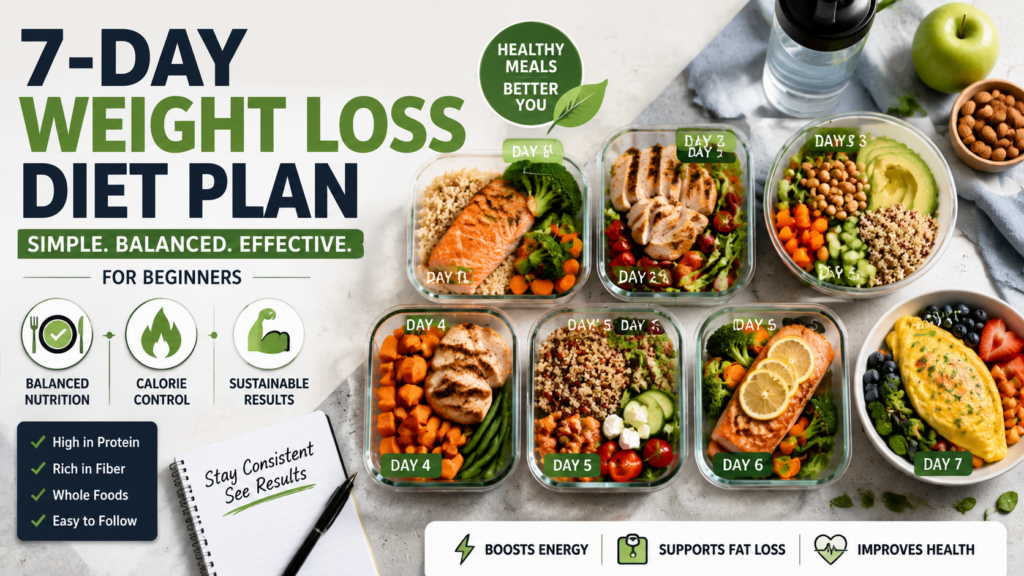
What Does a Simple 7-Day Weight Loss Diet Plan Look Like?
A simple beginner weight loss meal plan should include balanced meals with protein, vegetables, healthy carbohydrates, fiber, and controlled portions. The goal is not to eat as little as possible but to create a sustainable calorie deficit while keeping your body nourished.
Note: This is a general example plan. Individual calorie needs vary depending on age, gender, height, weight, activity level, and health conditions.
Day 1
Breakfast
Oatmeal with berries and Greek yogurt
- Rolled oats
- Greek yogurt
- Blueberries or strawberries
- A small amount of nuts or seeds
Why it helps: Provides protein, fiber, and long-lasting energy.
Lunch
Grilled chicken salad with whole-grain bread
- Grilled chicken breast
- Mixed green salad
- Vegetables
- Whole-grain bread
- Olive oil dressing
Dinner
Fish with vegetables and brown rice
- Grilled salmon or white fish
- Steamed vegetables
- Brown rice
Snack
Apple with nuts
- One apple
- Small handful of almonds or walnuts
Day 2
Breakfast
Eggs with vegetables
- 2 eggs
- Spinach, tomatoes, peppers
- Whole-grain toast
Lunch
Lentil bowl with salad
- Cooked lentils
- Mixed vegetables
- Salad greens
- Small serving of brown rice
Dinner
Chicken with roasted vegetables
- Grilled chicken
- Roasted broccoli, carrots, or zucchini
- Sweet potato
Snack
Greek yogurt
- Plain Greek yogurt
- Optional berries
Day 3
Breakfast
Protein smoothie with fruit
Ingredients:
- Greek yogurt or protein powder
- Banana or berries
- Spinach
- Milk or unsweetened almond milk
Lunch
Turkey or tofu wrap
- Whole-grain wrap
- Turkey breast or tofu
- Vegetables
- Hummus
Dinner
Beans with vegetables and whole grains
- Beans or chickpeas
- Mixed vegetables
- Quinoa or brown rice
Snack
Boiled eggs
- 1–2 boiled eggs
- Optional vegetable sticks
Day 4
Breakfast
Greek yogurt bowl
Ingredients:
- Greek yogurt
- Oats
- Berries
- Chia seeds
Lunch
Tuna or chicken salad bowl
Ingredients:
- Tuna or grilled chicken
- Lettuce
- Cucumber
- Tomatoes
- Whole-grain crackers
Dinner
Lean meat with vegetables
Ingredients:
- Lean beef or chicken
- Green vegetables
- Small serving of potatoes
Snack
Fruit with peanut butter
- Apple slices
- 1 tablespoon natural peanut butter
Day 5
Breakfast
Whole-grain toast with eggs
Ingredients:
- 2 eggs
- Whole-grain toast
- Avocado slices
- Vegetables
Lunch
Chicken and vegetable rice bowl
Ingredients:
- Grilled chicken
- Brown rice
- Vegetables
- Yogurt-based sauce
Dinner
Vegetable soup with protein
Ingredients:
- Lentil soup or chicken soup
- Side salad
Snack
Nuts and fruit
- Almonds or walnuts
- Orange or apple
Day 6
Breakfast
Oatmeal protein breakfast
Ingredients:
- Oats
- Milk
- Protein source (Greek yogurt/protein powder)
- Cinnamon
- Fruit
Lunch
Chickpea salad
Ingredients:
- Chickpeas
- Vegetables
- Feta cheese (optional)
- Olive oil dressing
Dinner
Grilled fish with vegetables
Ingredients:
- Fish fillet
- Steamed vegetables
- Small serving of quinoa or rice
Snack
Cottage cheese or yogurt
- Cottage cheese
- Fruit topping
Day 7
Breakfast
Vegetable omelet
Ingredients:
- Eggs
- Spinach
- Mushrooms
- Peppers
Lunch
Healthy chicken sandwich
Ingredients:
- Whole-grain bread
- Chicken breast
- Lettuce
- Tomato
- Yogurt sauce
Dinner
Balanced dinner plate
Includes:
- Lean protein (chicken, fish, beans, tofu)
- Vegetables
- Whole grains
Snack
Hummus with vegetables
- Carrot sticks
- Cucumber
- Hummus
Simple Beginner Portion Guide
| Food Group | Portion Guide |
|---|---|
| Protein | Palm-sized portion |
| Vegetables | Half of your plate |
| Carbohydrates | Fist-sized portion |
| Healthy fats | Thumb-sized portion |
What Should Beginners Eat for Breakfast, Lunch, and Dinner?
Beginners should build each meal around protein, vegetables or fruits, high-fiber carbohydrates, and healthy fats to support weight loss and energy.
A balanced meal structure helps prevent extreme hunger and makes a diet easier to follow.
What Should Beginners Eat for Breakfast?
A weight-loss breakfast should include protein and fiber because these nutrients help control hunger and provide steady energy throughout the morning.
Good beginner breakfast options include:
Option 1:
- Eggs
- Whole-grain toast
- Vegetables
- Fruit
Option 2:
- Greek yogurt
- Berries
- Oats
- Nuts
Option 3:
- Oatmeal
- Protein source
- Fresh fruit
Avoid making breakfast only:
- Sugary cereals
- Sweet pastries
- High-calorie drinks
These foods may provide quick energy but often do not keep people full for long.
What Should Beginners Eat for Lunch?
A healthy weight loss lunch should contain a lean protein source, vegetables, and a controlled portion of carbohydrates.
Examples:
Chicken Lunch Bowl
- Grilled chicken
- Brown rice
- Vegetables
- Salad
Vegetarian Lunch Bowl
- Lentils
- Chickpeas
- Vegetables
- Whole grains
Fish Lunch
- Fish
- Salad
- Sweet potato
A balanced lunch can help reduce afternoon cravings and prevent overeating later.
What Should Beginners Eat for Dinner?
A beginner-friendly weight loss dinner should be filling but balanced, with protein and vegetables as the main focus.
Examples:
- Grilled fish with vegetables
- Chicken stir-fry
- Lentil soup with salad
- Tofu with vegetables
A common mistake is eating very little during the day and then overeating at night.
A balanced dinner helps maintain consistency.
What Are Healthy Snacks for Weight Loss?
The best weight loss snacks combine protein, fiber, or healthy fats to provide fullness between meals.
Examples:
| Snack | Why It Helps |
|---|---|
| Greek yogurt | High protein |
| Apple with peanut butter | Fiber + healthy fat |
| Nuts | Healthy fats and minerals |
| Boiled eggs | Protein-rich |
| Carrots with hummus | Fiber + plant protein |
| Fruit with cottage cheese | Balanced nutrients |
Snacks are not required for everyone, but they can help beginners manage hunger.
Which Foods Should Beginners Avoid or Limit During Weight Loss?
Beginners do not need to completely remove foods, but limiting high-calorie, low-nutrient foods can make weight loss easier.
The focus should be on reducing foods that provide many calories without keeping you full.
Why Should Sugary Drinks Be Reduced?
Sugary drinks can make weight loss harder because they add calories without providing much fullness.
Examples:
- Soft drinks
- Sweetened juices
- Energy drinks
- Sugary coffee beverages
Better choices:
- Water
- Unsweetened tea
- Black coffee
- Sparkling water
Liquid calories are easy to consume and may not reduce hunger as much as solid foods.
Why Should Ultra-Processed Foods Be Limited?
Ultra-processed foods should be limited because they are often high in calories, added sugars, sodium, and unhealthy fats while being less filling.
Examples:
- Chips
- Candy
- Fast food meals
- Packaged desserts
This does not mean these foods can never be eaten.
A sustainable diet allows flexibility.
How Can Beginners Make Their Diet Plan Easier to Follow?
Beginners succeed more often when they create simple systems instead of relying only on motivation.
Small habits make a big difference.
How Does Meal Planning Improve Weight Loss?
Meal planning improves weight loss because it reduces impulsive food choices and helps people prepare healthier meals in advance.
Simple meal planning steps:
- Choose meals for the week
- Prepare protein sources
- Keep healthy snacks available
- Shop with a list
- Prepare meals ahead when possible
Examples:
Prepare:
- Boiled eggs
- Cooked chicken
- Washed vegetables
- Portion-controlled snacks
How Does Tracking Food Help Beginners?
Tracking food can help beginners understand eating patterns, portion sizes, and calorie intake.
Tracking methods include:
- Food journals
- Nutrition apps
- Portion guides
Tracking can help identify:
- Hidden calories
- Frequent snacking
- Large portions
However, tracking should support awareness, not create anxiety.
How Can Beginners Stay Consistent?
Beginners stay consistent by focusing on realistic habits instead of trying to achieve perfection.
Helpful strategies:
- Set small goals
- Focus on weekly progress
- Avoid all-or-nothing thinking
- Prepare meals ahead
- Celebrate non-scale improvements
Examples of progress:
- Better energy
- Improved fitness
- Better food choices
- Improved strength
Should Beginners Combine Diet With Exercise for Better Results?
Combining a healthy diet with physical activity usually provides better results because exercise supports calorie burning, muscle maintenance, and overall health.
Diet controls food intake, while exercise improves:
- Strength
- Fitness
- Energy expenditure
- Body composition
Why Does Strength Training Help During Weight Loss?
Strength training helps beginners maintain muscle while losing fat.
Benefits include:
- Improved strength
- Better body composition
- Increased physical function
Examples:
- Bodyweight exercises
- Resistance bands
- Weight training
Muscle maintenance is especially important because losing weight should ideally mean losing more fat and less muscle.
Why Is Walking Useful for Beginners?
Walking is an excellent beginner activity because it is simple, accessible, and easy to maintain.
Benefits:
- Increases daily movement
- Supports heart health
- Burns additional calories
- Improves mood
Beginners do not need intense workouts to start improving their health.
What Are the Biggest Beginner Weight Loss Mistakes?
The biggest beginner mistakes are following extreme diets, focusing only on the scale, and creating unrealistic expectations.
Why Do Crash Diets Usually Fail?
Crash diets often fail because they are difficult to maintain and may not teach sustainable eating habits.
Problems with extreme diets:
- Excessive hunger
- Low energy
- Poor adherence
- Higher chance of regaining weight
A slower, sustainable approach often produces better long-term results.
Why Is Eating Too Little Protein a Problem?
Eating too little protein during weight loss may make it harder to maintain muscle and control hunger.
Protein supports:
- Muscle repair
- Recovery
- Fullness
Good protein sources should be included throughout the day.
Why Is Focusing Only on the Scale a Mistake?
The scale does not show the complete picture of health because weight changes can come from fat, muscle, water, and other factors.
Other progress measurements include:
- Waist measurement
- Strength improvements
- Energy levels
- Clothing fit
- Fitness improvements
Key Takeaway: What Is the Best Beginner Approach for Weight Loss?
The best diet plan for weight loss beginners is a balanced, sustainable eating pattern that creates a calorie deficit while providing enough protein, fiber, and nutrients.
Beginners should focus on:
✅ Eating more whole foods
✅ Including protein in meals
✅ Eating vegetables and fruits daily
✅ Managing portions
✅ Staying physically active
✅ Creating habits they can maintain
The best diet is not the strictest diet.
The best diet is the one you can follow consistently.
FAQs
What is the easiest diet plan for weight loss beginners?
The easiest diet plan is a balanced, calorie-controlled diet that includes protein, vegetables, fruits, whole grains, and healthy fats without extreme restrictions.
How much weight can beginners safely lose per week?
Many health professionals consider gradual weight loss of about 1–2 pounds (0.5–1 kg) per week a common sustainable range, although results vary between individuals.
Should beginners count calories?
Beginners can track calories to understand portions and eating habits, but strict tracking is not required for everyone.
What foods help beginners lose weight?
Foods that support weight loss include lean proteins, vegetables, fruits, legumes, whole grains, and other nutrient-dense foods.
Can beginners lose weight without exercise?
Yes, weight loss can occur through diet changes alone because calorie intake strongly influences weight. However, exercise provides additional health benefits.
What should beginners eat at night while losing weight?
A good evening meal should include protein and vegetables, with portions adjusted according to daily calorie needs.
Is skipping meals a good weight loss strategy?
Skipping meals is not necessary for weight loss. Some people prefer fewer meals, but others maintain better control with regular balanced meals.
How long does it take beginners to see weight loss results?
Results vary, but consistent healthy habits usually produce noticeable changes over several weeks. Long-term consistency matters more than rapid results.
Conclusion
A beginner’s weight loss diet does not need to be complicated.
Successful weight loss comes from understanding the basics:
- Eat appropriate portions
- Choose nutritious foods
- Prioritize protein and fiber
- Maintain a calorie deficit
- Stay consistent
Small daily choices create long-term results.
A simple diet plan that fits your lifestyle is usually more effective than a perfect plan that cannot be maintained.