

Why Your Legs May Feel Weaker as You Get Older—and What Helps
You may first notice it on the stairs.
A flight you once climbed without thinking suddenly feels harder. Getting up from a low chair takes more effort. A long walk leaves your legs feeling tired sooner than it used to.
It can be tempting to dismiss these changes as simply “getting old.” But there is more happening beneath the surface.
As we age, changes in muscle mass, strength, activity levels, balance, and overall health can affect how powerful our legs feel. The good news is that getting older does not mean you have to simply accept becoming progressively weaker.
Regular movement and appropriately designed strength training can help older adults maintain—and in some cases improve—strength and physical function.
Why Your Legs Can Feel Weaker With Age
One important reason is the gradual age-related decline in muscle mass and strength.
The National Institute on Aging explains that muscle mass and strength generally reach their highest levels around ages 30–35. Physical performance then tends to decline gradually, with the decline becoming faster later in life.
Age-related loss of muscle mass and strength is commonly associated with sarcopenia.
Your legs can make these changes especially noticeable because you rely on them throughout the day.
Think about how many everyday activities require lower-body strength:
- Getting out of a chair
- Climbing stairs
- Walking
- Carrying groceries
- Getting in and out of a car
- Maintaining balance
- Getting up from the floor
When your leg muscles become weaker, activities that once required little thought may start requiring noticeably more effort.
But aging itself is only part of the picture.
Less Activity Can Make the Problem Worse
People often become less physically active as they get older.
Work routines change. Joint discomfort may discourage activity. Long periods of sitting can become more common. Some people stop doing the recreational activities or sports they enjoyed when they were younger.
That can create a cycle:
Move less → muscles receive less challenge → strength declines → movement feels harder → move even less.
Breaking that cycle can be important.
The CDC recommends that adults aged 65 and older combine aerobic activity, muscle-strengthening exercise, and balance activities each week.
Walking is valuable, but walking and strength training do different jobs.
Walking can support cardiovascular fitness and general activity. Strength exercises provide resistance that challenges muscles to produce force.
That resistance can come from:
- Your own body weight
- Resistance bands
- Dumbbells or other weights
- Weight machines
- Everyday movements performed progressively
What Can Actually Help Your Legs Stay Strong?
One of the most useful tools is progressive resistance exercise.
That does not necessarily mean lifting extremely heavy weights or becoming a bodybuilder.
It means asking your muscles to work against resistance and gradually progressing as your ability improves.
Research involving older adults with sarcopenia has found that resistance training can improve measures of muscle strength and physical function, although the size of the benefit varies between studies and individuals.
For many older adults, simple movements can form the foundation of a lower-body routine.
1. Sit-to-Stands
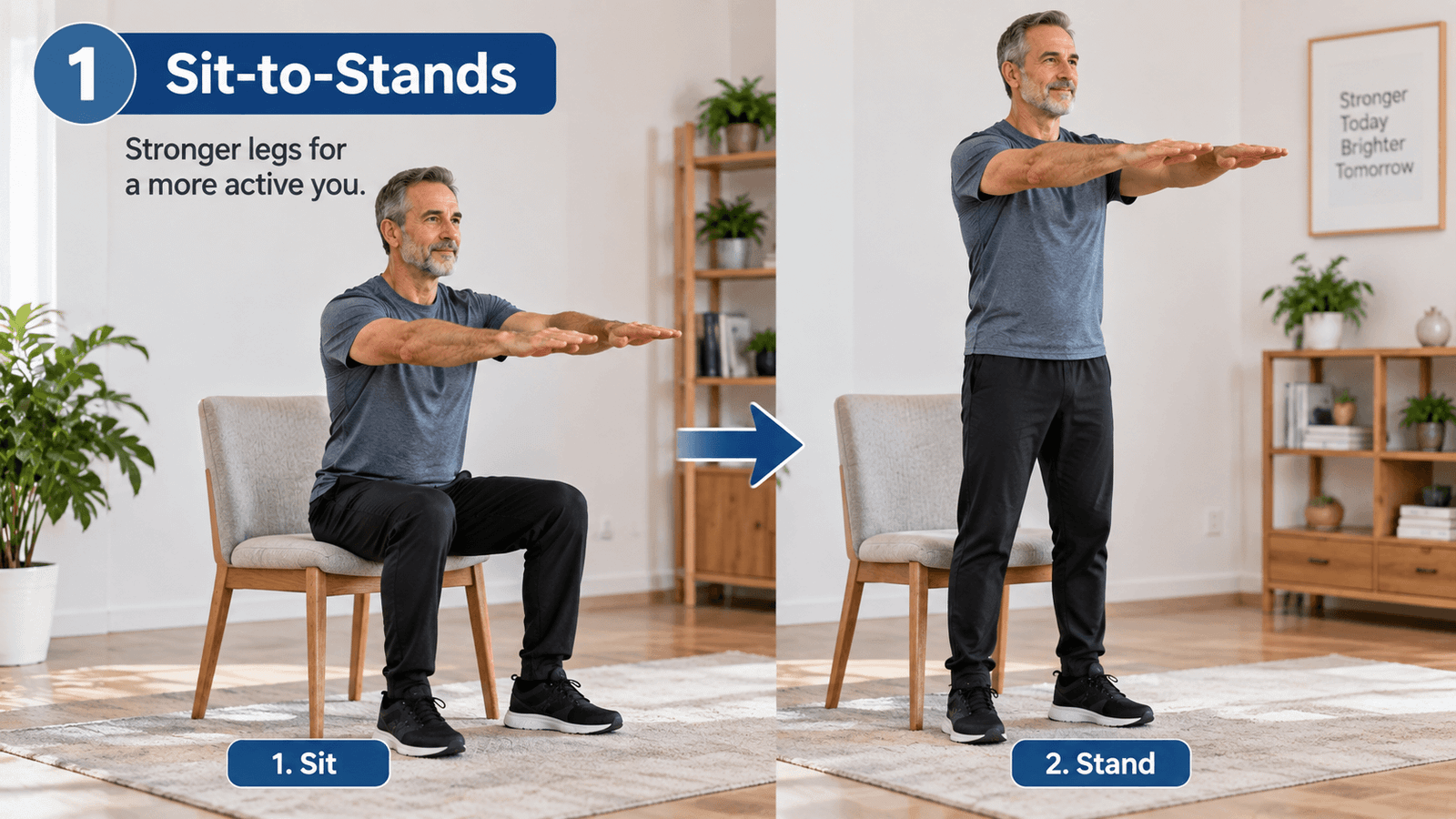
Sit in a stable chair and stand up under control, then slowly sit back down.
This movement trains muscles used every time you rise from a chair.
2. Supported Squats
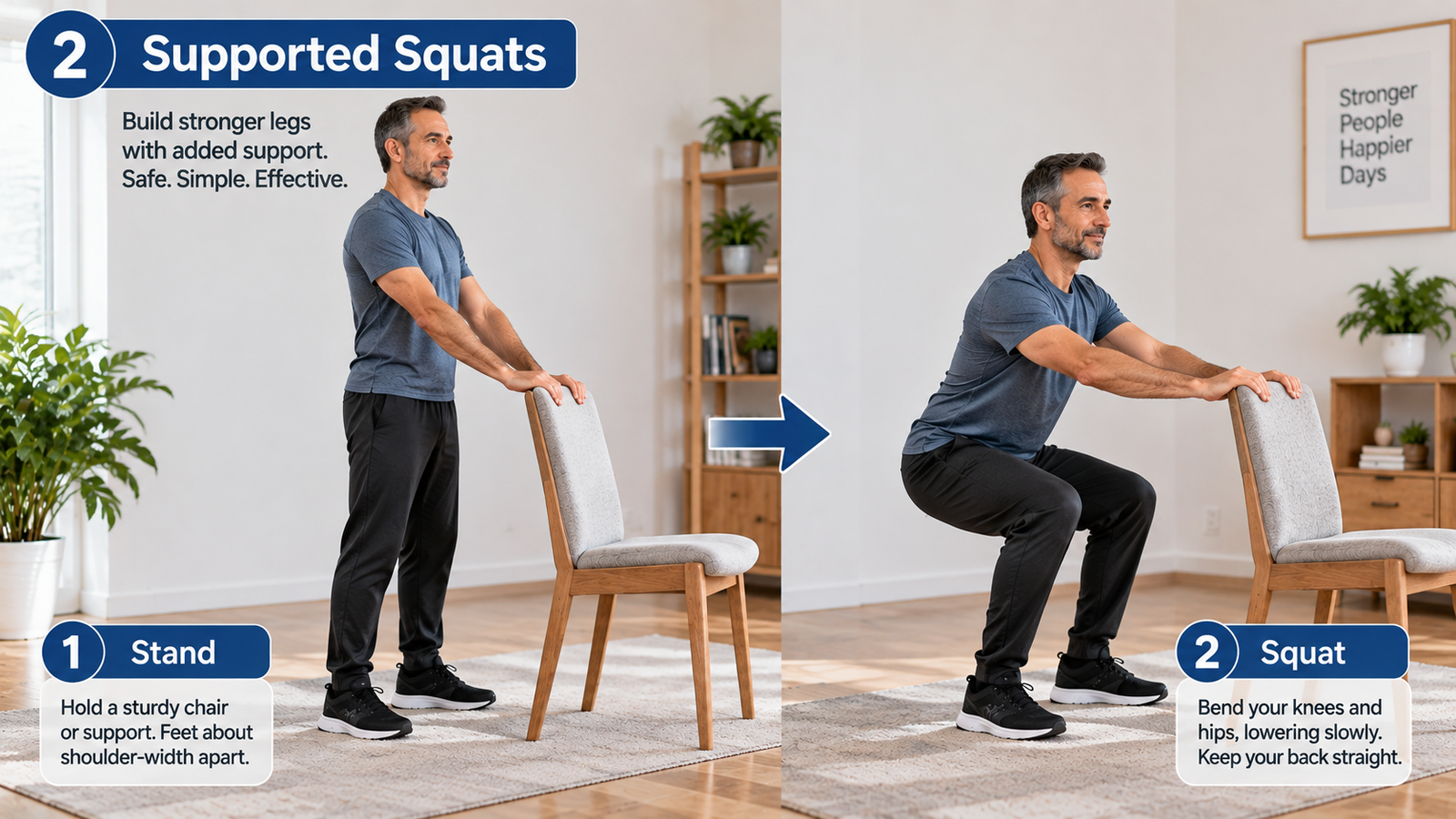
Hold a sturdy support if necessary and bend your hips and knees into a comfortable squat before standing again.
You do not need to squat deeply for the movement to be useful.
3. Step-Ups
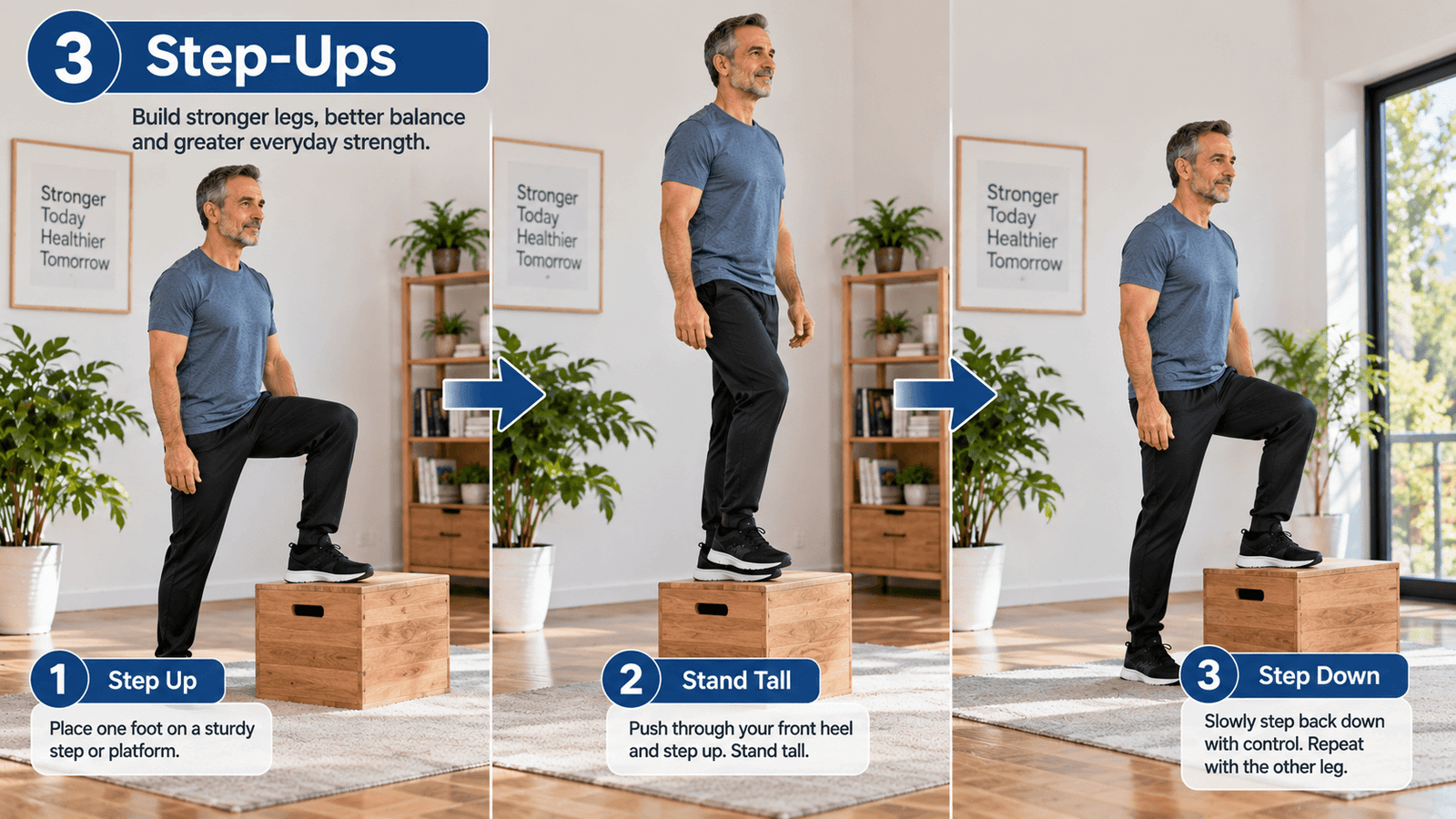
Using a safe, low step, step up and return to the starting position.
This movement resembles the strength demands of climbing stairs.
4. Calf Raises
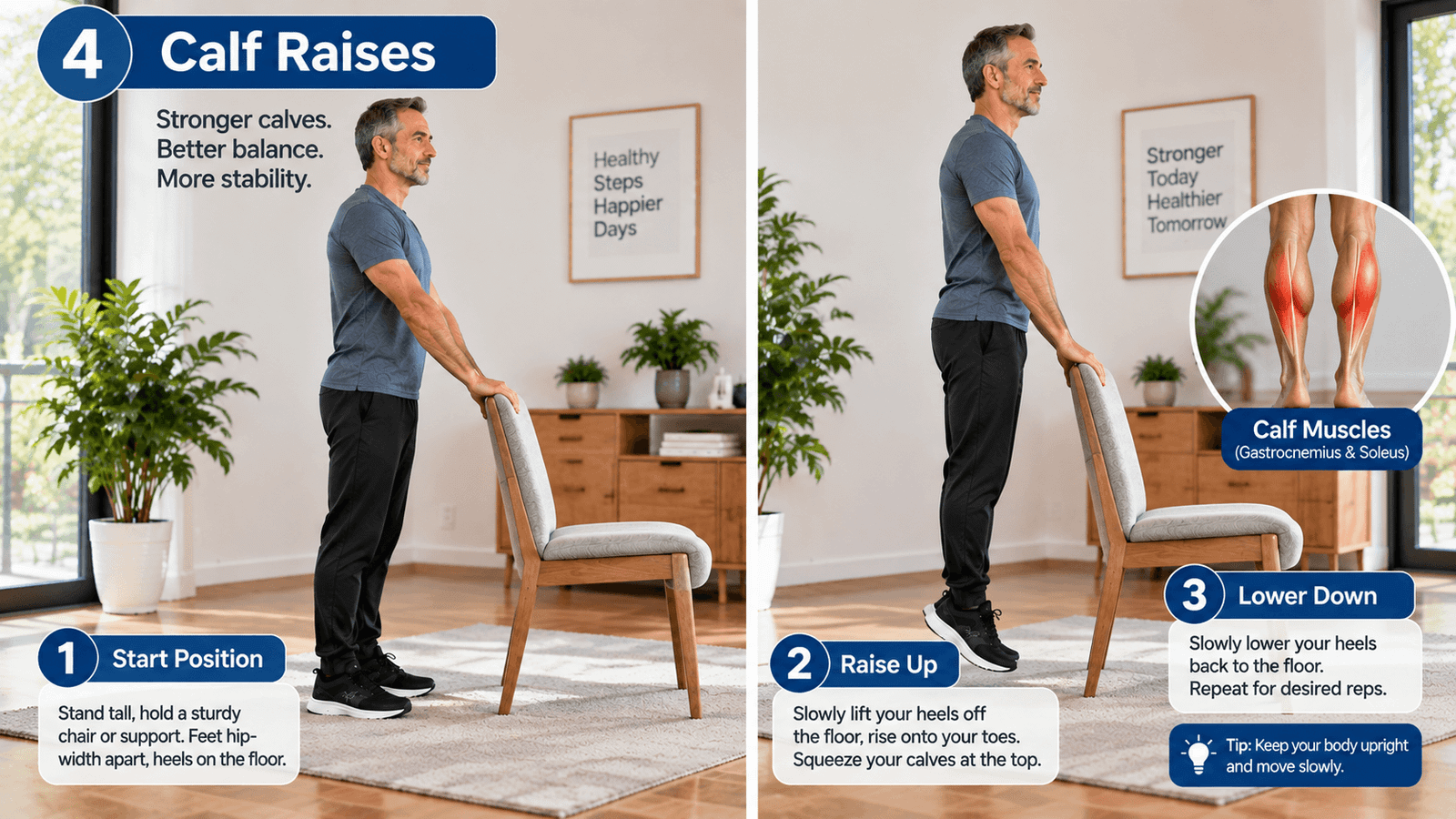
While holding a stable surface if needed, slowly lift your heels from the floor and lower them again.
5. Supported Reverse Lunges
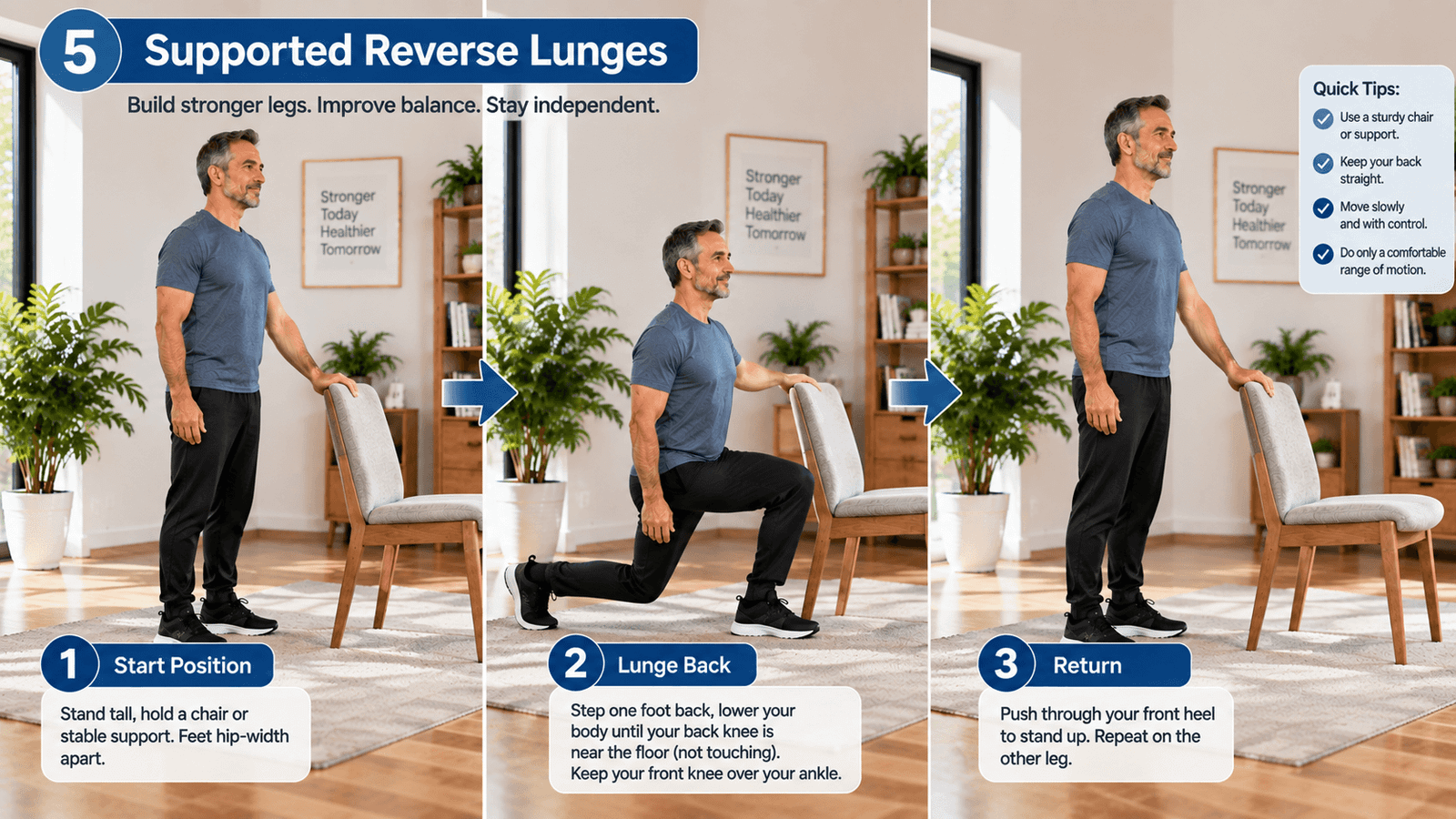
Holding a stable support, step one foot backward and lower only as far as is comfortable before returning to the starting position.
Balance and joint comfort should determine the range of motion.
If you want a more complete lower-body routine, see our guide to leg strength exercises for older adults.
You Don’t Need to Train Every Day
More exercise is not automatically better.
Recovery matters, especially when you are beginning resistance training.
Current CDC guidance recommends muscle-strengthening activity on at least two days per week for adults 65 and older, covering the major muscle groups.
It also recommends at least 150 minutes per week of moderate-intensity aerobic activity, or an equivalent amount of vigorous or combined activity, plus activities that improve balance.
Someone inactive does not need to reach all of those targets immediately.
Starting with manageable amounts and gradually increasing activity can be more realistic.
Don’t Forget Nutrition
Exercise gives your muscles a reason to adapt, but nutrition also matters.
Protein provides amino acids the body uses for maintaining and repairing tissues, including muscle.
Recent systematic reviews involving older adults with sarcopenia or physical frailty suggest that combining resistance exercise with appropriate nutritional support, including protein in some populations, may improve measures of muscle strength and function.
However, supplements are not automatically necessary for everyone.
Protein needs depend on factors such as age, body size, diet, activity, kidney health, medical conditions, and overall nutritional status.
Foods that can contribute protein include:
- Eggs
- Fish
- Chicken and other lean meats
- Milk and yogurt
- Beans and lentils
- Soy foods
- Nuts and seeds
People with kidney disease or other medical conditions should discuss major dietary or supplement changes with a qualified healthcare professional.
Balance Matters Too
Strong legs are important, but strength is only one part of staying mobile.
Balance also matters.
The CDC specifically recommends balance activities for older adults because balance, strength, and coordination all contribute to physical function and fall prevention.
Depending on your ability, balance work might include supported single-leg standing, heel-to-toe walking, tai chi, or other appropriately challenging exercises.
Safety comes first. A wall, countertop, sturdy chair, or qualified professional can provide support when needed.
When Leg Weakness Shouldn’t Be Ignored
Gradual changes associated with aging are different from sudden or unexplained weakness.
Seek medical evaluation if leg weakness is sudden, rapidly worsening, primarily affects one side, follows an injury, or occurs with symptoms such as severe pain, numbness, dizziness, difficulty speaking, loss of bladder or bowel control, chest pain, or shortness of breath.
Persistent weakness that interferes with normal daily activities also deserves medical attention.
A healthcare professional can determine whether the problem is related to normal age-related changes, inactivity, medication effects, nutritional deficiencies, neurological problems, joint disease, circulation problems, or another condition.
The Bottom Line
Your legs may not feel the same at 60 or 70 as they did at 30.
But age does not make meaningful strength training pointless.
Regular physical activity, progressive resistance exercise, balance training, adequate nutrition, and consistent practice can all contribute to maintaining physical function as you get older.
The goal isn’t necessarily to train like your younger self.
It’s to keep doing the things that matter—walking comfortably, climbing stairs, getting out of a chair, carrying everyday items, and remaining as active and independent as possible.
Your age changes how you train. It doesn’t eliminate your ability to train.
References & Sources
The information in this article is based on guidance and research from trusted health organizations and peer-reviewed scientific studies.
- Centers for Disease Control and Prevention (CDC) — Physical Activity for Older Adults
Recommendations for aerobic activity, muscle-strengthening exercise, and balance activities for adults aged 65 and older. - National Institute on Aging (NIA) — Strength Training and Healthy Aging
Information about age-related changes in muscle strength and how resistance training can help older adults maintain strength and physical function. - Tan Z, et al. (2026) — Resistance Training in Older Adults With Sarcopenia
A systematic review and meta-analysis examining how resistance training affects muscle strength, body composition, walking ability, and physical performance in older adults with sarcopenia. - Sun R, et al. (2025) — Effectiveness of Resistance Training in Sarcopenic Older Adults
A meta-analysis of randomized controlled trials examining the effects of resistance training on muscle mass and strength in older adults with sarcopenia. - Exercise for Sarcopenia in Older People — Systematic Review and Network Meta-Analysis
Research examining resistance exercise, aerobic exercise, balance training, and nutritional interventions for improving strength and physical function in older adults with sarcopenia.







One Response