
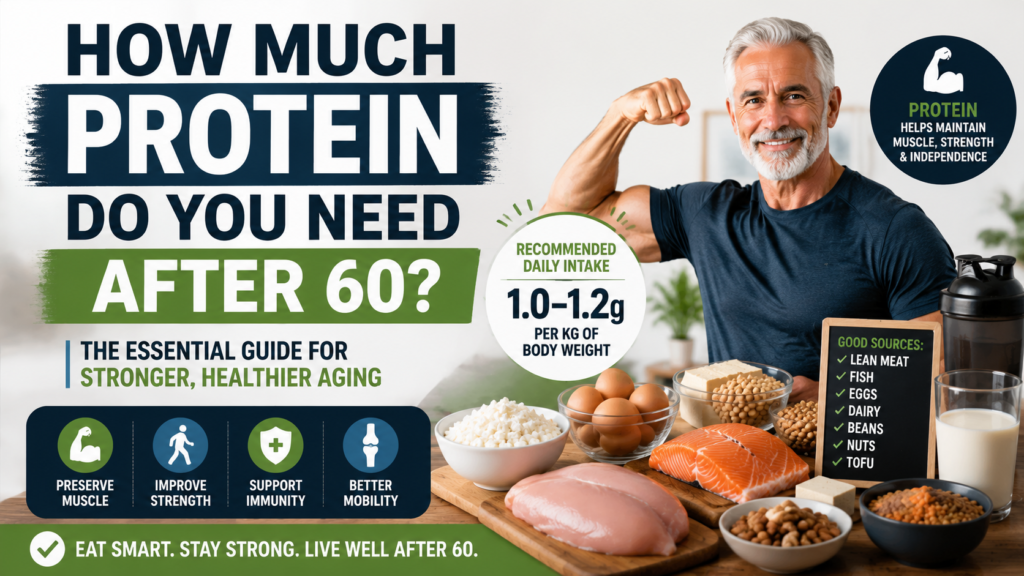
How Much Protein Do You Need After 60? A Complete Guide for Healthy Aging
Getting enough protein becomes increasingly important as you get older. After age 60, the body naturally becomes less efficient at maintaining muscle mass, recovering from physical activity, and using dietary protein compared with younger years.
The simple answer is:
Most healthy adults over 60 may benefit from 1.0–1.2 grams of protein per kilogram of body weight per day, while some active older adults or those at risk of muscle loss may need more, depending on their health, activity level, and medical guidance.
Protein needs are not the same for every person after 60. Your ideal amount depends on factors such as your body weight, exercise routine, muscle condition, overall health, and dietary pattern.
This guide explains how much protein older adults need, why protein matters after 60, which protein-rich foods are best, and how protein supports strength, mobility, and healthy aging.
Table of Contents
ToggleHow Much Protein Should Adults Over 60 Eat Every Day?
Adults over 60 generally need more attention to protein intake than younger adults because maintaining muscle becomes more challenging with age. A common recommendation for healthy older adults is approximately 1.0–1.2 grams of protein per kilogram of body weight daily.
The traditional minimum protein recommendation for adults is about:
0.8 grams of protein per kilogram of body weight per day.
However, many aging and nutrition experts suggest that older adults may benefit from higher protein intake to better support:
- Muscle maintenance
- Physical strength
- Recovery
- Independence
- Healthy body composition
For example:
A person weighing 70 kilograms (154 pounds) may need approximately:
- Minimum requirement: around 56 grams of protein/day
- Higher healthy aging range: around 70–84 grams of protein/day
Individual needs can vary.
What Is the Recommended Protein Intake Per Kilogram of Body Weight?
Protein recommendations after 60 are often calculated using body weight because protein needs depend partly on the amount of muscle tissue your body needs to maintain.
A general guide:
| Person Type | Suggested Protein Range |
|---|---|
| Healthy older adult | Around 1.0–1.2 g/kg/day |
| Active older adult | Around 1.2–1.6 g/kg/day may be beneficial |
| Older adult recovering from illness | May require individualized higher intake |
Higher protein intake may be useful for people who:
- Perform resistance training
- Have low muscle mass
- Are you recovering from illness
- Are you losing weight intentionally
- Want to maintain physical function
People with kidney disease or other medical conditions should discuss protein intake with a healthcare professional.
How Can You Calculate Your Daily Protein Needs After 60?
You can estimate daily protein needs by multiplying your body weight in kilograms by your desired protein target.
Formula:
Body weight (kg) × Protein target (g/kg) = Daily protein requirement
Example:
A 65 kg adult over 60:
65 kg × 1.2 g/kg = 78 grams of protein per day
This amount could be divided across meals:
- Breakfast: 25 grams
- Lunch: 25 grams
- Dinner: 28 grams
Spreading protein throughout the day can help older adults support muscle protein synthesis more effectively.
Why Does Protein Become More Important After Age 60?
Protein becomes more important after age 60 because aging is associated with gradual muscle loss and reduced muscle response to dietary protein.
Starting around middle age, adults can gradually lose muscle mass over time.
This process may accelerate with:
- Less physical activity
- Illness
- Poor nutrition
- Inadequate protein intake
Maintaining muscle is not only about appearance. Muscle supports:
- Walking ability
- Balance
- Strength
- Independence
- Daily activities
How Does Aging Affect Muscle and Protein Use?
Aging can reduce the body’s ability to efficiently use protein for building and maintaining muscle tissue.
This condition is sometimes described as anabolic resistance.
It means older muscles may require:
- Enough protein
- Higher-quality protein sources
- Regular movement
- Strength training
to produce the same muscle-building response that younger muscles achieve with less stimulation.
What Is Sarcopenia and Why Does Protein Matter?
Sarcopenia is an age-related loss of muscle mass, strength, and physical function. Protein and resistance exercise are important strategies for helping maintain muscle health.
Sarcopenia can affect:
- Walking speed
- Balance
- Strength
- Ability to perform daily activities
Risk factors include:
- Aging
- Physical inactivity
- Poor nutrition
- Chronic illness
Protein helps because muscles need amino acids to repair and maintain themselves.
How Does Protein Help Older Adults Maintain Muscle and Strength?
Protein supports muscle maintenance by providing amino acids needed for muscle repair and rebuilding.
Every day, the body continuously breaks down and rebuilds muscle tissue.
This process requires:
- Protein intake
- Physical activity
- Recovery
- Adequate calories
Without enough protein, the body may struggle to maintain lean muscle mass.
How Does Protein Support Muscle Protein Synthesis?
Muscle protein synthesis is the process by which the body uses amino acids from protein to repair and build muscle tissue.
Protein provides essential amino acids, including:
- Leucine
- Isoleucine
- Valine
Leucine is especially important because it plays a role in activating muscle-building pathways.
High-quality protein sources often contain all essential amino acids.
Examples:
- Eggs
- Fish
- Dairy products
- Chicken
- Soy products
Why Is Muscle Preservation Important After 60?
Maintaining muscle after 60 supports independence, mobility, and quality of life.
Strong muscles help older adults:
- Climb stairs
- Carry groceries
- Maintain balance
- Reduce risk of falls
- Stay active
Muscle is also a metabolically active tissue that supports overall body function.
Should Adults Over 60 Eat More Protein Than Younger Adults?
Many adults over 60 may benefit from higher protein intake than the minimum recommendation because aging changes how the body responds to protein.
The goal is not simply eating more protein.
The goal is to eat enough protein to support:
- Muscle health
- Strength
- Recovery
- Daily function
Why Do Older Adults Often Need Higher Protein Intake?
Older adults may need more protein because smaller amounts may not stimulate muscle repair as effectively as they did earlier in life.
Factors affecting protein needs include:
- Reduced muscle sensitivity
- Lower activity levels
- Recovery demands
- Changes in appetite
Many older adults also eat less food overall, making protein-rich choices more important.
Which Older Adults May Need Extra Protein?
Some older adults may especially benefit from paying attention to protein intake:
Active Older Adults
People who exercise regularly may need more protein to support:
- Muscle repair
- Strength gains
- Recovery
Adults Losing Weight
During weight loss, protein can help protect lean muscle while reducing body fat.
People Recovering From Illness
Recovery periods may increase nutritional needs because the body requires resources for repair.
Adults Experiencing Muscle Loss
People noticing:
- Reduced strength
- Difficulty climbing stairs
- Reduced activity ability
should discuss nutrition and exercise strategies with healthcare professionals.
What Are the Best Protein Foods After 60?
The best protein foods after 60 are nutrient-dense foods that provide high-quality protein along with important vitamins and minerals.
Good protein choices include both animal and plant sources.
Which Animal Foods Provide High-Quality Protein?
Animal-based proteins are often considered complete proteins because they contain all essential amino acids.
Examples:
Eggs
Benefits:
- High-quality protein
- Easy to prepare
- Contains important nutrients
Fish
Benefits:
- Protein-rich
- Provides omega-3 fatty acids
- Supports heart health
Examples:
- Salmon
- Tuna
- Sardines
Dairy Products
Examples:
- Greek yogurt
- Milk
- Cottage cheese
Benefits:
- Protein
- Calcium
- Convenient meal options
Lean Meat and Poultry
Examples:
- Chicken
- Turkey
- Lean beef
Benefits:
- High protein density
- Supports muscle maintenance
Which Plant Foods Are Good Protein Sources?
Plant-based proteins can also support healthy aging when included as part of a balanced diet.
Examples:
- Lentils
- Beans
- Chickpeas
- Tofu
- Tempeh
- Soy milk
- Nuts
- Seeds
Combining different plant protein sources can help provide a wider range of amino acids.
Are Protein Supplements Useful for Adults Over 60?
Protein supplements can be useful for some adults over 60 who struggle to meet their protein needs through food, but whole foods should usually remain the foundation of a healthy diet.
Protein powder is not a requirement for healthy aging. Many older adults can meet their needs through regular meals.
However, supplements may help people who:
- Have a poor appetite
- Eat small meals
- Have difficulty chewing certain foods
- Need additional protein after exercise
- Have increased nutritional needs during recovery
Common protein supplements include:
- Whey protein
- Casein protein
- Soy protein
- Pea protein
- Plant-based protein blends
Before using supplements, older adults with kidney disease or other medical conditions should discuss their needs with a healthcare professional.
How Should Adults Over 60 Spread Protein Throughout the Day?
Older adults may benefit from spreading protein intake across multiple meals instead of consuming most protein in only one meal.
The body uses protein more efficiently when it receives adequate amounts throughout the day.
A balanced approach may include protein at:
- Breakfast
- Lunch
- Dinner
- Snacks when needed
What Should a High-Protein Breakfast Include?
A high-protein breakfast can help older adults start the day with nutrients that support muscle maintenance and energy.
Examples:
Option 1:
- Greek yogurt
- Nuts
- Berries
Option 2:
- Eggs
- Whole-grain toast
- Vegetables
Option 3:
- Cottage cheese
- Fruit
- Seeds
Many traditional breakfasts are high in carbohydrates but low in protein. Adding a protein source can create a more balanced meal.
How Can Lunch and Dinner Provide Enough Protein?
Lunch and dinner should include a clear protein source to help older adults reach their daily protein targets.
Examples:
Lunch Ideas
- Chicken salad
- Lentil soup
- Tuna sandwich
- Bean bowl with vegetables
Dinner Ideas
- Fish with vegetables
- Chicken with whole grains
- Tofu stir-fry
- Lean meat with salad
A simple strategy is:
Build every meal around a protein source first, then add vegetables, healthy carbohydrates, and healthy fats.
Is Protein Enough to Prevent Muscle Loss After 60?
Protein is important for maintaining muscle, but protein alone is not enough. Healthy aging requires a combination of protein, exercise, and overall healthy lifestyle habits.
The strongest approach includes:
- Adequate protein intake
- Resistance training
- Regular movement
- Enough calories
- Quality sleep
Why Does Resistance Training Work Together With Protein?
Resistance training and protein work together because exercise signals the body to build and maintain muscle, while protein provides the materials needed for repair.
Examples of resistance training:
- Weight lifting
- Resistance bands
- Bodyweight exercises
- Strength machines
For older adults, strength training can support:
- Muscle strength
- Balance
- Mobility
- Independence
Protein provides the building blocks, while exercise provides the signal.
What Other Lifestyle Factors Support Healthy Aging?
Protein is only one part of healthy aging. Other lifestyle habits also influence strength, energy, and overall health.
Important factors include:
Regular Physical Activity
Movement supports:
- Muscle function
- Heart health
- Mobility
Adequate Sleep
Sleep supports:
- Recovery
- Hormonal balance
- Energy levels
Hydration
Older adults may have a reduced sense of thirst, making regular fluid intake important.
Balanced Nutrition
A healthy eating pattern includes:
- Fruits
- Vegetables
- Whole grains
- Healthy fats
- Protein-rich foods
How Much Protein Do You Need After 60 for Weight Loss?
Adults over 60 who want to lose weight should focus on adequate protein intake because protein can help preserve muscle while reducing body fat.
Weight loss becomes more challenging with age because losing weight without protecting muscle can reduce strength.
A balanced weight-loss approach includes:
- Moderate calorie reduction
- Enough protein
- Strength training
- Nutrient-rich foods
Why Is Protein Important During Fat Loss?
Protein helps older adults maintain lean muscle while losing fat during a calorie deficit.
Without enough protein, weight loss may include loss of muscle tissue.
Benefits of adequate protein during weight loss:
- Supports muscle preservation
- Helps control hunger
- Improves meal satisfaction
- Supports physical function
How Can Protein Help Maintain Lean Muscle?
Protein helps maintain lean muscle by supplying amino acids needed for repair.
During weight loss after 60, the goal should be:
Lose fat while protecting muscle.
This is why combining:
- Protein intake
- Resistance exercise
- Moderate calorie reduction
is often recommended.
What Are the Biggest Protein Mistakes Adults Over 60 Make?
Many older adults consume less protein than they need because of appetite changes, meal habits, or misunderstandings about nutrition.
Mistake 1: Eating Too Little Protein
Some older adults eat meals that are mostly:
- Bread
- Rice
- Pasta
- Snacks
with very little protein.
A better approach is to add a protein source to every meal.
Mistake 2: Consuming Most Protein in One Meal
Eating almost all daily protein at dinner may not provide the best distribution.
Example:
Breakfast:
- 5 grams of protein
Lunch:
- 10 grams of protein
Dinner:
- 60 grams of protein
A better approach may be:
Breakfast:
- 25 grams
Lunch:
- 25 grams
Dinner:
- 25 grams
Mistake 3: Ignoring Overall Nutrition Quality
Protein matters, but a healthy diet requires more than protein.
Older adults should also focus on:
- Fiber
- Vitamins
- Minerals
- Healthy fats
- Hydration
A balanced diet supports the whole body.
Protein Needs After 60: Quick Comparison Table
| Age Group / Goal | Protein Focus | Why It Matters |
|---|---|---|
| Adults 60+ maintaining health | Around 1.0–1.2 g/kg/day may be beneficial | Supports muscle and function |
| Active adults over 60 | Often, a higher intake may help | Supports exercise recovery |
| Weight loss after 60 | Protein + calorie control | Helps preserve muscle |
| Muscle building after 60 | Protein + resistance training | Supports muscle growth |
| Recovery periods | Individualized protein needs | Supports tissue repair |
Key Takeaway: How Much Protein Do You Really Need After 60?
Most adults over 60 should aim to prioritize adequate protein intake, with many healthy older adults benefiting from approximately 1.0–1.2 grams of protein per kilogram of body weight daily.
The exact amount depends on:
- Body weight
- Activity level
- Health status
- Fitness goals
Protein works best when combined with:
- Strength training
- Balanced meals
- Enough calories
- Healthy lifestyle habits
The goal is not simply living longer. The goal is to maintain strength, independence, and quality of life.
FAQs
How many grams of protein should a 60-year-old eat daily?
Many healthy adults over 60 may benefit from approximately 1.0–1.2 grams of protein per kilogram of body weight daily. Individual needs vary based on health, activity, and goals.
Is protein powder safe for adults over 60?
Protein powder can be safe for many older adults when used appropriately. People with kidney disease or medical conditions should consult a healthcare professional before increasing protein intake.
Can protein prevent muscle loss after 60?
Protein can help support muscle maintenance, but preventing muscle loss also requires resistance exercise, adequate calories, and overall healthy habits.
Should seniors eat protein at every meal?
Yes. Including protein at each meal can help older adults spread intake throughout the day and better support muscle maintenance.
What is the best protein source for older adults?
There is no single best source. Good options include eggs, fish, dairy products, poultry, beans, lentils, tofu, and other protein-rich foods.
Do active seniors need more protein?
Active older adults may need more protein because exercise increases the need for muscle repair and recovery.
Can eating more protein make seniors stronger?
Protein supports muscle repair, but strength improvements usually require both adequate protein and resistance training.
Conclusion
Protein becomes increasingly important after age 60 because maintaining muscle, strength, and physical independence becomes a greater challenge.
A practical approach is simple:
- Include a protein source at every meal
- Choose high-quality protein foods
- Stay physically active
- Perform strength exercises regularly
- Maintain a balanced diet
Protein is not a magic solution, but it is one of the most important nutritional tools for supporting healthy aging.
Fitness Guides