
What Are the Best Workouts for Beginners for Weight Loss?
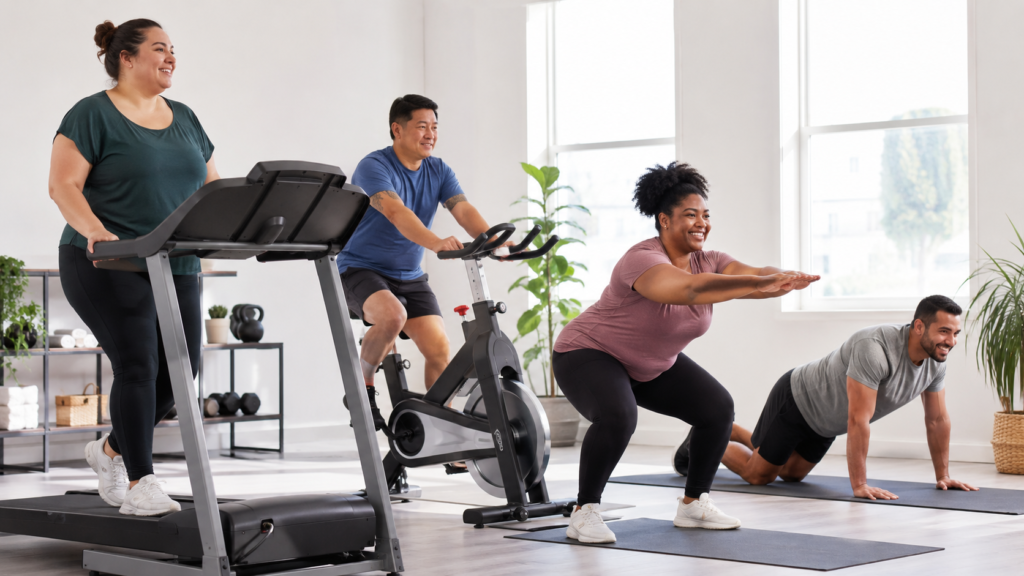
The best workouts for beginners for weight loss are brisk walking, low-impact cardio, and full-body strength training. These exercises are simple, adjustable, and effective without requiring advanced equipment or intense routines.
A good beginner plan combines aerobic exercise to increase energy expenditure with resistance training to build or preserve muscle. The goal is not to complete the hardest workout possible. The goal is to create a routine you can repeat consistently while gradually improving your fitness.
Exercise supports fat loss, heart health, strength, sleep, mobility, and daily energy. However, weight loss still depends on maintaining a calorie deficit over time. Workouts are most effective when combined with balanced nutrition, adequate sleep, recovery, and sustainable habits.
Which workouts are best for beginners who want to lose weight?
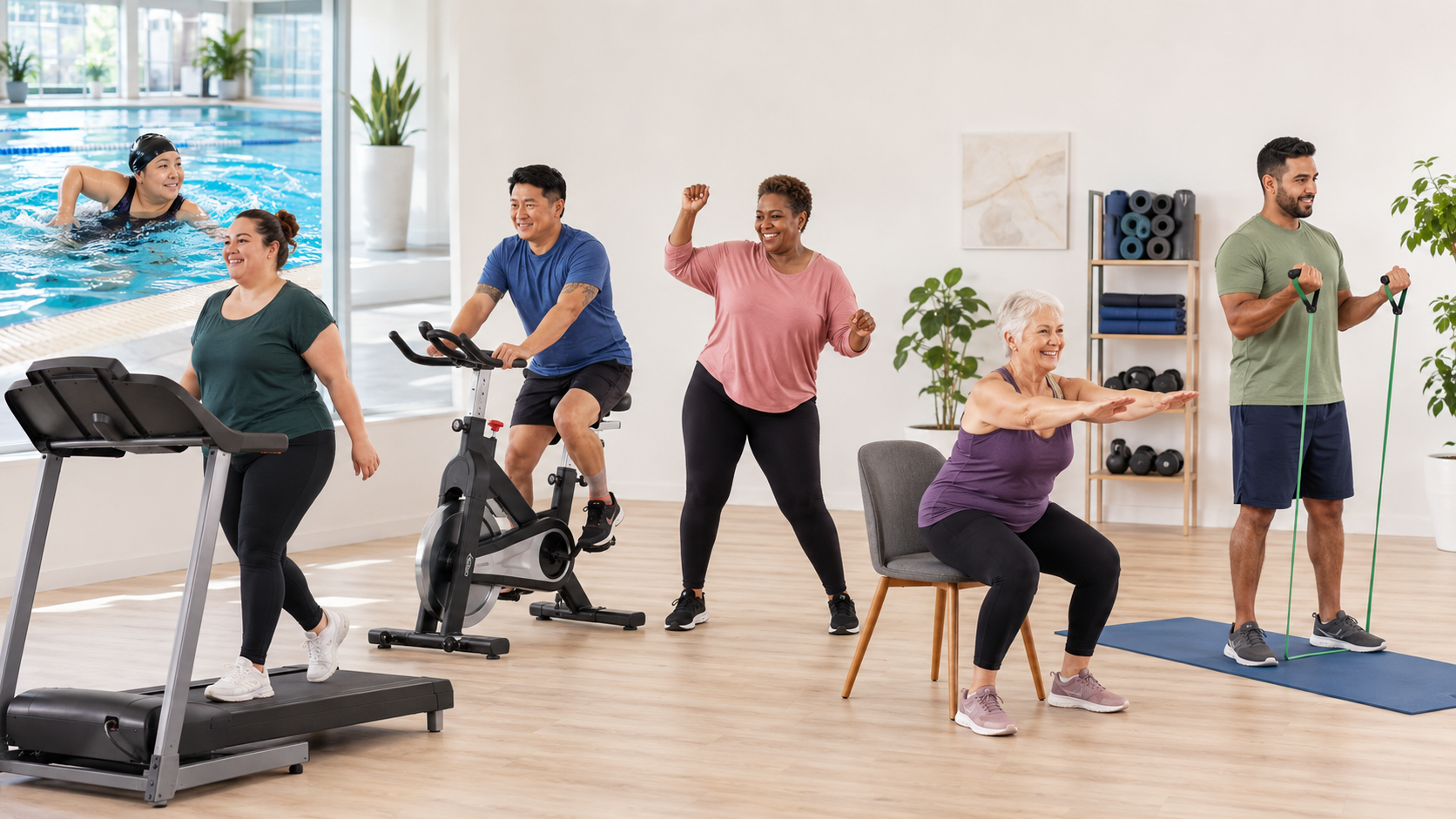
The best beginner weight loss workouts are walking, cycling, swimming, water exercise, low-impact aerobics, and basic full-body strength training. A balanced routine combines aerobic and strength exercise instead of relying on one so-called fat-burning workout.
| Workout type | Why it helps | Joint impact | Equipment | Beginner starting point |
|---|---|---|---|---|
| Brisk walking | Builds aerobic fitness and increases daily energy expenditure | Low | Supportive shoes | 10–20 minutes |
| Stationary cycling | Provides steady cardio with less impact on the knees and ankles | Low | Exercise bike | 10–15 minutes |
| Swimming or water aerobics | Supports body weight while training the whole body | Very low | Pool access | 15–20 minutes |
| Low-impact dance or marching | Makes home cardio simple and enjoyable | Low | None | 10–15 minutes |
| Full-body strength training | Builds strength and helps preserve lean muscle | Low to moderate | Body weight or bands | One set of 5–6 exercises |
| Beginner intervals | Improves cardiovascular fitness without a long continuous session | Adjustable | None | 4–6 short brisk intervals |
Choose workouts that match your current ability, mobility, preferences, and schedule. Consistency matters more than selecting the exercise with the highest estimated calorie burn.
How much exercise should a beginner do for weight loss?
A beginner should gradually work toward at least 150 minutes of moderate-intensity aerobic activity each week, plus muscle-strengthening exercise on two days. However, you do not need to reach that level during your first week.
According to the CDC’s physical activity guidance for healthy weight management, adults should aim for at least 150 minutes of moderate-intensity aerobic activity per week and complete muscle-strengthening activities on two or more days.
Short sessions still count. Exercise can be divided into manageable periods throughout the week rather than completed in long, exhausting workouts.
For additional weight-management and health benefits, some adults may gradually build toward 300 minutes of moderate aerobic activity per week. The National Institute of Diabetes and Digestive and Kidney Diseases exercise guidance recommends starting slowly and increasing activity as fitness improves.
How should someone start exercising from zero?
Someone starting from zero should begin with approximately 10 minutes of comfortable activity on most active days. Workout duration can then increase gradually as the body adapts.
A simple progression may look like this:
- Begin with 10–15 minutes of walking or low-impact cardio.
- Repeat the activity three or four days during the first week.
- Add a few minutes before increasing speed or resistance.
- Introduce two short full-body strength sessions.
- Gradually build toward 20–30 minutes on most active days.
Use the talk test to estimate workout intensity. During moderate exercise, your breathing and heart rate should become noticeably faster, but you should still be able to speak in short sentences.
Why is walking one of the best weight loss workouts for beginners?
Walking is one of the best beginner workouts because it is accessible, inexpensive, easy to modify, and suitable for both short and long sessions. A brisk walking pace can count as moderate-intensity aerobic activity, while a slower pace can help a previously inactive person build endurance.
Walking can be performed outside, indoors, on a treadmill, around a workplace, or in short sessions throughout the day.
To progress safely:
- Walk at a purposeful but sustainable pace.
- Add approximately five minutes when the current duration feels comfortable.
- Divide longer walking goals into two or three shorter sessions.
- Add small hills only after building basic endurance.
- Increase duration before adding substantial speed.
A 2024 systematic review and dose-response meta-analysis of aerobic exercise examined 116 randomized clinical trials involving 6,880 adults with overweight or obesity. Greater amounts of weekly aerobic exercise were associated with larger average reductions in body weight, waist circumference, and body-fat measures up to 300 minutes per week.
The study also found that at least 150 minutes of weekly aerobic exercise was associated with clinically important reductions in waist circumference and body-fat measures. These results are group averages rather than guarantees for every individual, but they show that regular aerobic exercise volume matters.
Which low-impact cardio workouts are good alternatives to walking?
Good low-impact alternatives to walking include stationary cycling, swimming, water aerobics, elliptical training, chair cardio, and low-impact dance. These activities can increase the heart rate while reducing repeated impact on the knees, ankles, feet, and hips.
Choose an activity according to your comfort, mobility, and access:
- Stationary cycling: Provides cardiovascular exercise with less impact on weight-bearing joints.
- Swimming: Trains multiple muscle groups while water supports the body.
- Water aerobics: Offers guided aerobic and resistance exercise with minimal joint impact.
- Chair cardio: Allows people with balance or mobility limitations to exercise while seated.
- Elliptical training: Provides a smooth movement pattern without the impact of running.
- Low-impact dancing: Adds variety and may make home workouts more enjoyable.
- Marching in place: Requires no equipment and can be divided into short sessions.
Start with 10–15 minutes at an easy or moderate pace. Increase the session duration before increasing resistance, incline, or speed.
Which strength exercises should beginners include?
Beginners should use simple strength exercises that train the major muscle groups through a comfortable and controlled range of motion. Two full-body strength sessions per week are sufficient for most beginners.
A basic beginner routine may include:
- Chair squat: Sit back toward a stable chair, lightly touch the seat, and stand.
- Wall or counter push-up: Keep the body straight while lowering the chest with control.
- Glute bridge: Lie on your back with bent knees and lift the hips.
- Bird-dog: From your hands and knees, extend the opposite arm and leg without twisting.
- Standing calf raise: Hold a stable surface and rise onto the balls of the feet.
- Resistance-band row: Pull the band toward your body while drawing the shoulder blades back.
Perform one set of approximately 8–15 controlled repetitions for each exercise. Beginners can progress to two sets when the exercises feel manageable and proper form can be maintained.
Strength training should not be judged only by the calories burned during the workout. Resistance exercise also supports muscular strength, physical function, and lean body mass.
A systematic review of resistance-based exercise and body composition evaluated 114 trials involving 4,184 participants. The review found that resistance-based exercise can improve body-composition outcomes in adults with overweight or obesity, particularly when combined with aerobic exercise or an appropriate calorie-reduction strategy.
Does a beginner need HIIT to lose weight?
No, high-intensity interval training is not required for weight loss. Beginners can lose weight and improve fitness through moderate walking, cycling, swimming, low-impact cardio, and strength training.
A systematic review comparing interval training with moderate continuous exercise found that both training approaches can support body-fat reduction. The evidence did not show that high-intensity interval training was consistently superior for fat loss.
Beginners should not feel pressured to perform all-out sprints, jumping circuits, or exhausting exercise sessions. After building a basic fitness foundation, a beginner can use gentler intervals.
For example:
- Warm up for five minutes.
- Walk briskly or pedal faster for 30–60 seconds.
- Recover at an easy pace for one to two minutes.
- Repeat four to six times.
- Cool down for five minutes.
The faster segments should feel challenging but controlled. A beginner should stop if exercise causes chest pain, faintness, dizziness, nausea, sharp pain, or unusual shortness of breath.
What is a realistic four-week beginner workout plan?
A realistic four-week workout plan gradually increases aerobic minutes while including two short strength sessions each week. The schedule should be treated as a flexible template rather than a strict requirement.
| Week | Aerobic plan | Strength plan | Main goal |
|---|---|---|---|
| Week 1 | 10–15 minutes, four days | One set, two days | Establish the habit |
| Week 2 | 15–20 minutes, four days | One or two sets, two days | Increase duration |
| Week 3 | 20–25 minutes, four or five days | Two sets, two days | Reach moderate effort |
| Week 4 | 25–30 minutes, five days | Two sets, two days | Approach 150 weekly minutes |
Two strength sessions can be completed after short walks, meaning the plan does not require seven separate workout days.
Include at least one easier day each week. Repeat the same week instead of progressing when soreness, joint discomfort, poor sleep, or unusual fatigue is increasing.
Sample beginner workout week
Monday: 20-minute brisk walk
Tuesday: 15-minute walk and full-body strength workout
Wednesday: Rest or gentle mobility
Thursday: 20-minute low-impact cardio workout
Friday: Rest or easy walking
Saturday: 15-minute walk and full-body strength workout
Sunday: 20–25-minute comfortable walk
The schedule can be adjusted around work, family responsibilities, mobility limitations, and personal preferences.
How can overweight beginners protect their joints and exercise safely?
Overweight beginners can protect their joints by choosing low-impact activities, starting with short sessions, and increasing duration before intensity. Supportive footwear, stable surfaces, water exercise, cycling, and chair-based workouts can make physical activity more comfortable.
Follow these beginner exercise safety principles:
- Warm up with three to five minutes of easy movement.
- Use a comfortable and controlled range of motion.
- Avoid jumping when walking, cycling, swimming, or doing chair exercise is more suitable.
- Increase only one variable at a time, such as duration, frequency, speed, or resistance.
- Allow recovery between strength-training sessions.
- Use stable furniture or support when balance is limited.
- Avoid exercising through sharp or worsening pain.
The NIDDK safety guidance for staying physically active advises stopping exercise and seeking appropriate help when symptoms such as chest pain, extreme shortness of breath, dizziness, nausea, or significant pain occur.
People with heart disease, uncontrolled high blood pressure, diabetes-related complications, severe joint pain, a major injury, or another health condition that limits activity should seek individualized guidance from a qualified healthcare professional.
How should workouts be combined with nutrition for weight loss?
Workouts should support a sustainable calorie deficit rather than serve as punishment for eating. Physical activity increases calorie expenditure, but food intake still has a major influence on whether weight loss occurs.
The CDC’s guidance on physical activity and weight explains that creating a calorie deficit requires using more energy than the body consumes. It also notes that reducing calorie intake usually contributes substantially to initial weight loss, while regular physical activity is particularly important for health and long-term weight maintenance.
Helpful nutrition and exercise habits include:
- Build meals around filling, nutrient-dense foods.
- Include suitable sources of protein and fiber.
- Drink water during most moderate beginner workouts.
- Avoid automatically replacing every estimated exercise calorie.
- Limit sugary drinks and frequent high-calorie snacks.
- Plan meals and workouts around a realistic schedule.
- Avoid extremely restrictive diets that are difficult to maintain.
The CDC describes approximately one to two pounds per week as a gradual rate of weight loss that may be easier to maintain. However, results vary according to starting weight, calorie intake, medical conditions, medications, sleep, genetics, and consistency.
Which beginner workout mistakes can slow progress?
Common beginner workout mistakes include starting too aggressively, relying only on cardio, changing the plan constantly, and treating sweat or soreness as proof of fat loss.
Avoid these problems:
Doing too much too soon
Rapidly increasing workout duration or intensity can cause excessive soreness, fatigue, and injury. A gradual plan is easier to maintain.
Skipping strength training
Cardio supports aerobic fitness and energy expenditure, but strength training helps maintain muscle, improve physical function, and make everyday movement easier.
Exercising inconsistently
Three manageable weekly workouts are usually more useful than one punishing workout followed by several inactive weeks.
Ignoring nutrition
Exercise supports weight loss, but it cannot reliably compensate for frequent overeating or high-calorie drinks.
Expecting spot reduction
Abdominal exercises strengthen the core, but they do not selectively remove fat from the stomach. Fat loss occurs throughout the body according to genetics, hormones, and overall energy balance.
Tracking only body weight
Scale weight can fluctuate because of water retention, food volume, sodium, hormonal changes, and other factors. Also monitor:
- Waist measurements
- Walking duration
- Walking pace
- Exercise repetitions
- Strength improvements
- Energy levels
- Sleep quality
- Workout consistency
Treating pain as progress
Mild muscle fatigue may be normal, but sharp, worsening, or persistent pain should not be ignored. Exercises can usually be modified or replaced.
Never allowing recovery
Rest and easier days help the body adapt. Recovery also makes it easier to maintain a consistent routine.
What is the key takeaway?
The best workout routine for a beginner trying to lose weight combines low-impact aerobic exercise with two weekly full-body strength sessions. Walking is an excellent starting point, but cycling, swimming, water aerobics, low-impact dance, and chair cardio are also effective options.
Start with approximately 10–15 minutes per session. Increase exercise gradually toward at least 150 minutes of moderate aerobic activity each week, and consider building further only when the routine feels safe and sustainable.
The most effective workout is not necessarily the most intense workout. It is the workout you can perform consistently while supporting your health with balanced nutrition, sufficient sleep, and appropriate recovery.
What do beginners commonly ask about weight loss workouts?
Can walking alone help a beginner lose weight?
Yes. Regular brisk walking can increase energy expenditure and support weight loss, especially when combined with an appropriate eating pattern. Adding strength training creates a more complete fitness routine.
How long should a beginner work out each day?
A beginner can start with 10–20 minutes on most active days. Workout duration can gradually increase toward approximately 30 minutes on five days per week.
Should beginners exercise every day?
Beginners do not need to complete a challenging workout every day. Daily light movement can be helpful, but strength sessions and harder cardio workouts should be balanced with easier days and recovery.
Is cardio or strength training better for weight loss?
Both are valuable. Cardio contributes to aerobic activity and energy expenditure, while strength training supports muscle, physical function, and body composition.
Can beginners lose belly fat with ab workouts?
Ab exercises can strengthen the abdominal muscles, but they cannot selectively burn belly fat. Reducing abdominal fat requires overall fat loss through sustainable nutrition, activity, and time.
What workout is best when the knees hurt?
Low-impact options such as stationary cycling, swimming, water aerobics, chair cardio, or short walks on flat surfaces may be more comfortable. Persistent or sharp knee pain should be assessed by a healthcare professional.
How quickly will exercise produce results?
Aerobic fitness, mobility, energy, and strength may improve before large changes appear on the scale. Weight-loss speed varies according to nutrition, health, starting weight, medication, sleep, and workout consistency.
References and Resources
- Centers for Disease Control and Prevention: Physical Activity and Healthy Weight
- National Institute of Diabetes and Digestive and Kidney Diseases: Tips for Starting Physical Activity
- JAMA Network Open: Aerobic Exercise and Weight Loss in Adults With Overweight or Obesity
- Systematic Review: Resistance-Based Exercise and Body Composition in People With Overweight or Obesity
- PubMed: Interval Training Versus Moderate-Intensity Continuous Training for Body-Fat Reduction
- National Institute of Diabetes and Digestive and Kidney Diseases: Tips to Help You Keep Moving