
How Do You Walk Properly? A Complete Guide to Proper Walking Technique and Walking Posture
Most people walk every day without thinking about how they move. However, proper walking technique affects posture, balance, joint health, energy levels, and even confidence.
Walking correctly means keeping the body aligned, maintaining a natural gait, and using efficient movement patterns from head to toe. Good walking posture can reduce strain on the back, knees, hips, and feet while improving stability and mobility.
Research from Harvard Health Publishing explains that proper walking posture helps reduce tension, improve breathing, and lower stress on the joints. Studies on gait mechanics also show that healthy walking patterns improve balance and movement efficiency.
What Is Proper Walking Technique?
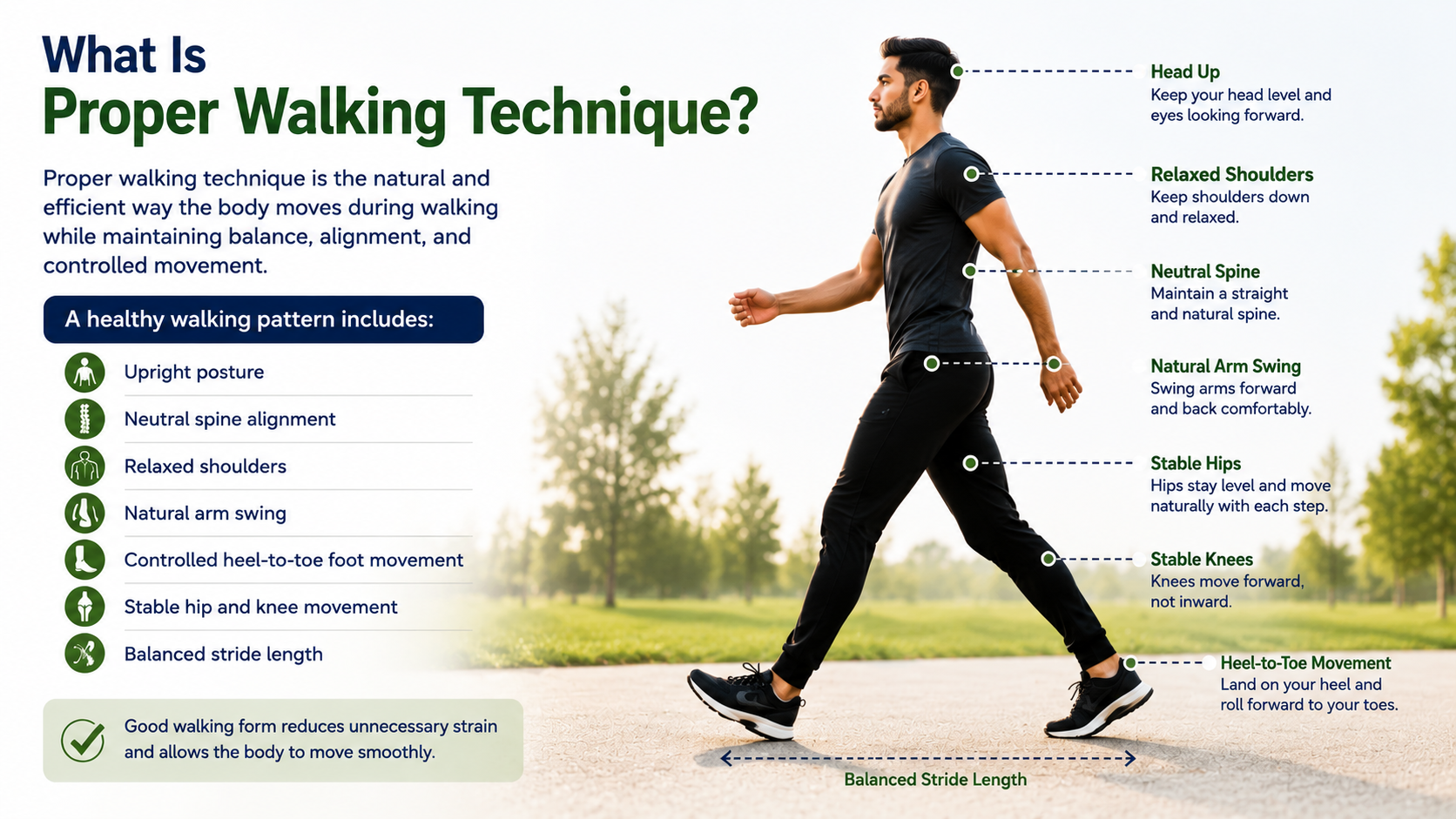
Proper walking technique is the natural and efficient way the body moves during walking while maintaining balance, alignment, and controlled movement.
A healthy walking pattern includes:
- Upright posture
- Neutral spine alignment
- Relaxed shoulders
- Natural arm swing
- Controlled heel-to-toe foot movement
- Stable hip and knee movement
- Balanced stride length
Good walking form reduces unnecessary strain and allows the body to move smoothly.
What happens during a normal walking cycle?
A normal walking cycle includes several coordinated movements:
- Heel contacts the ground first
- Weight shifts through the middle of the foot
- Toes push the body forward
- The opposite leg swings forward
- Arms naturally counterbalance movement
This coordinated movement pattern is called gait mechanics.
According to gait research, efficient walking works like a controlled transfer of body weight from one leg to the other while maintaining balance and forward momentum.
Why Does Proper Walking Posture Matter?
Proper walking posture keeps joints aligned and reduces unnecessary stress on muscles, ligaments, and bones.
Good posture while walking helps:
- Reduce neck and back pain
- Improve breathing
- Increase balance
- Lower joint strain
- Improve mobility
- Reduce fatigue
- Improve walking efficiency
How can poor walking posture affect the body?
Poor walking posture can lead to:
| Poor Walking Habit | Possible Effect |
|---|---|
| Slouching | Back and neck pain |
| Looking down constantly | Neck strain |
| Overstriding | Knee and hip stress |
| Flat-footed walking | Higher joint impact |
| Tight shoulders | Upper body tension |
| Weak core engagement | Lower back discomfort |
Research and physiotherapy experts note that misalignment during walking increases pressure on joints and may contribute to pain and injury over time.
What Is the Correct Walking Posture?
Correct walking posture means keeping the body upright, relaxed, balanced, and aligned from head to feet.
The body should feel tall but natural, not stiff.
How should the head and neck align while walking?
The head should stay upright with the eyes looking forward.
Avoid looking down at your feet constantly. Harvard Health recommends focusing the gaze about 10–20 feet ahead to reduce neck and upper-back tension.
Correct head posture includes:
- Chin parallel to the ground
- Neck relaxed
- Eyes forward
- Ears aligned over shoulders
How should the shoulders and arms stay?
Shoulders should remain relaxed and slightly back.
Avoid:
- Raised shoulders
- Rounded shoulders
- Excessive arm tension
Arms should swing naturally from the shoulders, not across the body.
Natural arm swing helps balance the body during movement and improves walking rhythm.
How should the spine and core work during walking?
The spine should stay neutral and elongated.
A neutral spine means the back maintains its natural curves without excessive arching or slouching.
Core muscles should stay lightly engaged to support posture and balance.
Core engagement helps:
- Stabilize the pelvis
- Support the lower back
- Improve balance
- Reduce unnecessary movement
Physiotherapists explain that core activation improves walking stability and movement control.
How should the hips and knees move?
Hips should stay level and stable during walking.
Avoid exaggerated hip swaying or stiff leg movement.
Knees should bend naturally as the body moves forward. Smooth knee movement helps absorb impact and maintain walking efficiency.
How Should Your Feet Land While Walking?
Feet should land in a smooth heel-to-toe pattern while staying aligned with the direction of movement.
Correct foot placement improves stability, reduces impact, and supports natural gait mechanics.
What is heel-to-toe walking?
Heel-to-toe walking means:
- Heel touches the ground first
- Weight rolls through the middle of the foot
- Toes push the body forward
This walking pattern reduces harsh impact and creates smoother movement.
Healthline and Harvard Health both recommend heel-to-toe walking for healthier gait mechanics and lower joint stress.
Should your feet point straight ahead?
Feet should generally point forward or slightly outward naturally.
Excessive inward or outward foot rotation may affect balance and joint alignment.
Proper foot direction helps:
- Improve balance
- Reduce knee strain
- Maintain straight walking patterns
How long should your walking stride be?
Walking stride should feel natural and controlled.
Overstriding happens when the front foot lands too far ahead of the body. This increases braking forces on the knees and hips.
Shorter, smoother strides usually improve walking efficiency and reduce impact.
How Can You Walk Straight and Maintain Balance?
Walking straight requires body alignment, coordination, and balance control.
People often drift while walking because of:
- Muscle imbalances
- Poor posture
- Weak core muscles
- Vision focus problems
- Uneven stride patterns
Why do some people drift while walking?
Walking drift can happen when one side of the body is stronger or tighter than the other.
Other causes include:
- Uneven leg movement
- Poor foot placement
- Reduced body awareness
- Balance issues
Practicing controlled walking and improving posture awareness often helps.
How does balance affect walking posture?
Balance keeps the center of gravity stable during movement.
Good balance improves:
- Walking confidence
- Stability
- Coordination
- Reaction control
Research on gait and posture shows that walking stability directly affects mobility and fall prevention, especially in older adults.
What Are the Most Common Walking Mistakes?
Common walking mistakes increase joint stress and reduce walking efficiency.
Why is overstriding harmful?
Overstriding places excessive force on the knees and hips.
It may lead to:
- Joint discomfort
- Reduced efficiency
- Lower back strain
- Slower walking rhythm
A shorter, smoother stride is usually healthier.
Why is looking down while walking a problem?
Constantly looking down strains the neck and upper back.
It can also reduce body alignment and affect balance.
Experts recommend keeping the gaze forward instead of watching the feet continuously.
Can the wrong shoes affect walking form?
Yes. Poor footwear can negatively affect gait, posture, and balance.
Good walking shoes should provide:
- Arch support
- Cushioning
- Stable heel support
- Comfortable fit
Improper footwear may increase foot, knee, and back strain.
What Are the Benefits of Proper Walking Technique?
Proper walking technique supports both physical health and daily movement efficiency.
Benefits include:
- Better posture
- Reduced back and neck pain
- Improved joint alignment
- Increased walking efficiency
- Better balance and stability
- Improved breathing
- Reduced muscle tension
- Better confidence and body awareness
Walking is also strongly connected to long-term mobility and healthy aging.
According to the Centers for Disease Control and Prevention, regular physical activity like walking supports cardiovascular health, balance, and overall mobility.
How Can You Improve Your Walking Posture and Gait?
Improving walking posture requires awareness, practice, mobility, and strength.
Small posture corrections repeated consistently create long-term improvement.
Which exercises improve walking posture?
Helpful exercises include:
- Core strengthening
- Glute activation exercises
- Calf stretching
- Hip mobility exercises
- Posture correction drills
- Balance training
Examples:
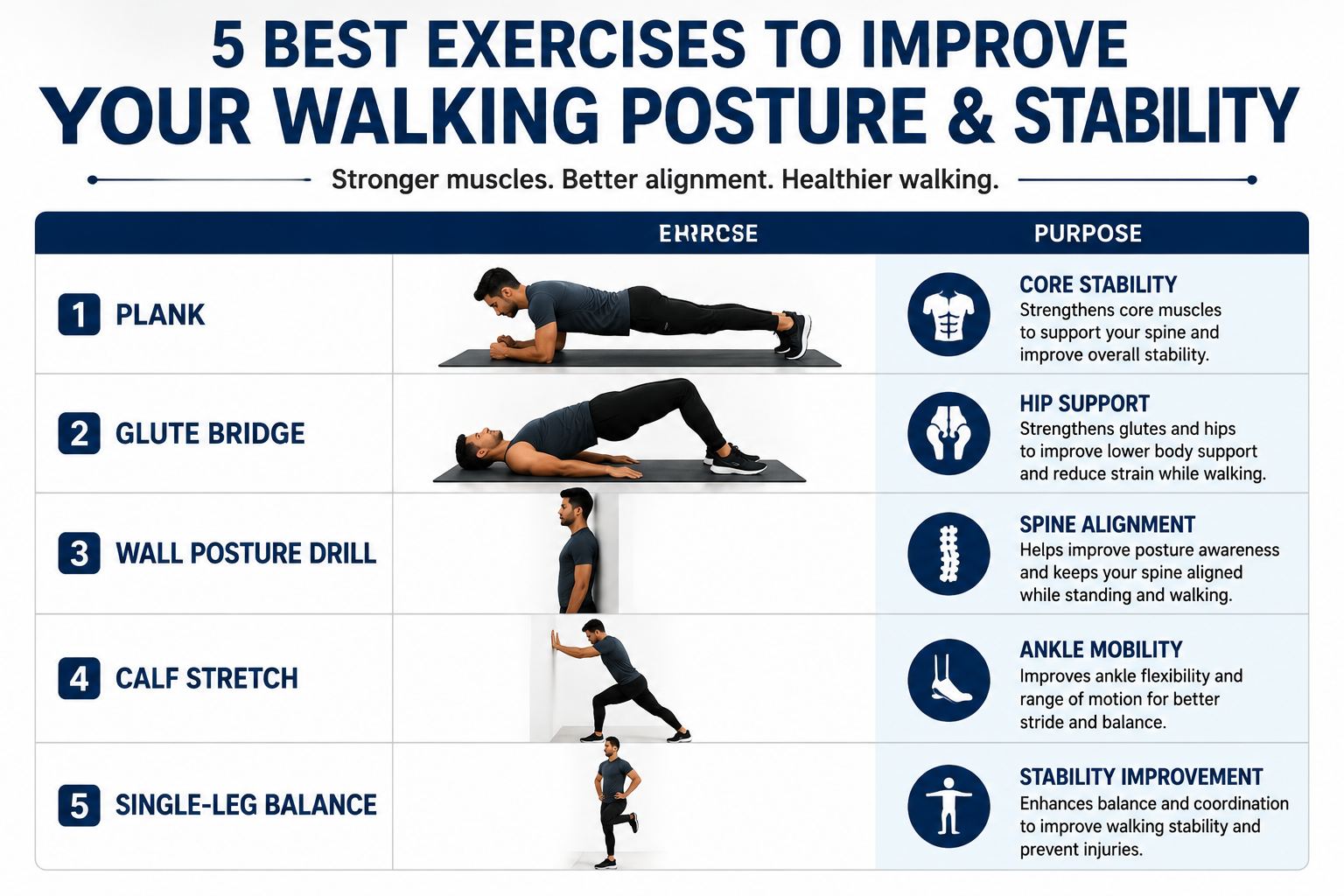
| Exercise | Purpose |
|---|---|
| Plank | Core stability |
| Glute bridge | Hip support |
| Wall posture drill | Spine alignment |
| Calf stretch | Ankle mobility |
| Single-leg balance | Stability improvement |
How can beginners practice proper walking form daily?
Beginners can improve walking form by focusing on one adjustment at a time.
Daily practice tips:
- Stand tall before walking
- Look forward
- Relax shoulders
- Engage the core lightly
- Walk heel to toe
- Keep strides natural
- Swing arms naturally
- Wear supportive shoes
Practicing for even 10–15 minutes daily can improve posture awareness over time.
How Does Proper Walking Technique Change for Different People?
Walking needs may vary depending on age, lifestyle, and physical condition.
Walking tips for office workers
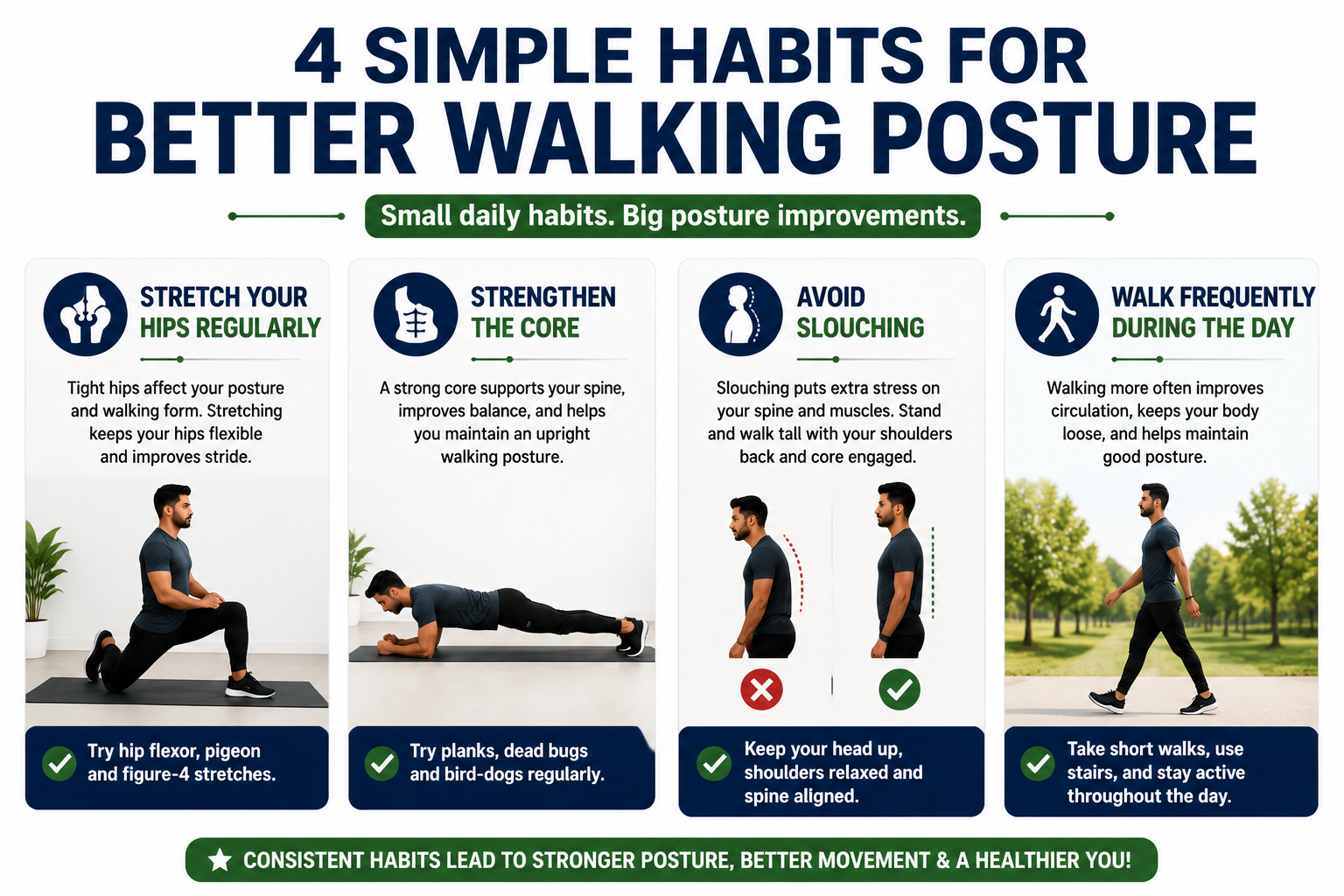
Office workers often develop forward head posture and tight hips from prolonged sitting.
Helpful adjustments:
- Stretch your hips regularly
- Strengthen the core
- Avoid slouching
- Walk frequently during the day
Walking tips for older adults
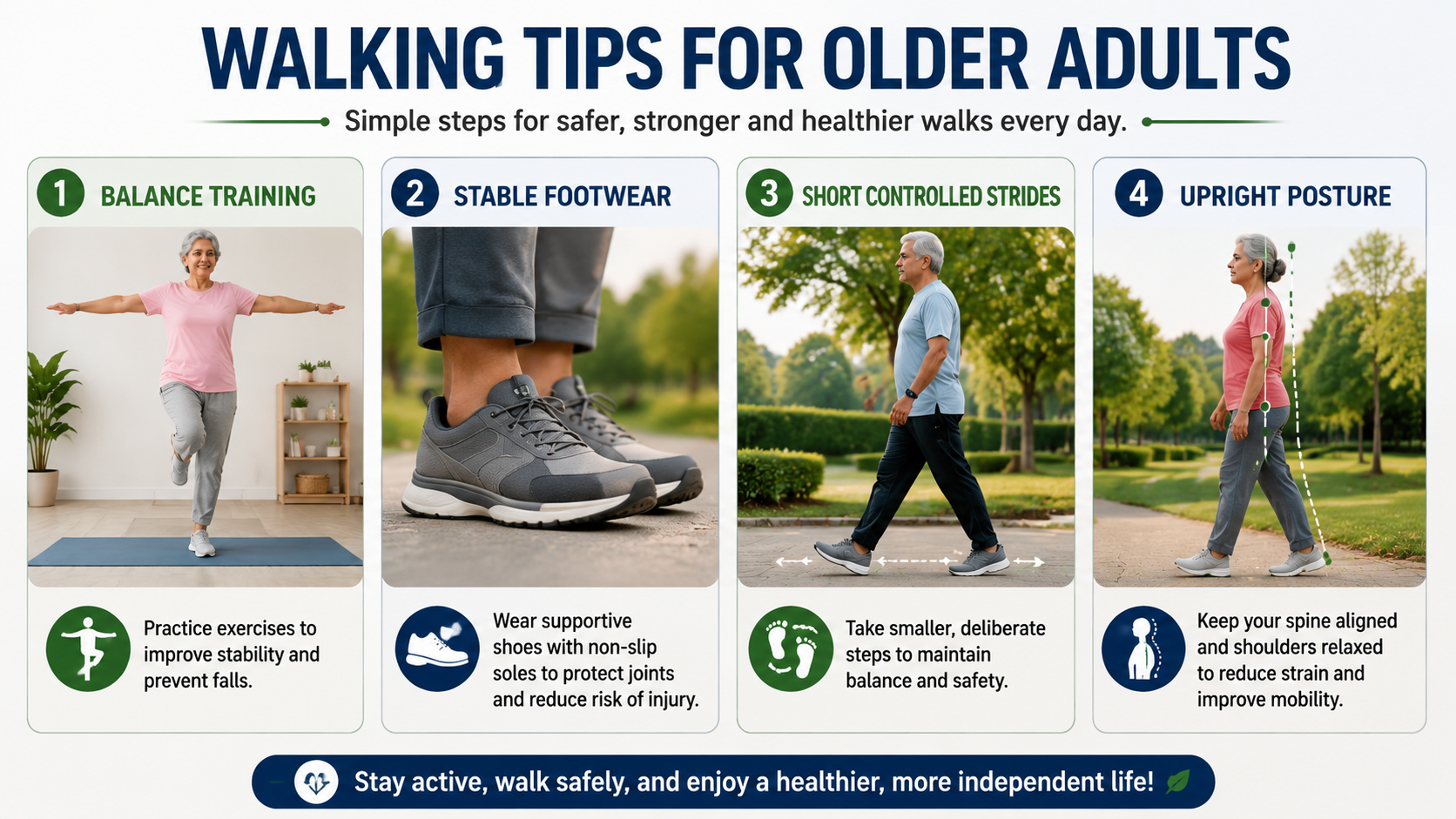
Older adults should prioritize:
- Balance training
- Stable footwear
- Short controlled strides
- Upright posture
Research shows that gait stability becomes increasingly important for fall prevention with age.
Walking tips for fitness walking
Fitness walking usually involves:
- Faster cadence
- Stronger arm swing
- More active core engagement
- Controlled stride length
However, posture principles remain the same.
Proper Walking Technique vs Poor Walking Technique
| Proper Walking Technique | Poor Walking Technique |
|---|---|
| Upright posture | Slouching |
| Neutral spine | Rounded back |
| Heel-to-toe gait | Flat-footed impact |
| Relaxed shoulders | Tight shoulders |
| Natural arm swing | Rigid arms |
| Controlled stride | Overstriding |
| Eyes forward | Looking down constantly |
| Stable balance | Uneven movement |
Key Takeaways About Walking Correctly
- Proper walking posture keeps the body aligned and balanced.
- Walking correctly reduces strain on joints and muscles.
- Heel-to-toe foot movement supports healthier gait mechanics.
- Short, controlled strides are usually better than long strides.
- Core engagement improves stability and posture.
- Looking forward instead of down reduces neck strain.
- Consistent practice helps improve walking form naturally.
FAQs About Proper Walking Technique
How should your feet land when walking?
Feet should land heel first, roll through the middle of the foot, and push off with the toes.
Is heel-to-toe walking better?
Yes. Heel-to-toe walking creates smoother movement and reduces impact on joints.
Why do I feel awkward when correcting my posture?
New movement patterns often feel unusual at first because the body is adapting to better alignment.
Can proper walking posture reduce back pain?
Yes. Better posture reduces unnecessary stress on the spine and surrounding muscles.
Should you tighten your core while walking?
The core should stay lightly engaged, not excessively tight.
Why do my shoulders get tense while walking?
Shoulder tension often comes from stress, poor posture, or raising the shoulders too high.
Can shoes affect walking posture?
Yes. Unsupportive shoes can affect gait, balance, and joint alignment.
How long does it take to improve walking posture?
Many people notice improvements within a few weeks of consistent posture practice and strengthening exercises.
Conclusion
Walking is one of the most natural human movements, but proper walking technique matters more than most people realize. Correct walking posture supports balance, reduces pain, improves efficiency, and protects long-term mobility.
Small adjustments like standing taller, walking heel to toe, relaxing the shoulders, and keeping a natural stride can make walking feel smoother and healthier over time.