
How Does Walking Improve Mental Health?
Walking is one of the simplest, most accessible forms of physical activity that offers significant mental health benefits. Extensive research has shown that walking reduces symptoms of anxiety, depression, and stress.
As a low-effort activity, walking is ideal for people of all fitness levels. Meta-analyses of randomized controlled trials (RCTs) confirm that walking provides substantial mental health improvements across different populations and forms of walking.
Key statistics and facts show walking’s significant impact on mental well-being:
- Regular walking (as little as 75 minutes of brisk walking per week) reduces the risk of depression by 18%.
- A 2024 meta-analysis of 75 RCTs with 8,636 participants found that walking significantly reduced depressive symptoms (SMD -0.591) and anxiety symptoms (SMD -0.446) compared to inactive controls, with effects comparable to other exercises.
- Daily walking also correlates with benefits: An extra 1,000 steps a day cuts depression risk by 9-10%, while walking 7,500+ steps a day reduces it by 42-43%.
What Are the Benefits of Walking for Mental Health?
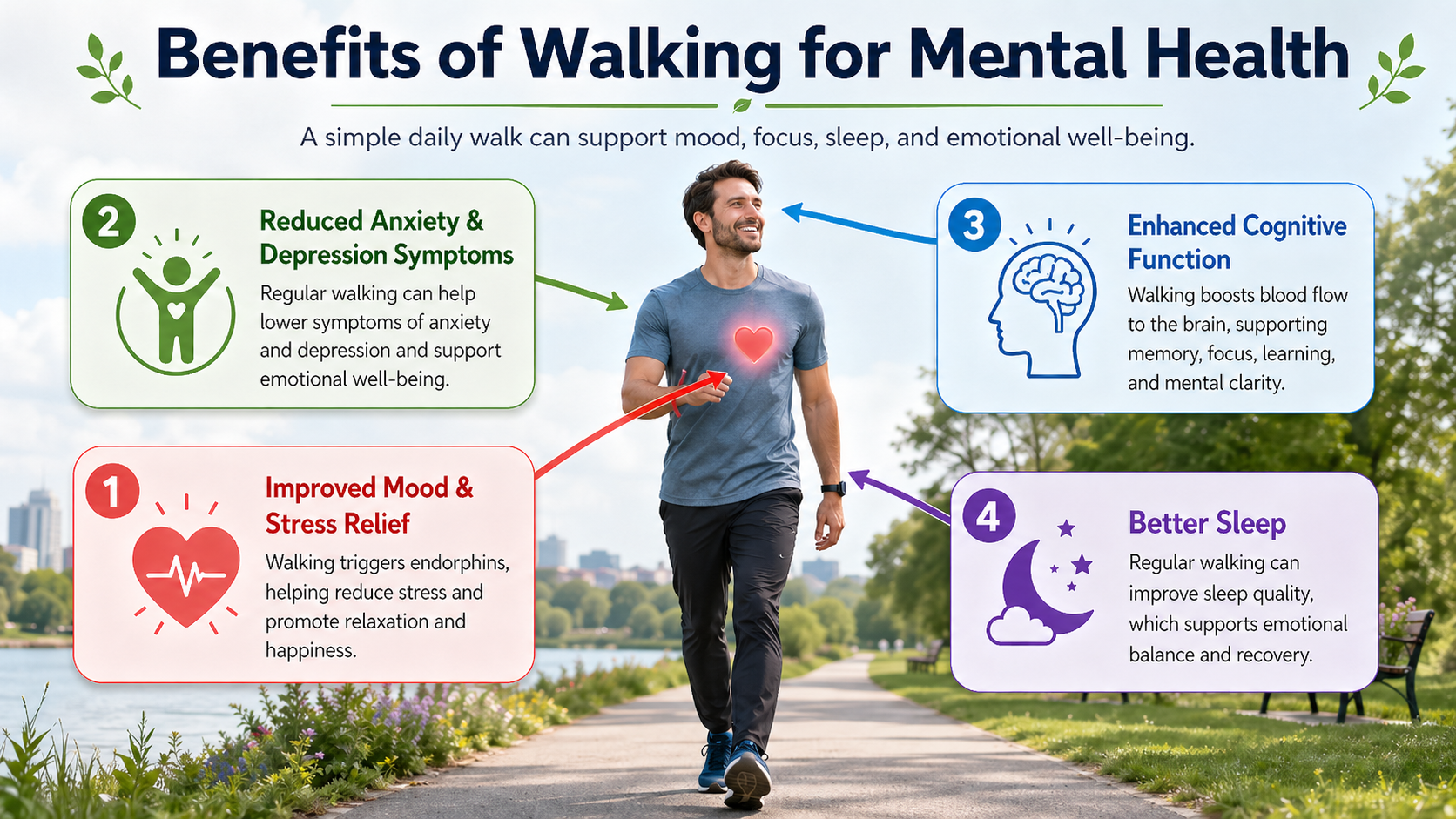
Walking offers a multitude of mental health benefits, making it an effective strategy for managing stress, anxiety, depression, and overall emotional well-being.
- Improved Mood and Stress Relief: Walking triggers the release of endorphins, the body’s natural “feel-good” chemicals. This reduces stress and creates a sense of relaxation and happiness.
- Reduction in Anxiety and Depression Symptoms: Regular walking can help lower anxiety and depressive symptoms. A 2024 systematic review found that people who walked regularly experienced fewer symptoms of both anxiety and depression, as compared to those who did not engage in physical activity.
- Enhanced Cognitive Function: Walking enhances brain function by increasing blood flow to the brain, supporting neuroplasticity, and improving cognitive function, which is essential for memory, learning, and focus.
- Better Sleep: Regular physical activity, like walking, also leads to improved sleep quality, which is essential for emotional regulation.
How Does Walking Affect Stress and Anxiety?
Walking can significantly reduce stress and anxiety levels. It activates various physiological responses that improve mental clarity and relaxation.
- Endorphins and Cortisol Regulation: Walking stimulates the release of endorphins (feel-good hormones) and helps reduce cortisol, the hormone responsible for stress. This results in a reduction of anxiety and stress levels.
- Relaxation: A regular walking routine calms the nervous system, promoting relaxation. Even short walks of 10-20 minutes have been shown to improve mood and decrease anxiety.
- Mindfulness: Walking, especially outdoors or in nature, provides an opportunity for mindfulness, which helps reduce rumination and obsessive thinking, both of which are common in anxiety disorders.
How Does Walking Help with Depression?
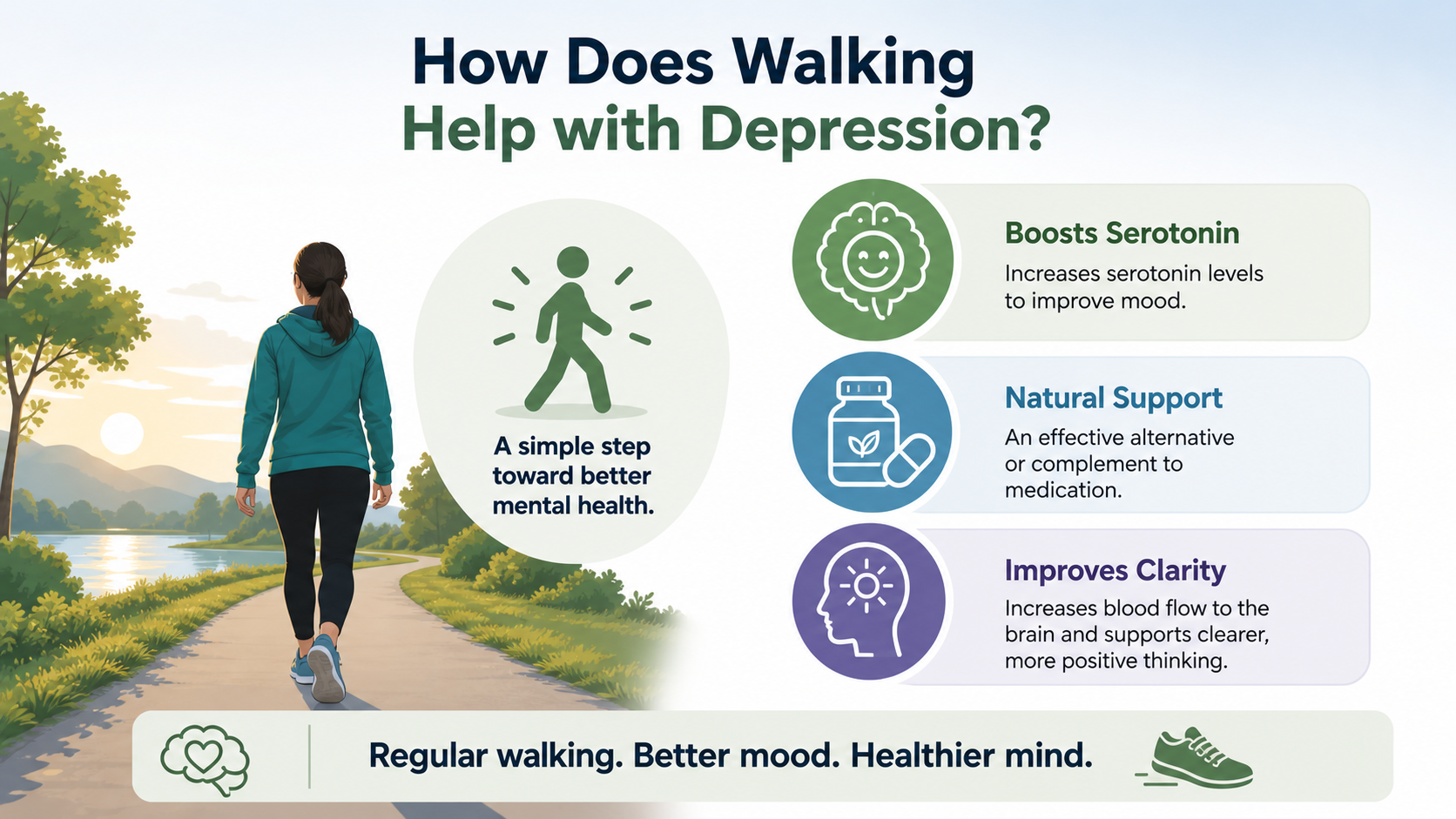
Walking is often considered a non-drug intervention for depression. Regular walking leads to noticeable improvements in mood by altering neurotransmitter activity in the brain.
- Serotonin Production: Walking boosts serotonin levels, which help regulate mood and improve feelings of well-being. This makes walking an effective tool for fighting depression.
- Alternative to Medication: Studies have shown that walking can serve as an effective alternative or complement to traditional medications in managing mild to moderate depression.
- Mental Clarity: As walking increases blood flow to the brain, it helps improve mental clarity, which can counteract the negative thinking patterns associated with depression.
Does Walking in Nature Help Mental Health?
Yes, walking in nature has additional benefits for mental health. Nature walks, often referred to as ecotherapy or nature therapy, provide unique mental health advantages that walking in urban areas may not.
- Nature’s Calming Effect: Nature has a calming effect on the mind. A systematic review of nature walks found that these walks reduced symptoms of both anxiety and depression, with lasting effects for up to three months.
- Attention Restoration: Nature has been shown to restore attention, reduce mental fatigue, and provide an opportunity for reflection and relaxation, which helps improve mental health.
- Stress Reduction: Walking in natural environments lowers stress hormone levels and enhances the body’s ability to recover from stress.
How Does a Morning Walk Improve Mental Health?
Starting your day with a morning walk can set a positive tone for the rest of the day. The benefits of morning walks are closely tied to exposure to natural light and the endorphin boost they provide.
- Exposure to Morning Sunlight: A morning walk exposes you to sunlight, which helps regulate the body’s circadian rhythm and improve mood.
- Boosted Energy and Focus: A brisk walk in the morning increases energy levels, clears the mind, and helps prepare you mentally for the day ahead.
- Improved Mental Health: Research suggests that regular morning walks can help alleviate symptoms of anxiety and depression.
What Are the Benefits of Walking Outdoors for Mental Well-being?
Walking outdoors offers unique benefits for mental health. Fresh air, green spaces, and sunlight exposure enhance mood and well-being in ways indoor walking cannot match.
- Fresh Air and Sunlight: Walking outdoors exposes you to fresh air and sunlight, which help regulate your mood and enhance vitamin D levels, essential for brain function and emotional regulation.
- Connection with Nature: Walking in natural environments, such as parks or forests, promotes relaxation and mental rejuvenation, while urban environments can contribute to stress.
- Social Interaction: Outdoor walking provides opportunities for social interaction, whether walking with friends or joining a group walk, which has additional positive effects on mental health.
Is Walking Better Than Running for Mental Health?
While both walking and running have mental health benefits, walking is a more accessible, sustainable option for most people. It provides all of the benefits of exercise without the strain on joints and muscles that running can cause.
- Low-Impact Exercise: Walking is much gentler on the joints compared to running. This makes it a better option for people with mobility issues or those new to exercise.
- Sustainability: Walking is easier to integrate into daily life, making it a more sustainable long-term mental health strategy than running, which can be harder to maintain for some people.
How Long Should I Walk for Mental Health Benefits?
For mental health benefits, a daily walking routine of 30 minutes to 1 hour is ideal. This time frame helps trigger the release of endorphins, boost mood, and reduce anxiety or stress.
- 30 Minutes per Day: Walking for just 30 minutes a day can significantly improve mood and reduce symptoms of stress and anxiety.
- More Walks, Greater Benefits: Walking for 60 minutes or more, especially at a brisk pace, offers enhanced benefits for emotional regulation and mental clarity.
How Long Should a Mental Health Walk Be?
A mental health walk should typically last at least 30 minutes. This allows enough time for the body to release mood-enhancing hormones and for the mind to relax.
- 30 Minutes of Brisk Walking: Studies show that even 30 minutes of brisk walking can lead to significant improvements in mental health, reducing stress and enhancing mood.
- Longer Walks: If time permits, longer walks of 1 hour or more provide even greater mental health benefits.
How Does Walking Help with Mental Clarity?
Walking promotes mental clarity by enhancing blood flow to the brain, reducing mental fatigue, and helping you process emotions more effectively.
- Improved Focus: Walking provides a break from the chaos of everyday life and allows you to clear your mind, improving focus and cognitive function.
- Stress Relief: The rhythmic nature of walking helps to reduce anxiety and clear mental fog, promoting better problem-solving and decision-making.
Why Do People Say They’re Going on a “Mental Health Walk”?
The phrase “mental health walk” has become a popular term to describe taking a walk as a form of self-care. It signifies walking specifically to improve mental well-being, manage stress, or clear the mind.
- Self-Care: A mental health walk is seen as a simple yet effective way to combat stress, anxiety, and emotional overwhelm.
- Rejuvenation: Many people use the phrase to indicate taking a step back from the hustle and bustle of life to focus on their mental health.
Key Takeaway
Walking, whether in nature or in urban spaces, is a highly effective way to improve mental health. It is simple, accessible, and offers a wide range of benefits, including reduced stress, anxiety, and depression. Whether you’re walking for a few minutes each day or committing to a longer routine, walking can be a powerful tool in your mental well-being toolkit.
FAQ Section
1. How does walking improve mental health?
Walking boosts mood by releasing endorphins, reducing stress hormones, and enhancing brain function, leading to improved mental health.
2. Does walking reduce anxiety?
Yes, walking has been shown to reduce anxiety by promoting relaxation and decreasing stress hormones like cortisol.
3. How long should I walk for mental health?
Walking for 30-60 minutes a day is recommended to improve mental health, but benefits can start with just 20 minutes.
4. Is walking better for mental health than running?
Walking is a low-impact, sustainable activity for mental health and may be better for long-term benefits compared to running.
5. Can walking help with depression?
Yes, walking helps relieve symptoms of depression by increasing serotonin and endorphin levels, improving overall mood.
6. Are nature walks better for mental health?
Yes, walking in nature offers additional benefits such as stress reduction and improved attention restoration, making it particularly good for mental health.
7. How many steps should I walk for mental health?
Walking 7,500+ steps daily can reduce depression risk by 42-43%, but even walking 1,000 steps daily has measurable benefits.
8. Why do people say they are going on a “mental health walk”?
A “mental health walk” is a term used to describe walking as a form of self-care to improve mood and reduce stress.
Key Sources
- 2024 Walking Meta-Analysis (75 RCTs) – Main study on depression/anxiety reductions
- PubMed Summary – Key stats on SMD effects
- APA Monitor Article – 18-25% risk reductions
- UCLA Health Steps Study – Steps vs. depression risk
- Nature Walks Review – Environmental benefits
- Older Adults Walking – Intensity Effects
- Emotional Health Link – Mechanisms
- Dose-Response Analysis – Minimum dose issues
- Exercise Intensity Mood – Moderators
- Nature vs City Walks – Context effects