

What Are the Health and Fitness Benefits of a 30-Minute Walk?
A simple 30-minute walk each day can transform your health, fitness, and mental well-being. Whether you’re an office worker, a busy parent, or someone starting a fitness journey, walking is accessible, low-impact, and surprisingly effective.
Walking is more than just moving your legs—it’s a structured exercise that improves your heart, burns calories, lifts your mood, and even supports brain health. In this guide, we’ll break down exactly why dedicating 30 minutes to walking daily is worth it.
How Does a 30-Minute Walk Improve Your Physical Health?
A daily 30-minute walk strengthens your cardiovascular system, improves metabolism, and supports weight management. Walking is a moderate-intensity aerobic exercise that engages multiple muscle groups, improves circulation, and can lower the risk of chronic diseases.
Benefits include:
- Heart Health: Regular walking reduces the risk of heart disease by improving circulation and lowering blood pressure.
- Blood Pressure & Cholesterol: Studies show consistent walking helps regulate blood pressure and can modestly reduce LDL cholesterol.
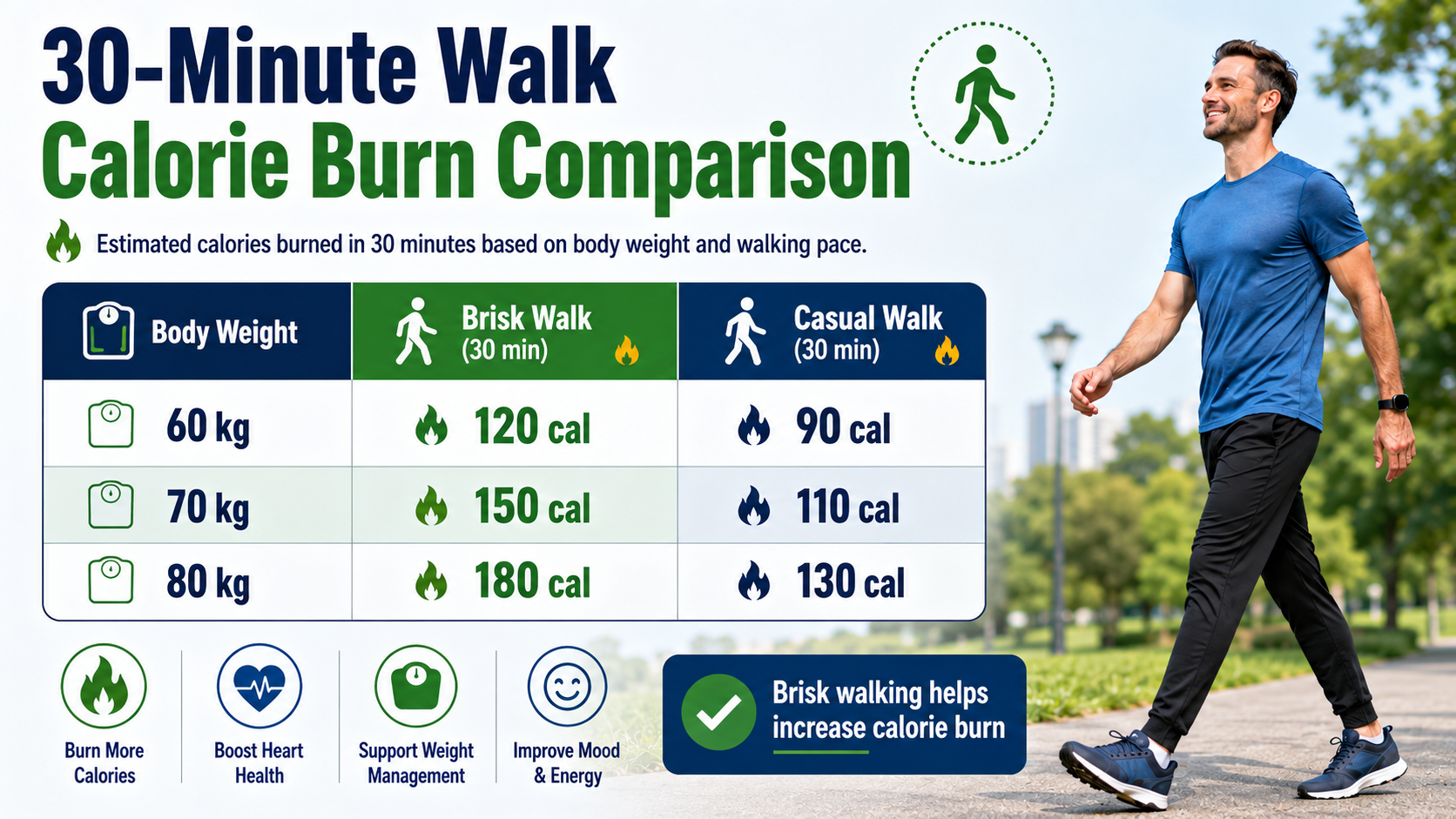
- Calorie Burn: A brisk 30-minute walk burns roughly 120–180 calories, depending on weight and pace.
- Mobility & Joint Health: Walking strengthens muscles, maintains joint flexibility, and reduces the risk of osteoporosis.
How Does Walking Benefit Heart Health?
Walking supports heart health by strengthening the heart, improving circulation, and lowering cardiovascular risks. Each step increases blood flow and oxygen delivery to organs, and brisk walking raises heart rate, improving cardiovascular efficiency over time.
Example: Walking about 30 minutes a day — roughly five days a week — has been associated with about a 19% lower risk of developing coronary heart disease in adults, based on a large meta‑analysis of population studies. (Source: PubMed)
Can Walking Help Lower Blood Pressure and Cholesterol?
A consistent 30-minute walk helps reduce both blood pressure and bad cholesterol. Moderate exercise promotes arterial elasticity and helps balance HDL (good) and LDL (bad) cholesterol. Walking after meals may also improve blood sugar control, especially for adults at risk of diabetes.
How Many Calories Can You Burn in 30 Minutes of Walking?
A 30-minute brisk walk typically burns 120–180 calories. Factors affecting calorie burn include body weight, walking pace, and incline.
Comparison Table:
How Does a 30-Minute Walk Enhance Mental Health and Well-being?
Walking reduces stress, improves mood, and enhances cognitive function. Physical activity triggers endorphin release, reduces cortisol levels, and supports mental clarity.
Can Walking Reduce Stress and Anxiety?
Walking lowers stress hormones and promotes relaxation. Nature walks, or walks outdoors, have stronger stress-relief effects. Even a treadmill walk releases endorphins, helping fight anxiety. A 30-minute walk can improve focus, calm racing thoughts, and decrease feelings of tension.
How Does Walking Boost Mood and Cognitive Function?
Walking enhances brain health and elevates mood. It encourages neurogenesis (new brain cell growth), improves memory and attention span, and may reduce the risk of cognitive decline in older adults.
How Can You Make the Most of Your 30-Minute Walk?
Optimize your walk by focusing on pace, timing, and posture.
What Is the Ideal Walking Speed and Intensity?
- Brisk pace: 3–4 mph (enough to raise heart rate)
- Casual pace: Less intense but still beneficial
- Interval walking: Alternating fast and slow paces boosts calorie burn
When Is the Best Time of Day to Walk?
- Morning walks improve energy and focus for the day
- Afternoon walks reduce stress and prevent post-lunch lethargy
- Evening walks aid digestion and relaxation
How Can You Maintain Proper Posture and Avoid Injury?
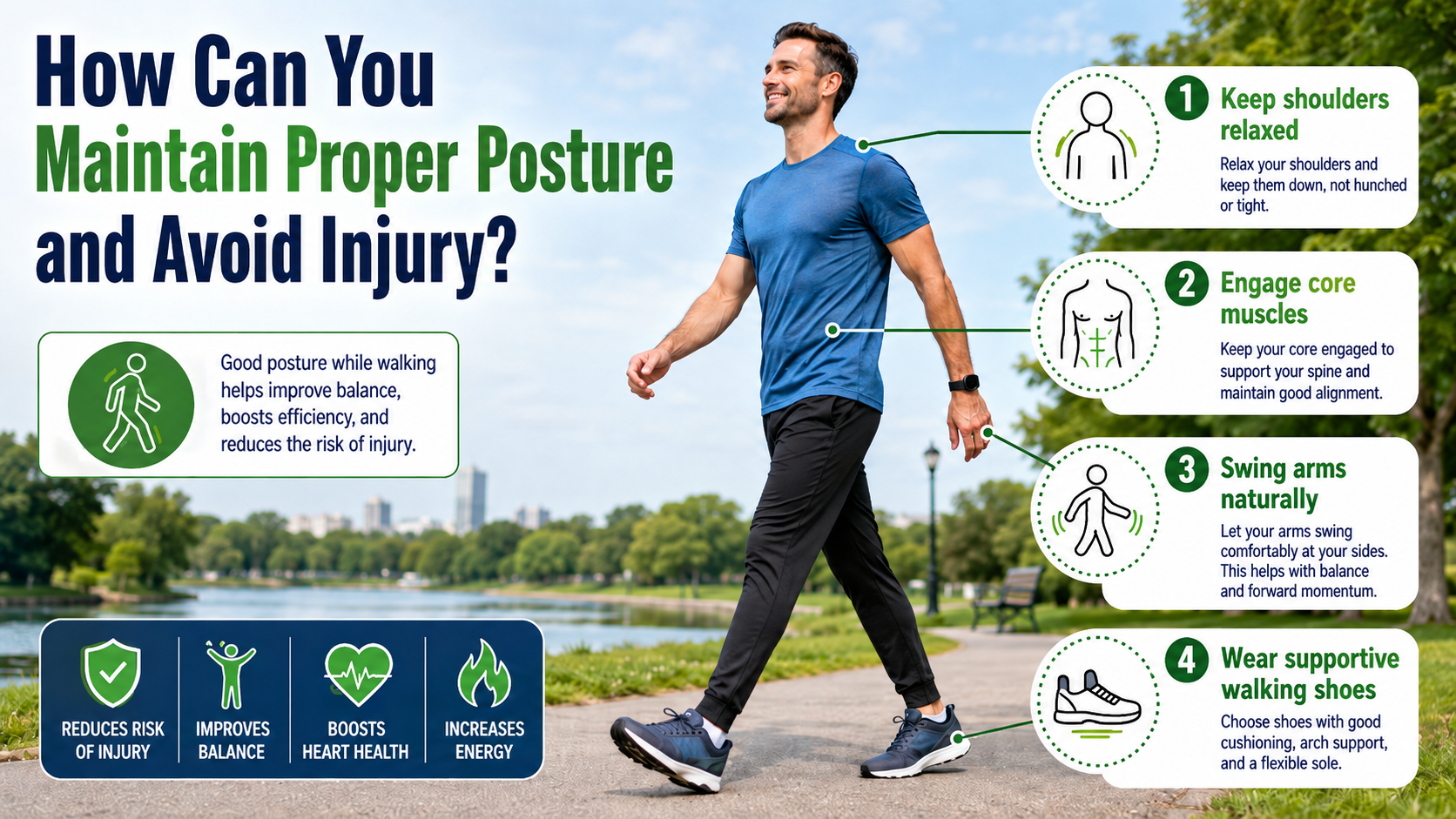
- Keep shoulders relaxed
- Engage core muscles
- Swing arms naturally
- Wear supportive walking shoes
What Tools and Products Can Enhance Your Walking Routine?
Walking shoes, fitness trackers, and apps can improve comfort and motivation.
Which Walking Shoes Are Best for Comfort and Support?
- Cushioned soles with proper arch support
- Lightweight and breathable materials
- Replace every 300–500 miles
How Can Fitness Trackers and Apps Help You Stay Motivated?
- Track steps, distance, and calories burned
- Set daily goals and reminders
- Connect with community challenges
What Are Common Misconceptions About Walking?
- Walking is not intense enough: Brisk walking can match moderate exercise benefits.
- Short walks are useless: 10–15 minute walks still contribute to health; 30 minutes is ideal.
- Walking replaces all exercise: Include strength training for full-body fitness.
Key Takeaways
- A 30-minute daily walk improves heart health, mental well-being, and calorie burn.
- Proper pace, posture, and consistency maximize benefits.
- Simple tools like shoes, trackers, and apps enhance the experience.
- Walking is accessible, low-impact, and sustainable for long-term health.
Frequently Asked Questions
Is a 30-minute walk enough for fitness?
Yes, it supports cardiovascular, mental, and metabolic health when done daily.
Can walking help with weight loss?
Yes, combined with diet, a brisk 30-minute walk burns 120–180 calories.
Do I need special shoes to walk?
Supportive shoes improve comfort and reduce injury risk.
Is walking better than running?
Walking is lower impact, sustainable, and still provides major health benefits.
Can I split 30 minutes into shorter walks?
Yes, three 10-minute walks can provide similar benefits.
Should I walk in the morning or evening?
Both are beneficial; choose a time that fits your schedule and energy levels.
How fast should I walk?
Brisk walking at 3–4 mph is ideal for health and calorie burn.
Will walking help my mental health?
Yes, it reduces stress, improves mood, and supports cognitive function.