
Table of Contents
ToggleWhat Are the 13 Types of Vitamins and Their Functions?
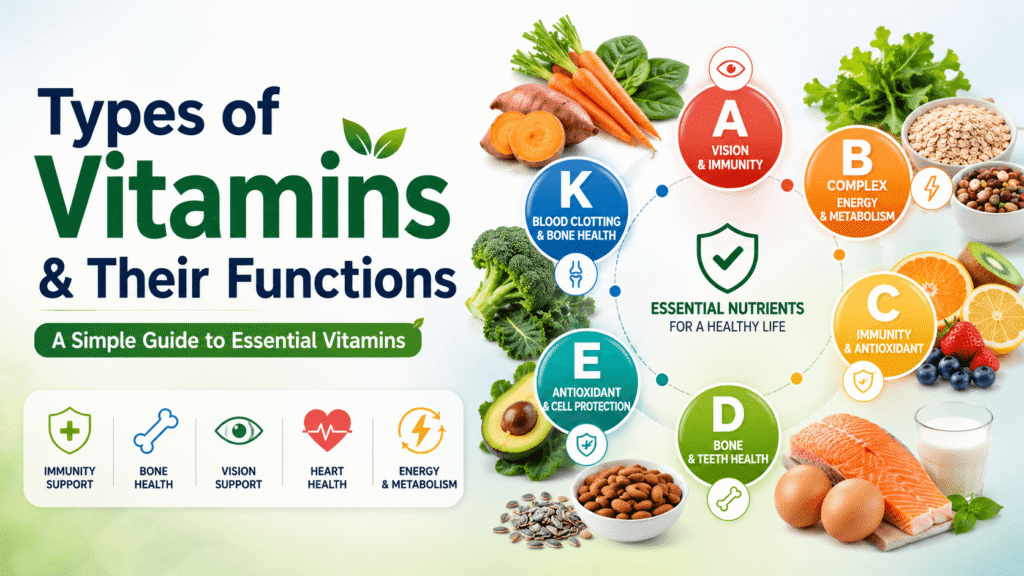
There are 13 essential vitamins, and each performs a different role in keeping the body healthy. These vitamins support functions such as vision, energy metabolism, immunity, blood formation, nerve activity, cell division, wound healing and bone development.
The 13 vitamins are divided into two main groups: fat-soluble vitamins and water-soluble vitamins. Vitamins A, D, E and K are fat-soluble. Vitamin C and the eight B vitamins are water-soluble.
Understanding the different types of vitamins can help you build a more balanced diet, recognise possible nutritional gaps and avoid unnecessary or potentially harmful supplement use.
What Are Vitamins and Why Does the Body Need Them?
Vitamins are organic micronutrients that the body needs in small amounts to function properly. They do not directly provide calories, but they help regulate processes that allow the body to use carbohydrates, fats, and proteins.
Different vitamins contribute to different biological functions, including:
- Converting food into usable energy
- Supporting normal growth and development
- Producing red blood cells
- Maintaining vision
- Supporting immune defences
- Building and maintaining bones
- Protecting cells from oxidative damage
- Producing DNA and supporting cell division
- Maintaining the brain and nervous system
- Producing collagen and healing wounds
The body cannot produce sufficient amounts of most vitamins, so they must usually come from food, fortified products or supplements when medically appropriate.
How Are Vitamins Classified?
Vitamins are classified as either fat-soluble or water-soluble. The classification describes how the vitamins are absorbed, transported, stored and removed from the body.
What Are Fat-Soluble Vitamins?
Fat-soluble vitamins dissolve in dietary fat and can be stored in the liver, muscles and fatty tissues. The four fat-soluble vitamins are A, D, E and K.
Because these vitamins can accumulate in the body, taking excessive amounts through high-dose supplements may be more dangerous than consuming them through ordinary foods. Absorption is generally improved when fat-soluble vitamins are eaten with a meal containing some dietary fat.
What Are Water-Soluble Vitamins?
Water-soluble vitamins dissolve in water and are generally stored in smaller amounts than fat-soluble vitamins. The water-soluble group includes vitamin C and the eight B-complex vitamins.
Excess amounts of many water-soluble vitamins leave the body through urine, so regular dietary intake is important. Vitamin B12 is an important exception because the liver can store substantial amounts for several years.
What Functions Do the 13 Essential Vitamins Perform?
Each essential vitamin has a distinct function, although several vitamins work together in processes such as metabolism, immunity, blood formation and cellular development.
| Vitamin | Classification | Main functions | Common food sources |
|---|---|---|---|
| Vitamin A | Fat-soluble | Supports vision, immunity, reproduction, growth and organ function | Carrots, sweet potatoes, spinach, eggs, dairy, fish and liver |
| Vitamin B1 | Water-soluble | Helps convert food into energy and supports cells, nerves and heart function | Whole grains, pork, fish, legumes, nuts and seeds |
| Vitamin B2 | Water-soluble | Supports energy metabolism, cell growth and red-blood-cell production | Eggs, milk, lean meat, spinach, mushrooms and fortified grains |
| Vitamin B3 | Water-soluble | Helps convert food into energy and supports cellular development and function | Poultry, fish, meat, nuts, legumes and fortified grains |
| Vitamin B5 | Water-soluble | Supports energy metabolism and the production and breakdown of fats | Poultry, eggs, milk, mushrooms, avocado, whole grains and chickpeas |
| Vitamin B6 | Water-soluble | Supports more than 100 enzyme reactions, brain development and immunity | Poultry, fish, potatoes, starchy vegetables and non-citrus fruits |
| Vitamin B7 | Water-soluble | Helps metabolise carbohydrates, fats and proteins | Eggs, fish, meat, nuts, seeds, sweet potatoes and spinach |
| Vitamin B9 | Water-soluble | Supports DNA production, cell division and healthy fetal development | Leafy greens, beans, peas, citrus fruits and fortified grains |
| Vitamin B12 | Water-soluble | Supports nerve cells, red blood cells and DNA production | Meat, fish, eggs, dairy and fortified plant foods |
| Vitamin C | Water-soluble | Supports collagen, wound healing, antioxidant protection, immunity and iron absorption | Citrus fruits, peppers, kiwi, strawberries, broccoli and tomatoes |
| Vitamin D | Fat-soluble | Supports calcium absorption, bones, muscles, nerves and immune function | Sunlight exposure, fatty fish, egg yolks and fortified foods |
| Vitamin E | Fat-soluble | Protects cells as an antioxidant and supports immunity and cellular communication | Vegetable oils, almonds, sunflower seeds, spinach and broccoli |
| Vitamin K | Fat-soluble | Supports normal blood clotting and bone health | Spinach, kale, broccoli, vegetable oils, soybeans, eggs and cheese |
The functions and food examples in this table are based on information from the National Institutes of Health and the U.S. National Library of Medicine.
What Do Fat-Soluble Vitamins Do?
Fat-soluble vitamins mainly support vision, bone health, antioxidant protection, immunity, and blood clotting. Because the body can store them, both deficiency and excessive supplementation require attention.
What Is the Function of Vitamin A?
Vitamin A supports normal vision, immunity, reproduction, growth and cellular development. It also helps organs such as the heart, lungs and kidneys function properly.
Vitamin A appears in two main dietary forms:
- Preformed vitamin A, found in liver, fish, eggs and dairy products
- Provitamin A carotenoids, including beta-carotene, found in orange, yellow and dark-green fruits and vegetables
Good sources include carrots, sweet potatoes, spinach, broccoli, mangoes, eggs, dairy products and some types of fish.
Vitamin A deficiency can reduce the ability to see in low light. Severe deficiency may progress to xerophthalmia and permanent blindness. Vitamin A deficiency remains more common in lower-income countries, particularly among young children.
What Is the Function of Vitamin D?
Vitamin D helps the body absorb calcium and maintain strong bones and teeth. It also supports muscle movement, nerve signalling and immune function.
The body can produce vitamin D when uncovered skin is exposed to ultraviolet radiation from sunlight. However, production varies according to age, skin pigmentation, season, air pollution, location, clothing and time spent outdoors. Sunlight through a window does not trigger meaningful vitamin D production in the skin.
Only a limited number of foods naturally contain substantial vitamin D. The best sources include:
- Salmon, trout, tuna and mackerel
- Fish-liver oils
- Egg yolks
- UV-exposed mushrooms
- Fortified milk or plant-based alternatives
- Fortified breakfast cereals
Vitamin D deficiency can cause rickets in children. In adolescents and adults, it can cause osteomalacia, which may lead to bone pain and muscle weakness.
What Is the Function of Vitamin E?
Vitamin E acts as an antioxidant that helps protect cells from damage caused by free radicals. It also contributes to immune function, blood-vessel health and communication between cells.
Important sources include:
- Sunflower, safflower and wheat-germ oils
- Almonds, peanuts and hazelnuts
- Sunflower seeds
- Spinach
- Broccoli
- Some fortified cereals
Vitamin E deficiency is rare in healthy people. It is more likely in people with conditions that interfere with fat digestion or absorption. Severe deficiency can cause nerve damage, muscle weakness, reduced movement control, and vision problems.
What Is the Function of Vitamin K?
Vitamin K is needed to produce proteins that support normal blood clotting. It also contributes to the formation and maintenance of healthy bones.
Vitamin K exists in forms that include:
- Vitamin K1, or phylloquinone
- Vitamin K2, or menaquinones
Good sources include spinach, kale, broccoli, lettuce, vegetable oils, soybeans, eggs, cheese, and some meats. Severe deficiency can cause easy bruising or excessive bleeding because the blood takes longer to clot.
People taking warfarin or a similar anticoagulant should not suddenly remove vitamin K foods from their diet. Instead, they generally need a consistent intake and individual guidance from their healthcare professional.
What Do Water-Soluble Vitamins Do?
Water-soluble vitamins mainly support metabolism, cellular reactions, blood formation, nervous-system function, immunity, collagen production and DNA synthesis.
What Is the Function of Vitamin B1?
Vitamin B1, also called thiamine, helps convert food into usable energy. It is also important for cell growth, nerve function and normal heart activity.
Good sources include:
- Whole grains
- Fortified bread and cereals
- Pork
- Fish
- Beans and soybeans
- Seeds and nuts
Severe thiamine deficiency can cause beriberi, which may affect the heart, muscles and nerves. People with long-term alcohol dependence are particularly vulnerable to thiamine deficiency and Wernicke-Korsakoff syndrome.
What Is the Function of Vitamin B2?
Vitamin B2, or riboflavin, helps the body release energy from food and supports normal cell growth and development. It also contributes to red-blood-cell production.
Food sources include:
- Eggs
- Milk
- Lean meat
- Organ meat
- Spinach
- Mushrooms
- Fortified cereals and bread
Riboflavin deficiency can cause cracked lips, sores at the corners of the mouth, skin problems, a sore throat and, in severe cases, anaemia.
What Is the Function of Vitamin B3?
Vitamin B3, or niacin, helps turn food into energy and supports the normal development and function of cells.
Common sources include poultry, beef, pork, fish, nuts, legumes and fortified grain products. The body can also produce some niacin from tryptophan, an amino acid found in protein-containing foods.
Severe niacin deficiency causes pellagra. Symptoms may involve inflamed or sun-sensitive skin, digestive problems, fatigue, depression, confusion and memory changes.
What Is the Function of Vitamin B5?
Vitamin B5, or pantothenic acid, helps the body convert food into energy. It is especially important for making and breaking down fatty acids.
Pantothenic acid occurs in a wide range of foods, including:
- Beef, poultry and seafood
- Eggs and milk
- Mushrooms
- Avocados
- Potatoes
- Broccoli
- Whole grains
- Peanuts and chickpeas
Deficiency is extremely rare because pantothenic acid is present in many foods. Severe deficiency may cause tiredness, numbness, burning sensations in the hands or feet and digestive symptoms.
What Is the Function of Vitamin B6?
Vitamin B6 supports more than 100 enzyme reactions involved in metabolism. It also contributes to immune function and brain development during pregnancy and infancy.
Major food sources include poultry, fish, organ meat, potatoes, starchy vegetables and non-citrus fruits.
Vitamin B6 deficiency may cause anaemia, itchy rashes, cracked skin around the mouth, a swollen tongue, confusion and weakened immune function. Extremely high supplemental doses taken for prolonged periods may also damage nerves, so more is not necessarily better.
What Is the Function of Vitamin B7?
Vitamin B7, commonly called biotin, helps the body metabolise carbohydrates, fats and proteins.
Sources include:
- Eggs
- Fish and meat
- Liver and other organ meats
- Nuts and seeds
- Sweet potatoes
- Spinach
- Broccoli
Biotin deficiency is very rare. Possible symptoms include hair thinning, skin rashes, brittle nails, seizures and nervous-system problems.
Biotin supplements are widely promoted for hair, skin and nail health, but evidence supporting these benefits in people without a deficiency remains limited. High-dose biotin may also interfere with some laboratory tests, including certain hormone tests.
What Is the Function of Vitamin B9?
Vitamin B9, known as folate in food, is essential for producing DNA and other genetic material. It is also required for cell division and normal red-blood-cell formation.
Folic acid is the form commonly used in fortified foods and supplements. Natural folate sources include:
- Spinach and other dark-green vegetables
- Asparagus
- Brussels sprouts
- Beans and peas
- Oranges
- Peanuts
- Liver
Folic acid is added to many enriched grain products and breakfast cereals.
Folate is especially important before conception and during early pregnancy. The NIH advises women and teenage girls who could become pregnant to consume 400 micrograms of folic acid each day from supplements, fortified foods or both, in addition to dietary folate. This helps reduce the risk of neural-tube defects.
What Is the Function of Vitamin B12?
Vitamin B12 helps maintain healthy nerve cells and blood cells. It is also required for DNA production and helps prevent megaloblastic anaemia.
Natural vitamin B12 is mainly found in animal-derived foods, including:
- Fish and shellfish
- Meat and poultry
- Eggs
- Milk and dairy products
- Liver
Plant foods do not naturally provide reliable vitamin B12 unless they are fortified. Vegans and some vegetarians may therefore need fortified foods or an appropriate supplement.
Older adults and people with pernicious anaemia, gastrointestinal disorders or previous stomach or intestinal surgery may have difficulty absorbing B12. NIH information indicates that vitamin B12 deficiency affects an estimated 3% to 43% of older adults, depending on the population and definition used.
Deficiency can cause fatigue, weakness, anaemia, numbness, tingling, balance problems, confusion and memory difficulties. Nerve damage can occur even without anaemia, making timely diagnosis important.
What Is the Function of Vitamin C?
Vitamin C, or ascorbic acid, acts as an antioxidant and helps protect cells from free-radical damage. It is also required to produce collagen, heal wounds, support immune function and improve the absorption of iron from plant foods.
Good sources include:
- Oranges and other citrus fruits
- Red and green peppers
- Kiwi
- Strawberries
- Broccoli
- Tomatoes
- Potatoes
- Cantaloupe
Long storage and prolonged cooking can reduce vitamin C content. Steaming or microwaving may preserve more vitamin C than extended boiling.
Severe vitamin C deficiency causes scurvy. Symptoms can include fatigue, bleeding gums, poor wound healing, skin spots, joint pain and anaemia.
Which Foods Provide the Different Types of Vitamins?
A varied diet containing vegetables, fruits, whole grains, beans, nuts, seeds, dairy or fortified alternatives, eggs, fish and other protein sources can provide most vitamins for most healthy people.
No single food naturally contains ideal amounts of every vitamin. Dietary variety is therefore more useful than relying on one “superfood.”
A practical vitamin-rich eating pattern may include:
- Dark-green vegetables: Folate, vitamins A, C, E and K
- Orange and yellow produce: Provitamin A carotenoids and vitamin C
- Beans and lentils: Folate and several B vitamins
- Whole grains: Vitamins B1, B3 and B5
- Nuts and seeds: Vitamins E, B1, B3 and biotin
- Eggs: Vitamins A, B2, B5, B7, B12 and small amounts of D
- Dairy or fortified alternatives: Vitamins B2, B12 and often vitamin D
- Fish: Vitamins D, B6 and B12
- Meat and poultry: Several B-complex vitamins
- Fortified cereals: Commonly contain folic acid and selected B vitamins
Most people should aim to obtain nutrients through a varied and balanced diet, although supplements may be useful when food cannot meet a specific need.
What Happens When the Body Does Not Get Enough Vitamins?
Vitamin deficiency can interrupt the body process supported by the missing vitamin. Symptoms vary widely and may affect vision, skin, blood, nerves, bones, muscles, immunity or wound healing.
| Deficient vitamin | Possible deficiency effects |
| Vitamin A | Poor night vision, dry eyes and possible blindness |
| Vitamin B1 | Weakness, confusion, nerve problems and beriberi |
| Vitamin B2 | Cracked lips, mouth sores, skin problems and anaemia |
| Vitamin B3 | Pellagra, including skin, digestive and neurological symptoms |
| Vitamin B5 | Fatigue, digestive symptoms and burning or numb feet |
| Vitamin B6 | Anaemia, rashes, mouth cracks, confusion and weak immunity |
| Vitamin B7 | Hair thinning, rash, brittle nails and neurological symptoms |
| Vitamin B9 | Megaloblastic anaemia and increased neural-tube-defect risk |
| Vitamin B12 | Anaemia, fatigue, tingling, numbness and nerve damage |
| Vitamin C | Scurvy, bleeding gums and poor wound healing |
| Vitamin D | Rickets, osteomalacia, bone pain and muscle weakness |
| Vitamin E | Nerve or muscle damage and vision problems |
| Vitamin K | Easy bruising, excessive bleeding and reduced bone strength |
These symptoms are not unique to vitamin deficiency. Fatigue, weakness, hair loss, numbness and skin changes can have many medical causes. A healthcare professional may use dietary history, physical examination and laboratory testing to determine the actual cause.
Who Has a Higher Risk of Vitamin Deficiency?
People with restricted diets, increased nutritional requirements or impaired absorption are more likely to develop certain vitamin deficiencies.
Higher-risk groups can include:
- People who eat a highly restricted or very limited diet
- Vegans who do not consume fortified B12 foods or supplements
- Pregnant people or those planning pregnancy
- Older adults with reduced vitamin B12 absorption
- People with alcohol dependence
- People with coeliac disease, Crohn’s disease or other malabsorption disorders
- People who have undergone bariatric or gastrointestinal surgery
- People taking medicines that affect nutrient absorption
- People with limited sunlight exposure
- People with conditions that impair fat absorption
- People experiencing food insecurity or undernutrition
Worldwide, deficiencies involving vitamin A and several other micronutrients remain important public-health concerns, particularly among children and pregnant women.
Does Everyone Need Vitamin Supplements?
No. Most healthy people can obtain the vitamins they need from a varied and balanced diet. Supplements are most useful when a specific dietary, medical or life-stage need cannot be met through food alone.
Supplementation may be considered in situations such as:
- Folic acid before and during early pregnancy
- Vitamin B12 for vegans or people with absorption problems
- Vitamin D when intake, production or blood levels are inadequate
- A medically confirmed vitamin deficiency
- A restrictive diet that excludes important nutrient sources
- Certain gastrointestinal conditions
- Use of medicines that interfere with vitamin absorption or metabolism
A supplement should not automatically be taken simply because a person feels tired or unwell. Symptoms should be evaluated because taking the wrong supplement may delay diagnosis of the real condition.
Children, pregnant people and breastfeeding people should use additional supplements only with appropriate professional guidance, except for routinely recommended prenatal products. Many supplements have not been adequately tested in these groups.
Can Taking Too Many Vitamins Be Harmful?
Yes. High doses of some vitamins can cause side effects, interact with medicines, or accumulate to harmful levels.
Important safety examples include:
- Vitamin A: Excess preformed vitamin A can cause headache, blurred vision, nausea, and liver-related toxicity. High-dose preformed vitamin A during pregnancy can cause birth defects.
- Vitamin E: High-dose supplements may increase bleeding risk and have not consistently prevented heart disease or cancer.
- Niacin: Supplemental nicotinic acid can cause flushing, itching, headaches, and dizziness. Medicinal doses may affect the liver, blood sugar and blood pressure.
- Biotin: High-dose biotin can produce misleading results in some laboratory tests.
- Vitamin K: Sudden changes in vitamin K intake can interfere with warfarin treatment.
The common belief that “more is better” does not apply to vitamins. High-dose products should be used only when there is a clear reason and appropriate professional supervision.
Which Common Vitamin Myths Cause Confusion?
Several popular vitamin claims are misleading or incomplete.
Do vitamins directly give the body energy?
No. Vitamins do not contain calories. B vitamins help enzymes release and use energy from carbohydrates, fats, and proteins, but taking extra B vitamins does not automatically increase energy when a person already has an adequate intake.
Does biotin always improve hair and nails?
No. Biotin can correct symptoms caused by biotin deficiency, but true deficiency is rare. Scientific evidence supporting high-dose biotin for hair and nail improvement in people without deficiency is limited.
Can sunlight always provide enough vitamin D?
No. Vitamin D production depends on skin pigmentation, age, location, season, cloud cover, pollution, clothing, and time outdoors. Excessive ultraviolet exposure also increases skin-cancer risk, so unsafe sun exposure should not be used as a vitamin D strategy.
Are water-soluble vitamins completely harmless?
No. Although the body removes excess amounts of many water-soluble vitamins, high-dose supplements can still cause adverse effects. Examples include niacin-related flushing and liver injury, vitamin B6-related nerve damage and vitamin C-related digestive symptoms.
Can supplements replace healthy food?
No. Whole foods provide fibre, protein, essential fats, minerals and beneficial plant compounds in addition to vitamins. Supplements can fill identified gaps, but they do not reproduce the full nutritional value of a balanced diet.
How Can You Use Food Labels to Compare Vitamin Content?
Use the percentage Daily Value on a food label to estimate whether one serving contains a small or large amount of a listed vitamin.
According to the U.S. Food and Drug Administration:
- 5% Daily Value or less per serving is considered low.
- 20% Daily Value or more per serving is considered high.
The percentage applies to one serving, not necessarily the entire packet. Check the stated serving size before comparing products.
When examining fortified foods or supplements, also check:
- The exact vitamin form
- The amount per serving
- The number of servings
- Whether several products contain the same nutrient
- Whether the dose greatly exceeds 100% Daily Value
- Whether the product includes added sugar or unnecessary ingredients
What Are the Key Takeaways About Vitamins?
The body needs 13 essential vitamins to support normal metabolism, growth, and health.
The most important points are:
- Vitamins A, D, E and K are fat-soluble.
- Vitamin C and the eight B vitamins are water-soluble.
- Each vitamin performs a specialised function.
- No single food provides ideal amounts of every vitamin.
- A varied diet is the best foundation for vitamin intake.
- Fortified foods can help provide nutrients such as folic acid, vitamin B12 and vitamin D.
- Deficiency symptoms can resemble many other medical conditions.
- Supplements are useful for specific needs but are not automatically necessary for everyone.
- High-dose supplements can cause harm or interact with medicines.
- A suspected deficiency should be discussed with a qualified healthcare professional.
What Are the Most Frequently Asked Questions About Vitamins?
How Many Essential Vitamins Are There?
There are 13 essential vitamins: vitamins A, C, D, E and K, plus eight B vitamins—B1, B2, B3, B5, B6, B7, B9 and B12.
Which Vitamins Are Fat-Soluble?
Vitamins A, D, E and K are fat-soluble. They are absorbed with dietary fat and can be stored in the liver and body tissues.
Which Vitamins Are Water-Soluble?
Vitamin C and the eight B vitamins are water-soluble. Most are not stored in large amounts, although vitamin B12 can remain stored in the liver for years.
Which Vitamin Is Most Important for Immunity?
No single vitamin controls the immune system. Vitamins A, C, D, E, B6, B9 and B12 all contribute to immune function or the development and activity of immune cells.
Which Vitamins Help the Body Produce Energy?
B vitamins help the body metabolise carbohydrates, fats and proteins. However, vitamins do not directly contain or provide calories.
Can Food Provide All the Vitamins the Body Needs?
A varied and balanced diet can provide most vitamins for most healthy people. Fortified foods or supplements may still be needed during certain life stages, with restrictive diets or when absorption is impaired.
Should Vitamins Be Taken Every Day?
Vitamins should be consumed regularly through food, but a daily supplement is not necessary for every person. Supplement needs depend on diet, health, age, pregnancy status, medicines and laboratory findings.
Can Vitamin Supplements Replace a Healthy Diet?
No. Supplements can provide selected nutrients, but they do not replace the fibre, protein, healthy fats, minerals and beneficial plant compounds found in whole foods.
Conclusion
Vitamins are essential micronutrients that work together to support almost every major body system. Learning the function and food sources of each vitamin makes it easier to build a balanced diet and recognise situations in which professional nutritional advice may be useful.
For most people, the safest approach is to prioritise varied foods, use fortified products where appropriate and avoid high-dose supplements unless they are recommended for a specific need.
Sources and References
The information in this guide was researched using trusted government and public-health sources:
MedlinePlus: Vitamins and Their Functions
Overview of the 13 essential vitamins, their classification, functions, and food sources.NIH Office of Dietary Supplements: Vitamin Fact Sheets
Detailed information about vitamin functions, recommended intake, deficiency, food sources, safety and supplement interactions.NIH: Vitamin A Fact Sheet
Information about vitamin A, vision, immunity, food sources, deficiency and excessive intake.NIH: Vitamin D Fact Sheet
Information about vitamin D, calcium absorption, bone health, sunlight, deficiency and supplements.NIH: B-Complex Vitamin Fact Sheets
Information about thiamine, riboflavin, niacin, pantothenic acid, vitamin B6, biotin, folate and vitamin B12.NIH: Vitamin C Fact Sheet
Information about collagen production, wound healing, antioxidant activity, iron absorption and vitamin C deficiency.NIH: Vitamin E Fact Sheet
Information about antioxidant protection, immune health, food sources, deficiency and supplement safety.NIH: Vitamin K Fact Sheet
Information about blood clotting, bone health, food sources and interactions with warfarin.World Health Organization: Micronutrients
Global information about vitamins, minerals, micronutrient deficiencies and public health.FDA: Understanding the Percent Daily Value
Guidance explaining that 5% Daily Value or less is considered low and 20% Daily Value or more is considered high.USDA Nutrition.gov
Government-supported information about balanced diets, healthy eating, and nutrient-rich foods.
Medical note: This article is for general educational purposes. Anyone who suspects a vitamin deficiency or plans to use high-dose supplements should consult a qualified healthcare professional.
Fitness Guides










One Response