
Table of Contents
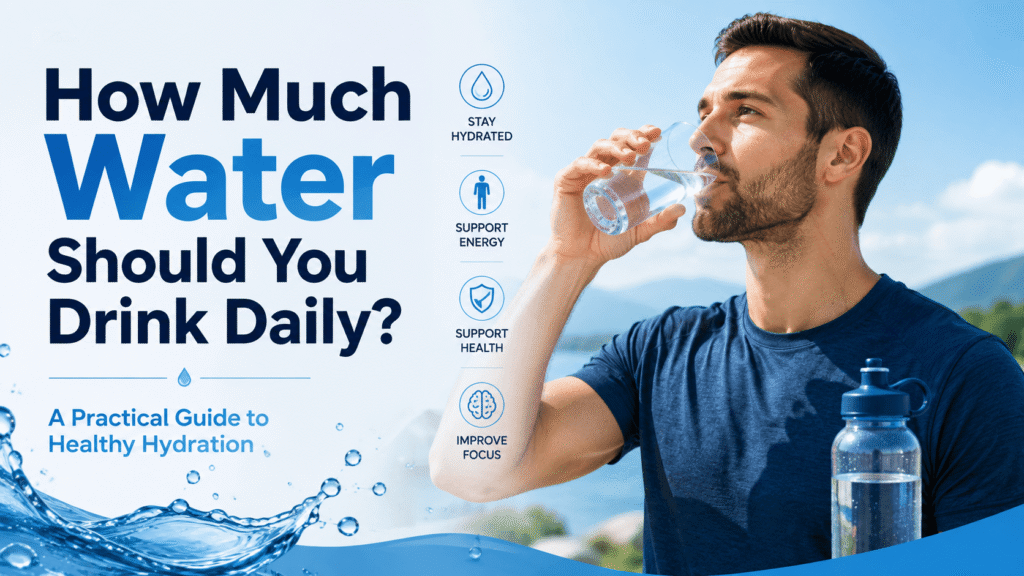
ToggleHow Much Water Should You Drink Daily?
Most healthy adults need approximately 2.7 to 3.7 liters of total water per day. However, this does not mean that the entire amount must come from plain drinking water. Total water intake includes water, other beverages, and the moisture naturally found in food.
The National Academies recommends approximately 3.7 liters, or 15.5 cups, of total water per day for adult men and 2.7 liters, or 11.5 cups, for adult women. In a typical diet, beverages provide around 13 cups for men and 9 cups for women, while food supplies the remaining amount.
These recommendations should be viewed as general starting points rather than exact daily requirements. Individual water needs can vary according to body size, physical activity, climate, diet, pregnancy, breastfeeding, health conditions, and fluid loss.
A healthy hydration plan should combine general intake guidelines with practical indicators such as thirst, urine output, activity level, weather conditions, and professional medical advice.
Medical note: This article provides general nutrition information. People with kidney disease, heart failure, liver disease, low blood sodium, or a medically prescribed fluid restriction should follow the recommendations of their healthcare professional.
What Is the Recommended Daily Water Intake?
A practical daily starting point is approximately 13 cups of beverages for adult men and 9 cups for adult women. These amounts include plain water and other drinks, while additional water is usually obtained from food.
The official U.S. Adequate Intake values are based on the average total water consumption of generally healthy populations. An Adequate Intake is not a strict minimum or a fixed requirement for every individual.
Drinking slightly less than the recommended amount on a particular day does not automatically mean that a person is dehydrated. Healthy hydration can be maintained across a range of fluid intakes.
| Group | Total Water From Food and Beverages | Approximate Water From Beverages |
|---|---|---|
| Adult men | 3.7 liters or 15.5 cups | 3.0 liters or about 13 cups |
| Adult women | 2.7 liters or 11.5 cups | 2.2 liters or about 9 cups |
| Pregnant women | 3.0 liters or about 12.5 cups | 2.3 liters or about 10 cups |
| Breastfeeding women | 3.8 liters or about 16 cups | 3.1 liters or about 13 cups |
These figures are general reference values for healthy individuals. Actual water requirements may change considerably based on physical activity, body size, climate, diet, illness, pregnancy, breastfeeding, and certain medical conditions.
How Much Water Should Men Drink Each Day?
Adult men can use 3.7 liters, or approximately 15.5 cups, of total water per day as a general guideline. Around 3 liters, or 13 cups, may come from drinking water and other beverages, while the remaining amount is usually obtained from food.
However, individual requirements can vary significantly. A smaller or less active man living in a cool environment may need less water. In contrast, someone who performs physically demanding work, exercises regularly, or spends time in hot and humid conditions may require considerably more.
For this reason, the recommended intake should be treated as a flexible starting point rather than a mandatory daily quota.
How Much Water Should Women Drink Each Day?
Adult women can use 2.7 liters, or approximately 11.5 cups, of total water per day as a general reference. Around 2.2 liters, or 9 cups, may come from water and other beverages.
Water requirements may increase during pregnancy and breastfeeding. Women may also need more fluids when exercising, living in hot weather, sweating heavily, or experiencing fever, vomiting, or diarrhea.
Is Eight Glasses of Water a Day Enough?
Eight 8-ounce glasses provide approximately 64 fluid ounces, or 1.9 liters, of water. This amount may be sufficient for some people, but it is not a universal requirement.
The popular “eight glasses a day” rule does not account for differences in:
- Body size
- Physical activity
- Climate
- Food intake
- Pregnancy
- Breastfeeding
- Illness
- Sweat loss
A person who eats water-rich foods and drinks milk, tea, coffee, or other fluids may remain adequately hydrated with around eight glasses of plain water. However, someone who exercises intensely or works outdoors in hot weather may require significantly more.
The more useful question is whether total fluid intake is keeping pace with the body’s fluid losses.
Does All Your Daily Water Have to Come From Plain Water?
No. Daily water intake can come from plain water, other beverages, and moisture contained in food.
In a typical diet, beverages provide most of a person’s water intake, while food contributes the remaining amount. Water-rich foods can therefore make a meaningful contribution to daily hydration.
Plain water remains one of the best hydration choices because it contains no calories or added sugar. However, healthy individuals do not need to obtain every ounce of fluid from plain drinking water alone.
Which Drinks Count Toward Daily Water Intake?
Water, milk, sparkling water, tea, coffee, and other nonalcoholic beverages contribute to daily fluid intake.
Plain coffee and tea can also be low-calorie hydration choices when they are not heavily sweetened or combined with large amounts of syrup, cream, or sugar.
Suitable hydration choices include:
- Tap, filtered, or bottled water
- Unsweetened sparkling water
- Plain tea
- Plain coffee in moderate amounts
- Milk
- Unsweetened fortified milk alternatives
- Soups and broths
- Oral rehydration solution when medically appropriate
Some drinks contain water but should not be used as the main source of hydration because they may provide excessive sugar, calories, caffeine, or sodium.
These include:
- Regular soda
- Sweetened iced tea
- Energy drinks
- Fruit-flavored drinks
- Heavily sweetened coffee
- Sports drinks when prolonged sweating has not occurred
Choosing plain water instead of sugary drinks can support hydration while reducing added sugar and calorie intake.
Which Foods Help With Hydration?
Fruits, vegetables, soups, yogurt, and other moisture-rich foods can contribute to total daily water intake.
Examples of hydrating foods include:
- Watermelon
- Oranges
- Berries
- Grapes
- Cucumbers
- Tomatoes
- Lettuce
- Celery
- Yogurt
- Soup
- Oatmeal prepared with water or milk
Food may not fully replace fluids during heavy sweating, exercise, or illness, but it can make a valuable contribution to everyday hydration.
Why Do Individual Water Needs Vary?
Water needs vary because people lose different amounts of fluid through urine, sweat, breathing, and bowel movements.
Several factors influence daily fluid requirements, including:
- Physical activity
- Temperature
- Humidity
- Diet
- Body size
- Health status
- Age
- Pregnancy
- Breastfeeding
- Sweat rate
There is no single exact water requirement that applies to every person. Daily needs should be adjusted according to individual circumstances.
How Do Exercise and Sweating Change Water Needs?
Exercise increases water requirements when it causes the body to sweat. The amount of additional fluid needed depends on workout intensity, duration, temperature, clothing, fitness level, and individual sweat rate.
A short indoor workout may require only a modest increase in water intake. In comparison, prolonged exercise, outdoor labor, protective clothing, or hot and humid conditions may lead to substantial fluid loss.
Signs of increased fluid loss may include:
- Heavy or continuous sweating
- Salt marks on clothing
- Increasing thirst
- Reduced urine output
- Darker urine
- Unusual fatigue
- Headache
- Dizziness
- Muscle cramps
- Reduced exercise performance
How Does Hot Weather Affect Water Requirements?
Hot weather increases water requirements because sweating helps the body release heat.
Humidity can increase the risk of dehydration because sweat does not evaporate as efficiently. As a result, the body may continue producing sweat without cooling itself effectively.
People who may be particularly vulnerable during hot weather include:
- Outdoor workers
- Athletes
- Older adults
- Young children
- People wearing heavy or protective clothing
- People taking medicines that affect fluid balance
- People with chronic health conditions
People living or working in hot climates should drink regularly and increase fluid intake according to activity level and sweat loss.
How Do Fever, Vomiting, and Diarrhea Affect Hydration?
Fever, vomiting, and diarrhea can rapidly increase water and electrolyte loss.
Plain water may be sufficient for mild fluid losses. However, an oral rehydration solution may be more appropriate when vomiting or diarrhea causes significant loss of sodium, potassium, and other electrolytes.
Medical advice should be sought when a person:
- Cannot keep fluids down
- Has persistent vomiting or diarrhea
- Shows confusion or unusual sleepiness
- Produces very little or no urine
- Has blood in the stool
- Develops severe dehydration symptoms
- Is an infant, frail older adult, or medically vulnerable person whose condition is worsening
How Much Water Should You Drink During Exercise or Hot Weather?
During exercise or hot weather, drink enough to replace increasing fluid losses without forcing excessive amounts.
There is no single fluid target that is suitable for every person, activity, and environment. Water intake should be adjusted according to exercise duration, temperature, humidity, clothing, intensity, and individual sweat rate.
For moderate physical work in hot conditions lasting less than two hours, approximately 8 ounces of water every 15 to 20 minutes may be appropriate. However, this guidance is mainly intended for workplace heat exposure and should not be treated as a fixed requirement for every exercise session.
For ordinary physical activity:
- Begin exercise reasonably well hydrated.
- Keep water easily accessible.
- Drink periodically, especially when thirsty.
- Increase intake when sweating becomes heavier.
- Continue replacing fluids after exercise.
- Avoid drinking excessive amounts far beyond your fluid losses.
Athletes may use changes in body weight to estimate sweat loss. A significant decrease in body weight during training may suggest inadequate fluid replacement. Gaining weight during endurance exercise may indicate excessive drinking.
When Are Electrolyte Drinks Helpful?
Electrolyte drinks may be useful during prolonged heavy sweating, extended exercise in hot conditions, or substantial fluid loss caused by illness.
They are generally unnecessary for short or light workouts when plain water and normal meals are available.
Electrolyte drinks may be beneficial when:
- Exercise lasts several hours
- Sweating is heavy and continuous
- Physical work is performed in high heat
- Fluid is lost through vomiting or diarrhea
- A healthcare or sports professional recommends them
Sports drinks and oral rehydration solutions are not the same.
Sports drinks are mainly designed to support prolonged physical activity. Oral rehydration solutions contain a specific balance of glucose and electrolytes intended to improve fluid absorption during illnesses such as diarrhea.
How Can You Tell Whether You Are Drinking Enough Water?
Thirst, urine frequency, urine color, physical symptoms, activity level, and environmental conditions can help indicate whether you are adequately hydrated.
No single home method provides a perfect measurement. However, several signs can be considered together.
For many healthy adults living in moderate conditions, drinking in response to thirst and consuming fluids with meals is generally effective. More careful hydration planning may be necessary during heat, prolonged exercise, illness, pregnancy, breastfeeding, and older age.
Signs that fluid intake may be adequate include:
- Thirst is not persistent
- Urination occurs regularly
- Urine is generally light rather than consistently dark
- The mouth does not feel unusually dry
- Energy and concentration remain normal
- There is no unexplained dizziness or headache
- Fluid intake increases when activity or temperature rises
Urine color should be treated as a general indicator rather than a medical diagnosis. Medicines, supplements, diet, timing, and health conditions can all affect urine appearance.
What Are the Early Signs of Dehydration?
Common signs of mild or moderate dehydration include:
- Strong thirst
- Dry or sticky mouth
- Dark yellow urine
- Reduced urination
- Headache
- Tiredness
- Muscle cramps
- Dizziness, especially when standing
- Difficulty concentrating
When these symptoms appear, move to a cooler environment if necessary and drink fluids gradually.
After significant sweating, vomiting, or diarrhea, an appropriate electrolyte-containing beverage may also be required.
When Does Dehydration Require Medical Attention?
Severe dehydration requires urgent medical assessment.
Confusion, fainting, inability to drink, very low urine output, rapid deterioration, or reduced consciousness should not be managed simply by encouraging the person to drink more water at home.
Infants, young children, older adults, and people with chronic illnesses may become severely dehydrated more quickly.
Seek prompt medical attention if symptoms are severe, worsening, or accompanied by persistent vomiting, diarrhea, fever, confusion, or loss of consciousness.
How Much Water Should Pregnant and Breastfeeding Women Drink?
Pregnant women generally need around 3 liters of total water per day, including approximately 2.3 liters, or 10 cups, from beverages.
Breastfeeding women have a higher recommended intake of approximately 3.8 liters of total water per day, including around 3.1 liters, or 13 cups, from beverages.
Pregnant and breastfeeding women may need additional fluid when they:
- Exercise
- Live in a hot climate
- Experience vomiting
- Have diarrhea or fever
- Sweat heavily
- Breastfeed more than one infant
Persistent vomiting, inability to keep fluids down, dizziness, very dark urine, or very low urine output should be discussed with a maternity healthcare professional.
How Much Water Should Children and Teenagers Drink?
Children’s water needs depend on age, body size, diet, activity level, weather, and other beverages.
Younger children require smaller amounts than adults but may become dehydrated more quickly.
| Age | Suggested Plain Water Range |
|---|---|
| 5–8 years | 16–40 fluid ounces per day |
| 9–13 years | 22–61 fluid ounces per day |
| 14–18 years | 29–88 fluid ounces per day |
The appropriate amount within each range depends on the child’s body size, activity level, diet, and environmental temperature.
Children may need more fluid during:
- Outdoor play
- Sports activities
- Hot weather
- Fever
- Vomiting
- Diarrhea
Infants under six months generally receive the water they need from breast milk or properly prepared infant formula. Plain water should not replace breast milk or formula unless a qualified pediatric healthcare professional specifically recommends it.
Do Older Adults Need a Different Hydration Strategy?
Older adults may benefit from a more structured hydration routine because the sensation of thirst can become less noticeable with age.
Although standard adult intake recommendations provide a useful starting point, relying only on thirst may not always be sufficient for older individuals.
Helpful hydration strategies include:
- Drinking fluids at regular times
- Keeping water within easy reach
- Drinking with meals
- Drinking when taking medicines
- Including milk, soup, or other suitable fluids
- Paying closer attention during hot weather and illness
- Monitoring changes in urine output, alertness, and energy
Caregivers should also determine whether the individual has been prescribed a fluid restriction or takes medicines that affect fluid balance.
Can Drinking Too Much Water Be Dangerous?
Yes. Drinking water faster than the kidneys can remove it may dilute the sodium level in the blood and cause a condition called hyponatremia, sometimes referred to as water intoxication.
Hyponatremia occurs when the concentration of sodium in the blood becomes too low. Excess water can then enter the body’s cells and cause them to swell. Swelling in brain cells can be particularly dangerous.
Overhydration may be more likely when a person:
- Drinks very large amounts within a short period
- Consumes excessive water during endurance events
- Replaces heavy sodium losses only with plain water
- Has kidney, heart, or liver disease
- Takes certain medicines
- Has a hormonal condition that causes water retention
This does not mean that normal water consumption is dangerous. It means that water intake should match the body’s needs rather than being treated as something that is always healthier in unlimited quantities.
What Are the Symptoms of Hyponatremia?
Possible symptoms of low blood sodium include:
- Nausea
- Headache
- Fatigue
- Muscle weakness
- Muscle cramps
- Dizziness
- Confusion
Severe cases may cause:
- Seizures
- Reduced consciousness
- Coma
- Death
Seek urgent medical attention if a person develops severe confusion, seizures, loss of consciousness, repeated vomiting with neurological symptoms, or a severe headache after consuming excessive amounts of water.
Suspected severe hyponatremia should not be treated simply by consuming salt at home. Diagnosis requires professional medical assessment and a blood sodium test.
Who Should Ask a Doctor About Fluid Intake?
People with medical conditions that affect fluid removal or electrolyte balance should obtain individualized hydration advice.
General recommendations such as “drink more water” may be inappropriate for someone who has been prescribed a fluid restriction.
Consult a healthcare professional if you have:
- Chronic kidney disease
- Kidney failure
- Heart failure
- Advanced liver disease
- Low blood sodium
- Swelling or fluid retention
- Excessive thirst or urination
- Recurrent kidney stones
- Persistent vomiting or diarrhea
- A prescription for diuretic medicine
- A medically prescribed fluid restriction
Kidney disease can reduce the body’s ability to remove excess fluid. Heart failure and liver disease may also cause fluid to accumulate rather than being excreted normally.
What Are the Best Ways to Drink More Water Each Day?
The easiest way to improve hydration is to make water visible, convenient, and connected to your regular routine.
Try the following practical strategies:
- Drink water after waking.
A glass of water can help replace some of the fluid lost overnight. - Keep a reusable bottle nearby.
Easy access makes it more likely that you will drink regularly. - Drink with meals.
Regular meal times provide natural hydration reminders. - Increase intake during heat and activity.
Carry water when exercising, working outdoors, or spending time in hot weather. - Choose water instead of sugary drinks.
This supports hydration while reducing added sugar and calorie intake. - Add natural flavor.
Lemon, lime, cucumber, mint, or berries can make plain water more appealing. - Eat water-rich foods.
Fruits, vegetables, yogurt, oatmeal, and soups can contribute to hydration. - Spread intake throughout the day.
Regular drinking is generally more comfortable than consuming a large amount at once. - Use reminders when necessary.
Scheduled reminders may help older adults or people who become highly focused on work. - Adjust intake according to your needs.
Drink more during hot, active, or sick days and adjust intake when fluid losses are lower.
Which Common Water-Intake Myths Should You Ignore?
Several popular hydration rules are oversimplified.
Myth 1: Everyone Must Drink Exactly Eight Glasses
Eight glasses may be a useful general habit, but it is not a universal requirement.
Myth 2: Official Recommendations Refer Only to Plain Water
Daily total water intake includes plain water, other beverages, and water contained in food.
Myth 3: More Water Is Always Healthier
Excessive intake can dilute blood sodium and cause a serious medical emergency.
Myth 4: One Body-Weight Formula Works for Everyone
Body-weight formulas do not fully account for climate, activity, diet, pregnancy, health conditions, and individual sweat rate.
Myth 5: Sports Drinks Are Necessary for Every Workout
Plain water is usually sufficient for short or moderate exercise. Electrolyte drinks are more useful during prolonged heavy sweating or certain illness-related fluid losses.
Myth 6: Plain Water Is Always the Best Treatment for Diarrhea
Significant diarrhea causes both water and electrolyte loss. A properly prepared oral rehydration solution may be more appropriate, especially for children.
Myth 7: Drinking Water Directly Burns Body Fat
Water does not directly burn or melt body fat. However, replacing high-calorie sugary drinks with water may support weight management by reducing calorie intake.
What Is the Key Takeaway About Daily Water Intake?
Most healthy adults can begin with approximately 13 cups of beverages per day for men and 9 cups for women, while remembering that food also contributes to total water intake.
These values are general references rather than strict daily requirements.
Increase fluid intake when activity, sweating, heat, fever, vomiting, diarrhea, pregnancy, or breastfeeding raises the body’s fluid needs.
Use thirst, urine output, physical symptoms, environmental conditions, and activity level as practical hydration guides.
Avoid forcing extreme amounts of water. People with kidney, heart, liver, sodium, or fluid-balance conditions should follow an individualized medical recommendation.
Frequently Asked Questions About Daily Water Intake
Is It Healthy to Drink a Gallon of Water Every Day?
A gallon, or approximately 3.8 liters, may be appropriate for some highly active people but excessive for others, particularly when consumed rapidly.
Daily intake should reflect body size, physical activity, climate, diet, sweat loss, and medical status.
Does Coffee Count Toward Daily Water Intake?
Yes. Coffee contributes to total fluid intake.
However, plain water should remain a primary hydration choice. Coffee should be consumed in moderation, and large amounts of added sugar, syrup, cream, or high-calorie flavorings should be limited.
Is Clear Urine a Sign of Good Hydration?
Very light urine often occurs when fluid intake is high, but urine does not need to remain completely clear throughout the day.
Persistently dark urine combined with reduced urination may be a more important sign of possible dehydration.
Should You Drink Water Even When You Are Not Thirsty?
Most healthy adults can use thirst as one hydration guide.
However, planned drinking may be helpful during exercise, hot weather, illness, pregnancy, breastfeeding, and older age. People who sweat heavily should avoid waiting until they become extremely thirsty.
Does Drinking More Water Help With Weight Loss?
Water does not directly cause fat loss.
However, replacing sugary or high-calorie beverages with plain water can reduce calorie intake and may support a balanced weight-management plan.
How Much Water Should You Drink to Help Prevent Kidney Stones?
There is no single suitable amount for every person with kidney stones.
Adequate fluid intake, mainly from water, is an important preventive measure. However, the appropriate target should be personalized according to stone type, urine output, climate, kidney function, and medical history.
Is It Better to Sip Water or Drink It All at Once?
Spreading water intake throughout the day is generally more comfortable and helps replace ongoing fluid losses.
Drinking very large amounts within a short period is unnecessary and may be dangerous in extreme situations.
Sources & References
- National Academies — Dietary Reference Intakes for Water
Source for the recommended total daily water intake of 3.7 liters for men and 2.7 liters for women, including water from food and beverages. - CDC — About Water and Healthier Drinks
Source for information about hydration, caffeinated beverages, water-rich foods, and replacing sugary drinks with water. - CDC/NIOSH — Workplace Heat and Hydration Recommendations
Source for drinking water during physical activity and working in hot conditions. - MedlinePlus — Dehydration
Source for dehydration symptoms, causes, high-risk groups, and signs that require medical attention. - World Health Organization — Diarrhoeal Disease
Source for information about water and electrolyte loss during diarrhea and the use of oral rehydration solution. - ACOG — Healthy Eating During Pregnancy
Source for the recommendation that pregnant women aim for approximately 8 to 12 cups of water each day. - American Academy of Pediatrics — How Much Water Should Children Drink?
Source for daily plain-water ranges for children and teenagers between the ages of 5 and 18. - National Kidney Foundation — Hyponatremia
Source for information about low blood sodium, excessive water intake, symptoms, risk factors, and treatment. - NIDDK — Eating, Diet, and Nutrition for Kidney Stones
Source for information about water intake and the prevention of kidney stones.










One Response