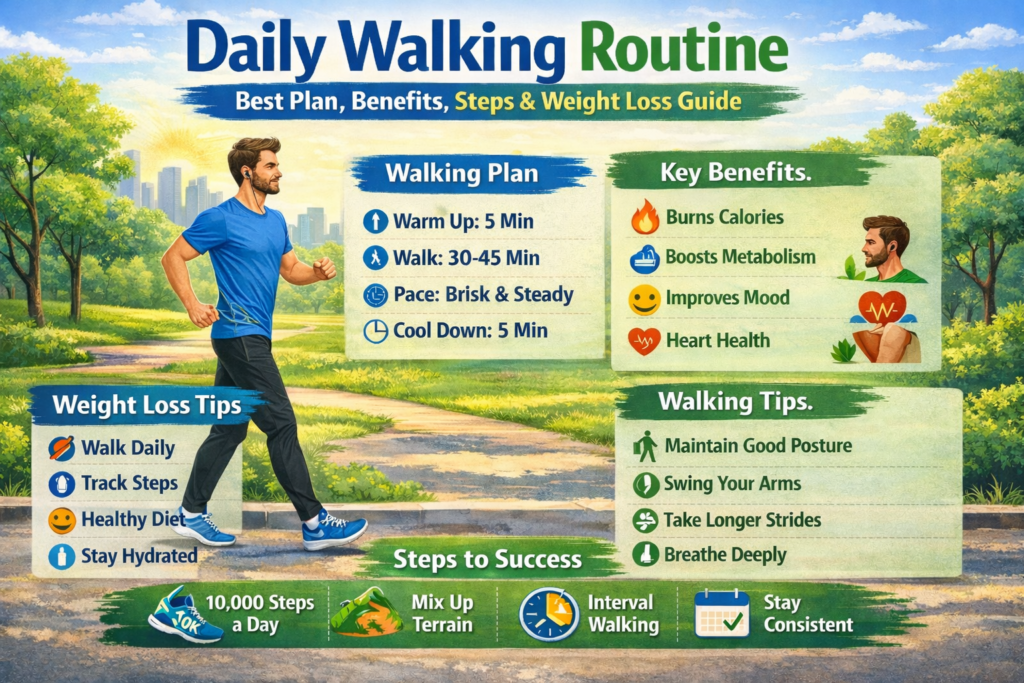
What Is the Best Daily Walking Routine for Health, Fitness, and Weight Loss?
A daily walking routine is one of the simplest and most effective ways to improve your overall health. It requires no gym, minimal equipment, and fits easily into almost any lifestyle.
The best routine combines consistent daily movement, moderate intensity, and realistic step goals. According to the World Health Organization, adults should aim for at least 150 minutes of moderate-intensity activity per week, and walking is one of the easiest ways to meet that target.
What Is a Daily Walking Routine and Why Does It Matter?
A daily walking routine is a structured habit of walking regularly for a set time, distance, or step count each day.
It matters because walking is a low-impact cardio exercise that supports long-term health without putting stress on joints.
- Suitable for beginners, older adults, and busy professionals
- Easy to maintain compared to high-intensity workouts
- Builds consistency, which is key to fitness success
What Are the Proven Benefits of Walking Every Day?
Daily walking improves physical health, supports weight management, and enhances mental well-being.
How Does Walking Improve Physical Health?
Walking strengthens the heart, improves circulation, and reduces chronic disease risk.
- The Centers for Disease Control and Prevention reports regular walking helps reduce the risk of:
- Heart disease
- Stroke
- Type 2 diabetes
- Improves blood pressure and cholesterol levels
- Supports joint mobility and bone strength
Can Walking Help With Weight Loss?
Yes, walking supports weight loss when combined with a calorie-controlled diet.
- Burns calories based on speed, duration, and body weight
- Brisk walking increases calorie burn significantly
- Helps maintain fat loss long-term
Example calorie burn (approximate):
How Does Walking Support Mental Health?
Walking reduces stress, improves mood, and enhances cognitive function.
- Research published by Harvard Medical School shows walking can:
- Reduce anxiety and depression symptoms
- Improve sleep quality
- Boost creativity and focus
How Do You Start a Daily Walking Routine as a Beginner?
Start with short, manageable walks and gradually increase time and intensity.
What Is the Easiest Way to Begin Walking Daily?
Begin with 10–15 minutes per day, then build up.
Step-by-step approach:
- Start with 10–15 minutes daily
- Walk at a comfortable pace
- Increase duration by 5 minutes weekly
- Add brisk walking after 2–3 weeks
What Mistakes Should Beginners Avoid?
Avoid overdoing it too quickly.
Common mistakes:
- Walking too fast, too soon
- Skipping rest days
- Wearing improper shoes
- Setting unrealistic step goals
How Many Steps or Minutes Should You Walk Daily?
Most adults benefit from 7,000 to 10,000 steps per day, but even lower counts provide benefits.
Is 10,000 Steps a Day Necessary?
No, 10,000 steps is not mandatory.
- A study in JAMA Network found health benefits plateau around 7,000–8,000 steps for many adults
- Beginners can start with 5,000 steps and increase gradually
🚶♂️ Calculate Walking Time
What Is the Ideal Walking Duration?
Aim for 30–60 minutes per day.
- 30 minutes = basic health benefits
- 45–60 minutes = better weight loss and endurance
What Is the Best Time of Day to Walk?
The best time to walk is the time you can stay consistent with.
Morning Walk vs Evening Walk: Which Is Better?
Both have unique benefits.
| Factor |
Morning Walk |
Evening Walk |
| Energy |
Boosts alertness |
Relieves stress |
| Metabolism |
Kickstarts metabolism |
Helps unwind |
| Consistency |
Easier to stick to |
Flexible timing |
What Are Effective Daily Walking Plans for Different Levels?
Structured plans help maintain consistency and progress.
Beginner Walking Plan
- Week 1–2: 15 minutes daily
- Week 3–4: 20–25 minutes
- Week 5+: 30 minutes
Goal: Build habit and endurance
Intermediate Walking Plan
- 30–45 minutes daily
- Include brisk walking intervals
- Aim for 7,000–10,000 steps
Goal: Improve fitness and burn more calories
What Pace Should You Walk for Maximum Benefits?
A brisk walking pace (about 5–6 km/h) provides the most health benefits.
- You should be able to talk, but not sing
- Increases heart rate effectively
- Burns more calories than slow walking
How Can You Stay Consistent With a Daily Walking Routine?
Consistency comes from making walking easy and enjoyable.
Practical tips:
- Set a fixed daily time
- Use a step counter or app
- Walk with a friend or group
- Listen to something that entertains you.
- Track progress weekly
Want to make walking more enjoyable? Read this guide:
https://excelfitz.com/walking/10-daily-walking-tips/
What Tools Help Track Walking Progress?
Tracking improves motivation and accountability.
Common tools:
- Step counters (pedometers)
- Fitness trackers (smartwatches)
- Mobile apps like Google Fit or Apple Health
Key Takeaways
- A daily walking routine is one of the easiest ways to improve health
- Aim for 30–60 minutes or 7,000–10,000 steps daily
- Brisk walking offers the best results
- Consistency matters more than intensity
- Walking supports both physical and mental health
FAQs
How long should I walk daily for good health?
Walk at least 30 minutes daily to meet basic health guidelines.
Is walking every day enough exercise?
Yes, walking can meet activity guidelines if done consistently and at moderate intensity.
Can I lose weight by walking alone?
Yes, but results improve when combined with a balanced diet.
What is a good walking speed?
A brisk pace where talking is possible but slightly challenging.
Should I walk every day or take rest days?
Daily walking is safe, but light rest or variation can help prevent fatigue.
Is 5,000 steps enough?
It’s a good starting point, especially for beginners, but increasing steps improves benefits.
Does walking reduce belly fat?
Walking helps reduce overall body fat, including belly fat, over time.